Are pro-nuclear politics a threat to public safety?

The one moribund nuclear power sector is suddenly a hive of activity, and nuclear regulators face pressure to rapidly assess an unprecedented number and variety of projects. How they respond will determine winners and losers among reactor designers, power companies and nations. More importantly, it will shape the future safety of nuclear energy and, if they get it wrong, squander the technology’s recently-revived public support.

Congress created the NRC in 1974 after pro-nuclear bias sunk the Atomic Energy Commission

I evaluated the quandary facing regulators for Nature magazine, drawing lessons from nuclear power’s history and perspective from past and present nuclear regulators around the world.

Front and center is the U.S. Nuclear Regulatory Commission, which has pivoted aggressively to an unapologetically nuclear-boosting posture under Trump 2.0. NRC chairman Ho Nieh is pushing for rapid transformation to make his agency a nuclear construction enabler. His stated goals: “Licences are issued. Shovels go in the ground. And we start building nuclear reactors safely and securely in the United States.”

Are “shovels in the ground” an appropriate measure of success for a nuclear regulator? Read on for answers…

The 1976 Campus Experiment That Spun Up the Wind Industry

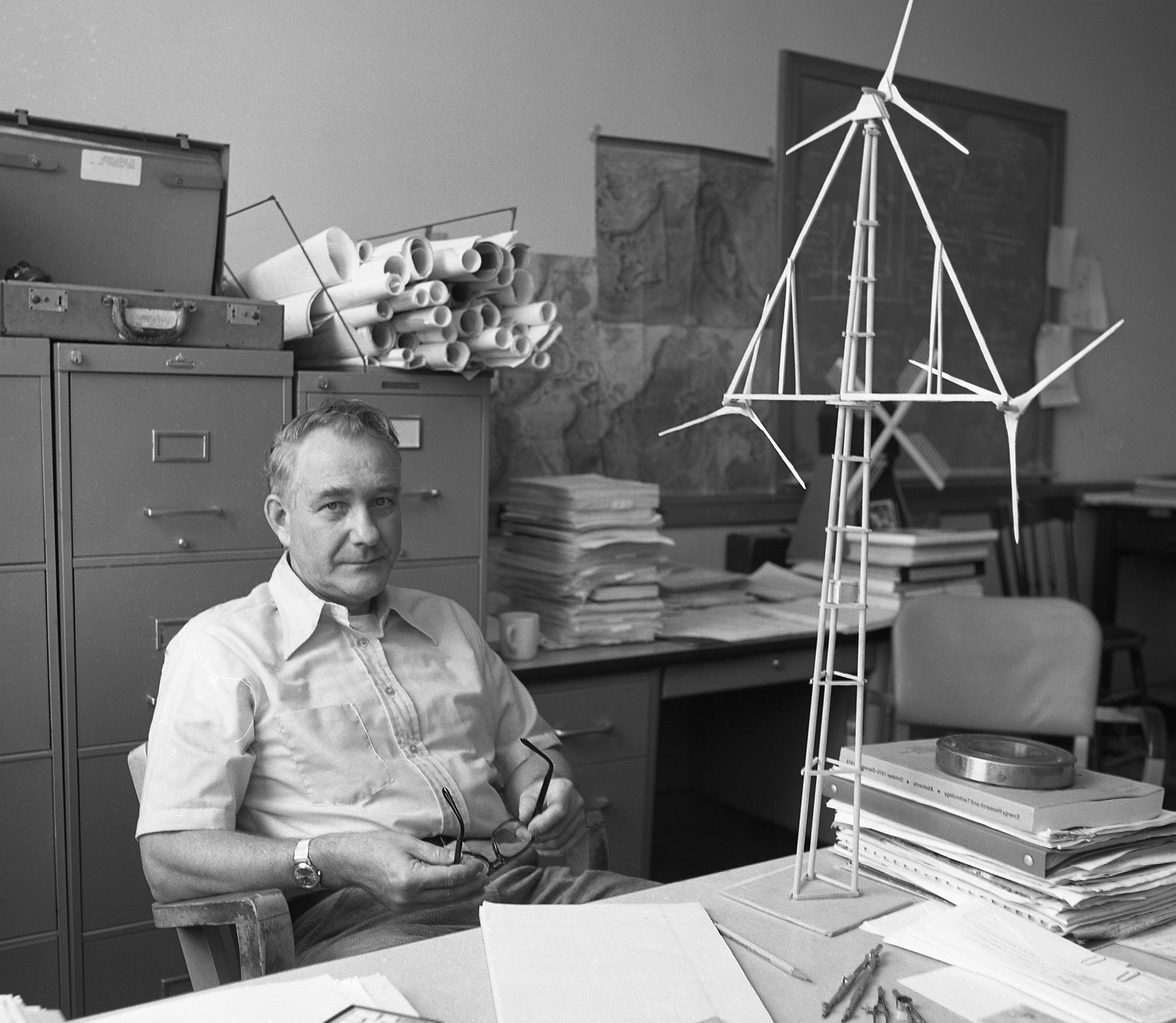
William Heronemus, 1975, with multirotor offshore wind turbine model. Robert S. Cox Special Collections/UMass Amherst Libraries

A half century ago, a scrappy crew at the University of Massachusetts Amherst erected a wind turbine on Orchard Hill, the highest point on campus. It was a frugal production, cobbled together from the rear axle of a Ford truck, a donated generator and microcontroller, a steam pipe, and various handcrafted steel and fibreglass parts, including its 4.5-meter blades. It was also tiny by modern standards — generating 1000x less power than today’s biggest wind machines. But the UMass ‘Wind Furnace’ delivered far more than most experts expected from wind energy in 1976.

The Wind Furnace project’s enduring impact is impossible to overstate. The training and inspiration it provided the spark and the engineers that unleashed the modern wind industry. For IEEE Spectrum magazine I profiled the UMass project and the visionary engineer behind the machine: Captain William Heronemus.

Bill Heronemus was a nuclear submarine veteran turned professor. A nuclear energy critic. Above all a brilliant engineer with a steady moral compass. I hope you read the profile and then want more, because I’ve got a lot more to say about ‘The Captain’ and his legacy.

The Man Who Kept Ukraine Warm

In the 21st Century nothing works when the power goes out, which is exactly why Vladimir Putin repeatedly attacks Ukraine’s power system. In How Electrical Engineers Fight a War I narrate their grid engineers’ fight to keep the lights on and the heat flowing. One man did more than any other: transmission mastermind Oleksiy Brecht, who was killed in January while rebuilding a crippled substation.

Oleksiy Brecht / Ukrenergo

Brecht’s life and death are a window into the realities of thousands of Ukrainian grid engineers who face conditions beyond what most of their international counterparts could imagine. Mariia Tsaturian, who worked with Brecht at the country’s power grid operator Ukrenergo, told me the war transformed professional life. “Their world was turned upside down entirely. A substation engineer working under shelling is something no one had ever seen or experienced before,” said Tsaturian.

Brecht’s brilliance, creativity and courage empowered his colleagues to restore power flows again and again after Russian missiles and drones smashed power plants, electrical switchyards and transmission lines. The transmission boss found a way to use whatever equipment was available, sometimes making unprecedented ‘off design’ use of complex devices. And he beat the bushes to find replacement parts abroad.

Andrii Nemyrovskyi, Ukrenergo’s former Deputy CEO, told me he insisted that the military provide protection for two people at the company: the CEO, who made daily operational calls, and Brecht, because “system operations requires that the system exists.” President Zelenskyy posthumously named Brecht a “Hero of Ukraine.”

Pushing wind power to London

Scottish wind power is slashing UK reliance on gas and speeding electrification, but a flood of southbound power is straining its grid, costing consumers 100s of millions annually. US Energy Secretary Chris Wright called the situation “Lunacy.” UK grid operators call it an engineering challenge.

My latest feature for IEEE Spectrum magazine took me to the big switches in Northern England stickhandling* power through UK grid bottlenecks. Innovative electronic devices, aka SmartValves, nudge power away from congested circuits to maximize the system’s overall capacity to keep power flowing. Along with other grid-enhancing tech, including advanced conductors and sensors that spot overheating lines, SmartValves are buying the UK vital time while its grid operators build new circuits using further innovative electronics.**

The SmartValves deployed by UK grid operator National Grid were developed by a US-based firm (SmartWires), that was launched by Georgia Institute of Technology prof Deepak Divan (an immigrant educated at the Indian Institute of Technology, Kanpur and the University of Calgary), and supported with R&D funding from the U.S. Department of Energy.

In other words, what Energy Secretary Wright calls lunacy is no match for America bringing its best to a global challenge.

* Stickhandle (n): Canadian. To deftly manage a difficult situation.

** The UK’s new circuits connecting Scotland and Greater London use high-voltage direct current (HVDC) technology to loop out under the English Channel “like patch cords in an old-time telephone switchboard,” as I wrote in this 2023 technology profile: HVDC Networks Come to Europe.

Democratizing geothermal energy

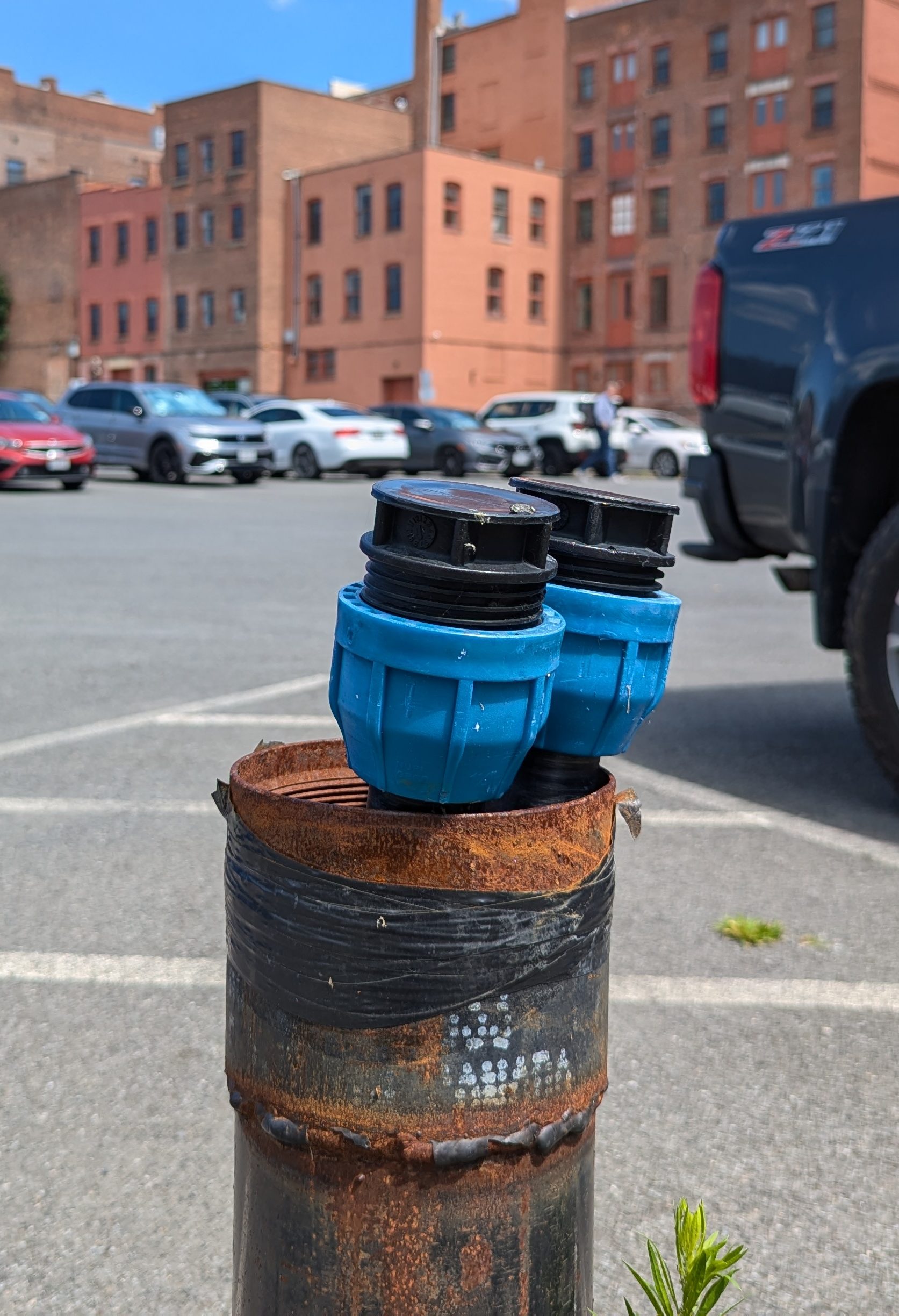
Pilot borehole for geothermal network in Troy NY
A geothermal test loop behind the arts center in Troy, NY

Tapping the ground is the most efficient means of heating and cooling buildings, but requires boreholes that are prohibitively expensive for most homeowners and businesses to drill on their own. Geothermal ‘networks’ change that equation. Just as power and gas utilities spread the costs of building power plants and transmission lines and gas pipes, they can make geothermal accessible to all by spreading out the costs of drilling hundreds of feet into the ground.

My Nature magazine feature on geothermal networks shows how this largely overlooked solution for moving cities off gas heating is spreading in Europe and North America, and why its performance and politics may accelerate electrification. I also show how this promising climate solution is undermined by a dearth of knowledge exchange between practitioners on either side of the Atlantic.

This is effectively part 4 in an ongoing series of ‘getting off gas’ stories supported by the Fund for Environmental Journalism. On-the-ground insights from New York’s Hudson Valley that enriched the Nature feature wouldn’t have been possible without that grant from the Society of Environmental Journalists.

Rolling Power

Electricity moves down a wire at close to the speed of light. In March, a tiny tech firm in San Francisco drew a crowd to witness power moving 100 million times slower, at the very modest pace of a freight train bumping around a rail yard. And I mean literally at freight speed, because the aptly-named startup, SunTrain, convened us to watch a diesel locomotive hauling solar energy.

The star of this demonstration at the Port of San Francisco’s Pier 96 rail yard was a freight container that SunTrain had crammed full of lithium ion batteries and mounted on a standard 27-meter railcar…

So begins my latest feature for the solutions-oriented Anthropocene Magazine, profiling the creative thinkers who see railroads — the ultimate industrial dinosaur — as a lever to equip power grids for a wind and solar-powered future. SunTrain would turn railroads into a power transmission solution, using railroads to make an end run around grid congestion that’s holding up power projects across the U.S.

Imagine mile-long trains with 120 or more battery cars, charging up where wind and solar power is cheap and making daily deliveries of over two gigawatt-hours of clean energy each—enough to power a small city, port, or datacenter for days. 

I also cover a slightly more mature rail-to-grid concept: feeding power lines through rail corridors, thus avoiding the environmental impacts, cost and community upset that delay and frequently kill grid expansion. A handful of transmission projects in New England and New York already co-locate power lines beside rails. And the proposed SOO Green transmission project would follow rails for nearly all of its 560-kilometer journey from Iowa’s wind belt to Chicago.

The ultimate challenge facing both approaches is getting railroads to think outside the box and to make room for cleaner power. That will get easier if, as expected, even President Trump’s pro-carbon policies can’t keep the railroads’ rolling boxes full of coal.

Read the full story @Anthropocene

Getting Off Gas, Block by Block

Electrifying homes and businesses one at a time can be hard, and leave people behind. What if we could instead liberate entire neighborhoods from reliance on natural gas? A few utilities are taking baby steps to do just that, helping customers go all-electric en masse so it can start dismantling their gas grids.

Since 2018 San Francisco-based PG&E has been finding spots where it can make a buck by capping dodgy gas pipes rather than replacing them. After nipping pipes around the edges of its gas grid, removing pipes that serve just a handful of customers each, PG&E is now preparing to lop off some sizeable branches. The first large test moving forward targets 32,000 feet of gas pipes at a California State University campus, perched atop coastal dunes at a former army base north of Monterey. PG&E will ditch the pipes by equipping 600 student housing units with electric heat pumps, stoves and water heaters.

Such ‘strategic decommissioning’ of gas grids is not just a way to accelerate decarbonization. It’s simultaneously combating energy injustice. Without immediate reductions in spending on gas infrastructure, disadvantaged customers will be left paying for oversized gas grids as more affluent households go all-electric and quit the system. As Building Decarbonization Coalition executive director Panama Bartholomy told me: “Every time we put a new natural gas pipe in the ground, we’re knowingly putting a financial time bomb in the ground.”

Read my feature for Sierra Magazine, Getting Off Gas: Block By Block

A paired Sierra news piece profiles the pioneering geothermal network that Boston-based Eversource Energy and Massachusetts climate action group HEET started up this summer. Water pipes running under streets in Framingham, MA serve as the system’s circulatory system, democratizing access to 90 geothermal bore holes. Since August a fire hall, school, gas station, cabinet shop, city-run housing units for the elderly and disabled, and 22 single-family homes and duplexes have been heating and cooling by exchanging heat with the clay and rock 600 to 700 feet below the city. The super high efficiency of such thermal energy networks should reduce peak summer and winter electricity demand, slashing the need for new transmission lines by 33 percent according to a 2023 US national labs study. They also offer gas utilities and workers a post-combustion raison d’etre, potentially turning energy transition obstacles into a driving force for building decarbonization.

Read my Sierra news piece, Geothermal Helps Communities Get Off Fossil Gas

The Sierra articles are the 2nd and 3rd instalments in Tapping Off, a reporting project supported by the Society of Environmental Journalists’ Fund for Environmental Journalism. Part 1, published by The Tyee, profiled Washington state utility Puget Sound Energy’s use of customer electrification to put the brakes on gas expansion.

Read Part 1 online @The Tyee