Are pro-nuclear politics a threat to public safety?

The one moribund nuclear power sector is suddenly a hive of activity, and nuclear regulators face pressure to rapidly assess an unprecedented number and variety of projects. How they respond will determine winners and losers among reactor designers, power companies and nations. More importantly, it will shape the future safety of nuclear energy and, if they get it wrong, squander the technology’s recently-revived public support.

Congress created the NRC in 1974 after pro-nuclear bias sunk the Atomic Energy Commission

I evaluated the quandary facing regulators for Nature magazine, drawing lessons from nuclear power’s history and perspective from past and present nuclear regulators around the world.

Front and center is the U.S. Nuclear Regulatory Commission, which has pivoted aggressively to an unapologetically nuclear-boosting posture under Trump 2.0. NRC chairman Ho Nieh is pushing for rapid transformation to make his agency a nuclear construction enabler. His stated goals: “Licences are issued. Shovels go in the ground. And we start building nuclear reactors safely and securely in the United States.”

Are “shovels in the ground” an appropriate measure of success for a nuclear regulator? Read on for answers…

The 1976 Campus Experiment That Spun Up the Wind Industry

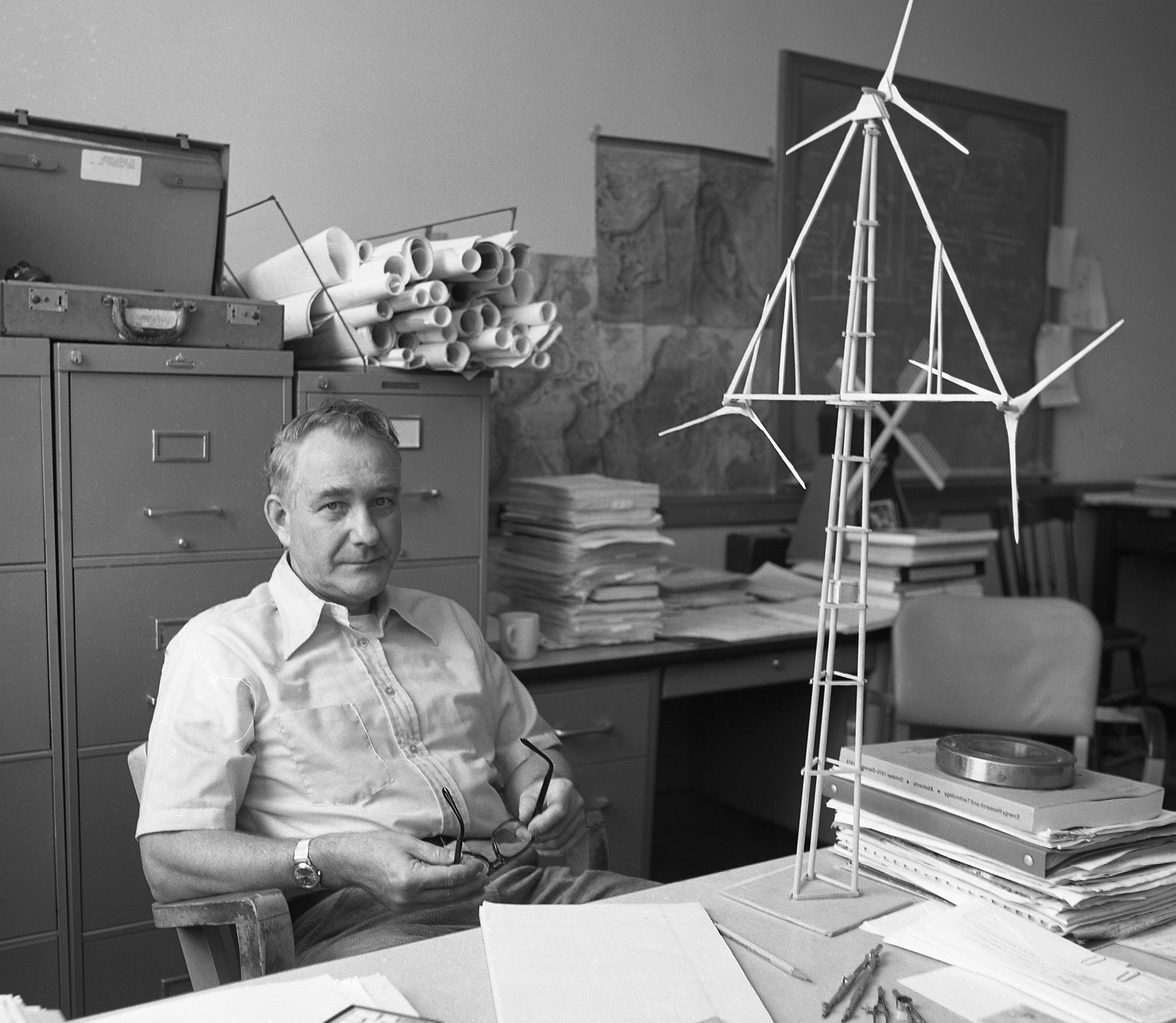
William Heronemus, 1975, with multirotor offshore wind turbine model. Robert S. Cox Special Collections/UMass Amherst Libraries

A half century ago, a scrappy crew at the University of Massachusetts Amherst erected a wind turbine on Orchard Hill, the highest point on campus. It was a frugal production, cobbled together from the rear axle of a Ford truck, a donated generator and microcontroller, a steam pipe, and various handcrafted steel and fibreglass parts, including its 4.5-meter blades. It was also tiny by modern standards — generating 1000x less power than today’s biggest wind machines. But the UMass ‘Wind Furnace’ delivered far more than most experts expected from wind energy in 1976.

The Wind Furnace project’s enduring impact is impossible to overstate. The training and inspiration it provided the spark and the engineers that unleashed the modern wind industry. For IEEE Spectrum magazine I profiled the UMass project and the visionary engineer behind the machine: Captain William Heronemus.

Bill Heronemus was a nuclear submarine veteran turned professor. A nuclear energy critic. Above all a brilliant engineer with a steady moral compass. I hope you read the profile and then want more, because I’ve got a lot more to say about ‘The Captain’ and his legacy.

Energizing Taiwan’s ‘Silicon Shield’

National Gold Feature Article, 2025 Azbee Awards

One incredibly wealthy firm, the Taiwan Semiconductor Manufacturing Company, dominates the global microchip market. To Taiwan, it’s much more than an economic engine. TSMC’s advanced microchips are to this century what petroleum was to the last, and that geopolitical asset gives embattled Taiwan what security experts call the ‘Silicon Shield’: The US won’t let TSMC’s chip fabrication plants fall to China, and Beijing won’t risk the economic devastation of a fab-destroying invasion.

Or so the logic goes.

The challenge is keeping this geopolitical forcefield powered up.

TSMC’s power consumption is nearly doubling every 5 yrs as it taps extreme-UV beams to etch silicon. And power quality matters as much as quantity. TSMC needs cleaner energy than Taiwan’s mostly coal and LNG-fired power plants supply. As buyers like Apple & Google seek to wring carbon out of their supply chains, Taiwan risks losing TSMC to greener pastures.

My latest feature, reported from Taiwan, captures a massive push to green the country’s energy with solar arrays and offshore wind plants. In a densely-populated land slightly larger than Maryland, that renewables push is inevitably ruffling feathers.

Read the full story @IEEE Spectrum

Piercing the fog of war at Ukraine’s embattled Zaporizhzhia Nuclear Plant

After plumbing Ukraine’s lightning fast leap to unplug from Russia’s power grid and a pair of exposés exposing Russian moles within its nuclear energy utility, my latest reporting on the #EnergyFront refocused coverage of the warfare threatening Europe’s largest nuclear power plant. While domestic and international reporting focused on the terrifying explosions rocking Zaporizhzhia — a perilous game of nuclear roulette — my stories spotlighted efforts by Ukrainian nuclear experts to cancel the game, and thus slash the risk of devastating reactor meltdowns.

Few stories questioned why Zaporizhzhia was still producing power in the middle of a war zone. U.S. reactors proactively shut down when, for example, a hurricane is barreling in. Why was Ukraine’s nuclear utility and energy ministry and nuclear regulator ordering Zaporizhzhia’s operators to do otherwise, and why was its nuclear regulator allowing it? The answer: Ukraine wanted to maximize its power supply to bolster electricity exports to Europe in a bid for political support and badly-needed revenue.

But nuclear experts I spoke to, such as former Chernobyl chief engineer and IAEA board member Nikolai Steinberg, called maintaining nuclear chain reactions at Zaporizhzhia “a crime.” Shutting down, Steinberg and others argued, would cool Zaporizhzhia’s reactors, thus slashing the risk of an accident akin to (or potentially worse than) Japan’s Fukushima disaster.

My first story laid out the experts’ case for a proactive shutdown. For example, I cited an unpublished assessment by Ukraine’s state nuclear-safety center reviewing the risk of a station-wide blackout that would zap the plant’s ability to cool its reactors and pools of spent nuclear fuel (as occurred at Fukushima in 2011). Moving Zaporizhzhia’s reactors to a ‘cold stop’, they found, would reduce accident risk by extending the time between station blackout and reactor core damage from 3 hours to 27 hours, buying crucial time for operators to find workarounds and restart cooling.

Shutting down proactively would also cease the production of short-lived fission products, reducing the harm caused by any reactor breach.

I followed up one week later after shelling (most likely by the Russian forces occupying the plant) forced the entire plant off the grid for the first time since it began operating in 1985, and temporarily shut down two reactors. My story explained how:

  • Repeated damage to Zaporizhzhia’s transmission lines — the electrical umbilical cords linking it to Ukraine’s grid — caused the plant’s reactors to blink on and off the grid.
  • The near misses bolstered calls for an orderly shutdown, even if diesel generators and other emergency systems had averted radiological accidents; and
  • Ukrainian officials continued to restart reactors and power generation rather than heed the warnings.

My story also noted, however, that nuclear experts had scored one win. Ukraine’s nuclear regulator took a symbolic baby step by ordering two reactor units already in cold shutdown to remain offline.

A few days later after that story the White House called for a “controlled shutdown” at Zaporizhzhia. Ukraine’s nuclear utility Energoatom acceded to the growing chorus on September 11.
The Internal Struggle Compounding Ukraine’s Nuclear Peril

There’s a cloak-and-dagger struggle on for control of Ukraine’s nuclear power plants, pitting activist nuclear professionals against alleged Russian agents. I began tracking this opaque battle early in Russia’s invasion when Ukraine’s state security bureau detained the nuclear power utility’s director of personnel. That cast a dark cloud over officials he’d appointed at Energoatom’s headquarters and at the four nuclear power plants that supply over half of Ukraine’s electricity.

Now this spy-vs-spy battle for Ukraine’s nuclear power has leapt from the shadows.

Last month Ukrainian counterintelligence pierced an “extensive agent network” led by the suspect official’s longtime patron: U.S.-sanctioned Russian spy Andriy Derkach, who gained global notoriety passing kompromat on Biden to Trump lawyer Rudy Giuliani in 2019. Then utility CEO Petro Kotin fanned the flames this month in a disastrous appearance before a parliamentary panel. Kotin did not win deputies’ confidence when, for example, he explained that his deputy failed to show for the hearing because he had the day off.

The spectacle prompted Kyiv-based media outlet Glavcom to report that Ukraine’s “Nuclear energy is in danger,” and that a “search for collaborators” was on.

Fears of infiltration add to the instability created by Russia’s unprecedented military assaults on Ukraine’s nuclear reactors. And both threats raise the spectre of accidents that could spread radiation across Europe, and undercutting Ukraine’s ability to defend itself. If the power grid collapses, the country will be in chaos.

Read the full story @IEEE Spectrum

Ukraine’s #EnergyFront

Energy is central to the geopolitics of Russia’s war on Ukraine. Putin thought Europe would let him seize Ukraine because the continent depends so heavily on Russian gas, petroleum and coal. The US is helping turn back Russian aggression not just by pumping weapons into Ukraine, but also by bolstering Europe’s energy supplies and thus facilitating European solidarity.

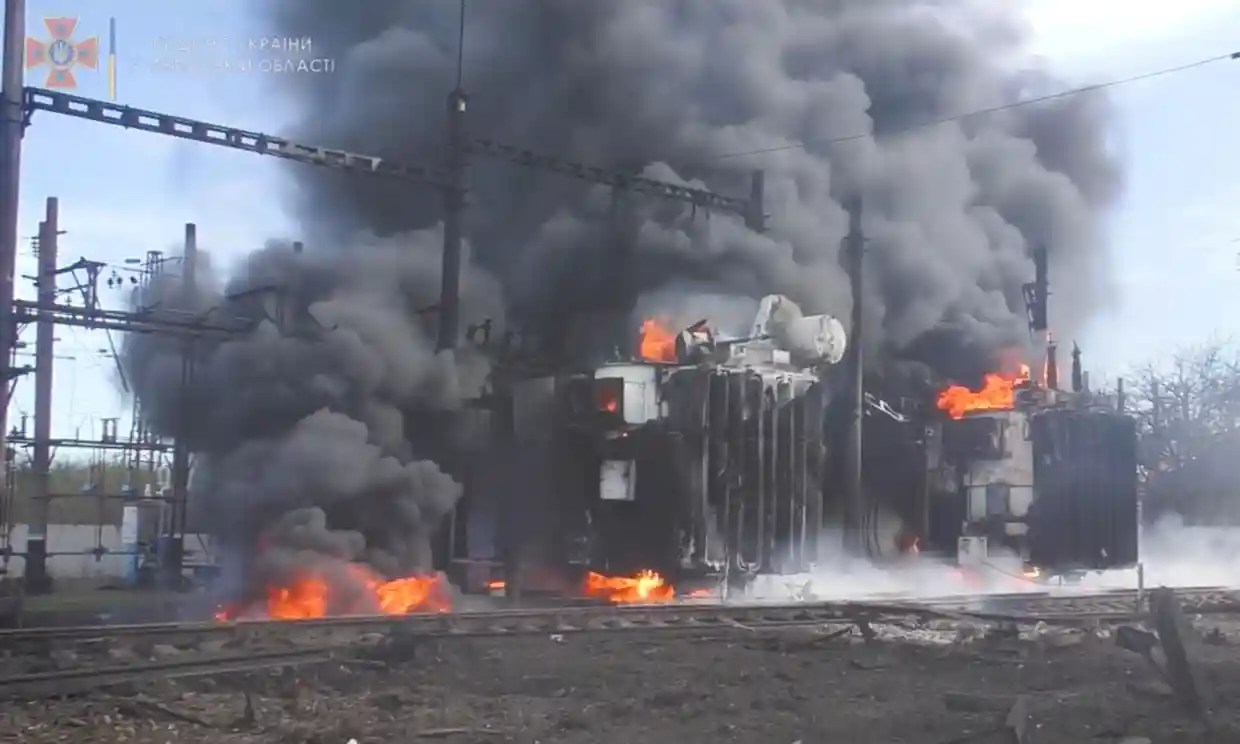
A substation in Ukraine shelled by Russia. Photo credit: State Emergency Service Of Ukraine.

But there’s also an #EnergyFront within Ukraine, which I’ve been covering for @IEEESpectrum. One flashpoint has been Ukraine’s power grid which was, until the war began, tied to the giant UPS/IPS synchronous AC power zone controlled from Moscow. My report, How Russia Sent Ukraine Racing Into the “Energy Eurozone”, chronicles bold moves in the war’s first weeks that isolated Ukraine’s power system and then plugged it into Europe’s.

Ukraine’s power grid operator made the first move hours before Russian tanks and missiles crossed borders in February. The transmission operators’ European counterparts made the next “heroic” move a few weeks later, stabilizing Ukraine’s power supply even as its attackers destroyed lines, substations and power generators.

Another flashpoint is the battle for control of Ukraine’s nuclear power sector, including the four operating plants that supply over half of the country’s electricity. When Russia invaded, Ukraine remained heavily dependent on Russian suppliers of nuclear fuel, waste handling, and parts. Patriots feared sabotage of nuclear power plants and and their defences, either to facilitate the plants’ seizure by Russian forces or to cause a nuclear incident.

Their fears prove justified when the Russian army attacked and captured Ukraine’s Zaporizhzhya nuclear power plant—Europe’s largest.

My report, Ukraine Scrubbing Nuclear Agencies of Russian Influence, revealed an internal struggle for control of Ukrainian national nuclear power generating company Energoatom whereby several top executives fled the country and a vice president was detained by state security police.

China’s Nuclear Power Death Watch

BNEF 2018 China LCOE chart
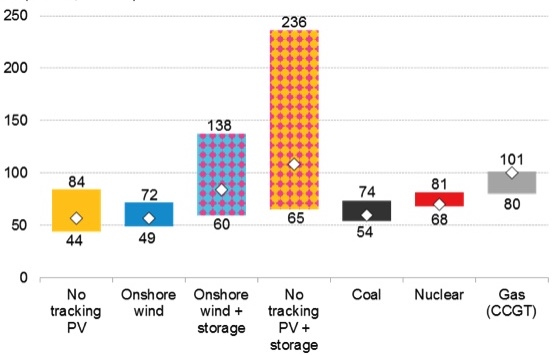
In China, Nuclear’s Up & Renewables are Down. Graph of levelized cost of energy from new power plants in China in US$ per MWh via Bloomberg NEF 2018.

How many times have you read an article and discovered that the label on the package didn’t match the meat? Here’s an open secret from the news biz: that story’s writer may have also cringed. Writers often don’t see the headline until it runs, and we’re not always ecstatic about the angles editors choose to hook eyeballs.

Take this headline that topped a story today on China’s nuclear power sector in Technology Review magazine:

China’s losing its taste for nuclear power. That’s bad news.

Personally I’d call China’s anti-nuclear turn “sad” rather than “bad.” But what do I know? I only wrote the story!

Whatever the headline, my article shows that the same woes killing Western nukes now confront the technology in China. As the editors’ spot-on subhed puts it: ‘Once nuclear’s strongest booster, China is growing wary about its cost and safety’.

The coming downturn is hard to recognize amid a flurry of new reactor startups, and nuclear industry players worldwide have been slow to acknowledge it. It means that China’s planners may no longer count on reactor power to wean the world’s leading greenhouse gas emitter off of coal and oil. And if one big option for decarbonizing energy systems may be biting the dust, that puts more pressure on the remaining options (eg. solar panels and wind turbines) and on innovators conjuring up new options.

As for whether dropping the nuclear option is bad or sad? I’d prefer to let the readers decide. Have your own look online, or pick up Technology Review’s January 2019 Special Issue on China.