
I’ve delivered several dispatches on carbon capture and storage (CCS) recently, including a pictorial ‘how-it-works’ feature on the world’s first commercial CCS power for Technology Review. Two aspects of CCS technology and its potential applications bear further elaboration than was possible in that short text. Most critical is a longer-term view on how capturing carbon dioxide pollution from power plants (and other industrial CO2 sources) can serve to reduce atmospheric carbon dioxide concentrations. The Intergovernmental Panel on Climate Change is looking for CCS to do much more than just zero out emission from fossil fuel-fired power plants. Continue reading “Understanding the IPCC’s Devotion to Carbon Capture”
Author: pfairley
Peter Fairley has been reporting and commenting on energy and the environment for 25 years.
Turning E-Waste into LIght

Bangalore-based IBM Research India has a bright idea for keeping discarded lithium laptop batteries out of landfills: repurposing their cells as energy supplies for the powerless. The idea, presented at this weekend’s fifth annual Symposium on Computing for Development (DEV 2014) in San Jose, has passed a small proof-of-principle test run with Bangalore’s working poor. Continue reading “Turning E-Waste into LIght”
Can China Turn Carbon Capture into a Water Feature?
In an intriguing footnote to their historic climate deal this month, Chinese President Xi Jinping and U.S. President Barack Obama called for demonstration of a hitherto obscure tweak to carbon capture and storage (CCS) technology — one that could simultaneously store more carbon and reduce water consumption. Such an upgrade to CCS holds obvious attraction for China, which is the world’s top carbon polluter and also faces severe water deficits, especially in the coal-rich north and west. Obama and Xi pledged joint funding for a project that would inject 1 million tons of captured carbon dioxide deep underground, annually, and simultaneously yield approximately 1.4 million cubic meters of water. Continue reading “Can China Turn Carbon Capture into a Water Feature?”
Obama and Xi Breathe New Qi into Global Climate Talks
Context is everything in understanding the U.S.-China climate deal struck in Beijing by U.S. President Barack Obama and Chinese President Xi Jinping last week. The deal’s ambitions may fall short of what climate scientists called for in the latest entreaty from the Intergovernmental Panel on Climate Change, but its realpolitik is important.
Obama and Xi’s accord sets a new target for reductions in U.S. greenhouse gas emissions: 26-28 percent below 2005 levels by 2025. And for the first time sets a deadline for China’s rising GHGs to peak: 2030. This is potentially strong medicine for cooperation, when seen in the context of recent disappointments for global climate policy. Continue reading “Obama and Xi Breathe New Qi into Global Climate Talks”
EU Climate Summit Commits to 2030 Carbon Cuts
European leaders wrapped up a two-day climate summit in Brussels last week with a deal to cut the European Union’s total greenhouse gas emissions to 40 percent below 1990 levels. This would continue a downward trend – the EU is already on track to meet a 20 percent reduction from 1990 levels by 2020 – but the agreement is weak relative to Europe’s prior ambitions to confront climate change.
Investors in green tech pushed aggressively for the deal, seeking a longterm signal that the European market will continue to reward advances in energy efficiency and low-carbon energy production. The deal is also a shot in the arm for the Paris global climate talks, scheduled for December 2015, which will seek to achieve the decisive binding global targets for greenhouse gas reductions that failed to emerge from the 2009 Cophenhagen climate talks.
What the deal lacks is specificity and ambition regarding the mechanisms by which European countries are to achieve the carbon reduction. “Key aspects of the deal that will form a bargaining position for global climate talks in Paris next year were left vague or voluntary,” reported The Guardian. Continue reading “EU Climate Summit Commits to 2030 Carbon Cuts”
Internet-Exposed Energy Control Systems Abound
Two-and-a-half years ago researchers at Chicago-based cyber security firm Infracritical set out to measure how many industrial control systems are openly exposed to the Internet. Their disquieting findings are up for discussion today at the 2014 ICS Cyber Security Conference in Atlanta. Infracritical remotely identified over 2.2 million unique IP addresses linked to industrial control systems at energy-related sites including electrical substations, wind farms, and water purification plants. And they were still logging an average of 2,000-3,000 new addresses per day when they closed the count in January 2014. “We never reached bottom,” says Infracritical cofounder Bob Radvanovsky, an expert in securing supervisory control and data acquisition (SCADA) systems. Continue reading “Internet-Exposed Energy Control Systems Abound”
Nuclear Shutdowns Put Belgians and Britons on Blackout Alert
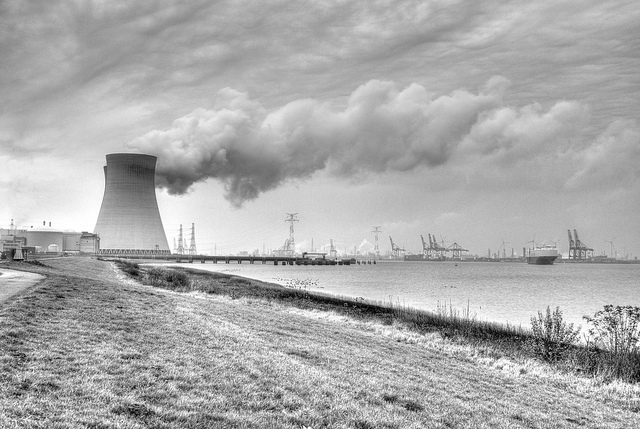
A bad year for nuclear power producers has Belgians and Britons shivering more vigorously as summer heat fades into fall. Multiple reactor shutdowns in both countries have heightened concern about the security of power supplies when demand spikes this winter.
In Belgium, rolling blackouts are already part of this winter’s forecast because three of the country’s largest reactors — reactors that normally provide one-quarter of Belgian electricity — are shut down. Continue reading “Nuclear Shutdowns Put Belgians and Britons on Blackout Alert”
 Peter Fairley