Chu Entertains FutureGen Alliance

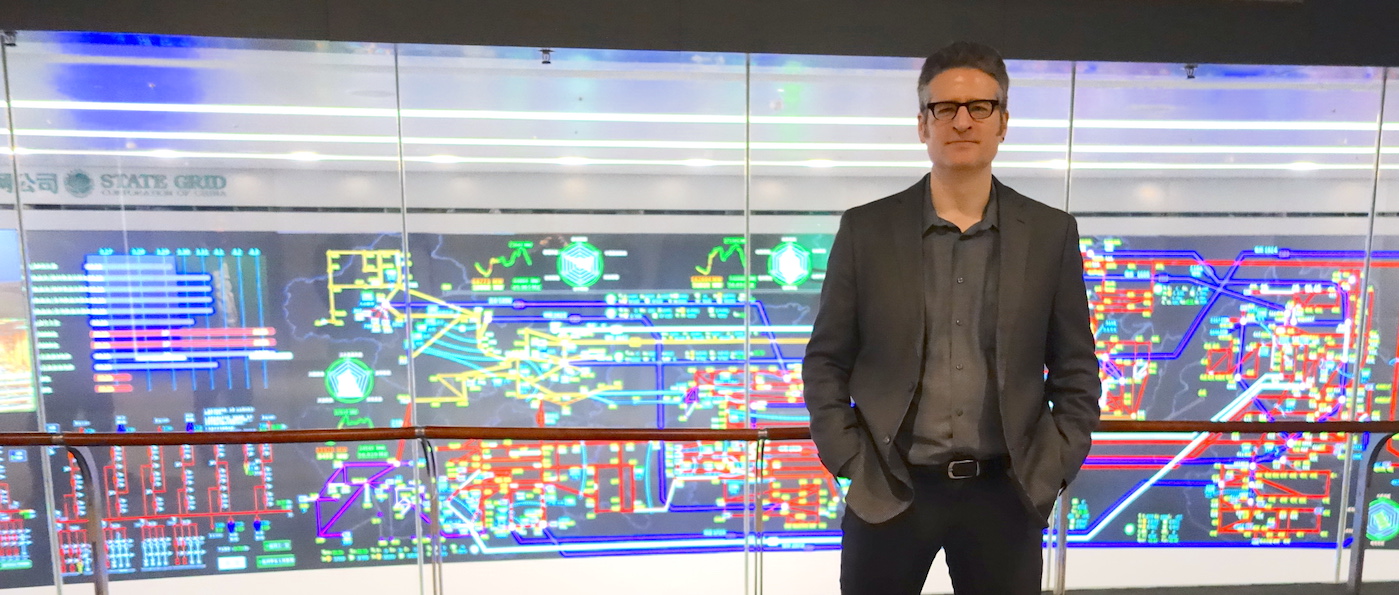
Potential Energy has learned that Energy Secretary Steven Chu met with representatives of the FutureGen Alliance today, reinforcing positive signals from Chu two weeks ago that the troubled project could be revived. The public-private partnership to prove the integration of carbon capture and storage and coal gasification technology was killed by the Bush Administration in January 2008 using what Congressional investigators have shown to be specious accounting.

In an email to TechReview today, Department of Energy press secretary Stephanie Mueller confirms that Chu and the Alliance had a “good discussion” and that the Secretary Chu “believes that the FutureGen proposal has real merit”:

Secretary Chu believes that investment in carbon capture and storage research and development is critical to meeting our energy and climate change challenges. Unfortunately, the prior Administration simply walked away from FutureGen after years of work … In the coming weeks, the Department will be working with the Alliance and members of Congress to strengthen the proposal and try to reach agreement on a path forward.


Continue reading “Chu Entertains FutureGen Alliance”

Mazda’s Hybrid-free Strategy of Necessity

mazda-tribute-credit-mazda-usa
Mazda's Tribute SUV uses Ford technology

How to make sense out of the bewildering differences in strategy by automakers today? In the case of Mazda, which rejects hybrid vehicles as a fad, the strategy may be one of necessity.

Mazda R&D chief Seita Kanai confirmed last week that Mazda still has no plans to commercialize its own hybrid technology, according to a report last week in Automobile Magazine. The Japanese automaker markets a hybrid version of its Tribute, a small SUV, which Automobile  Magazine writes off as a Ford engineered system closely resembling the technology in Ford’s Hybrid Escape. Kanai said Mazda will achieve mandated fuel economy savings by improving engines and transmissions, and by redesigning vehicles to reduce their weight.

But Kanai also admitted at the same event for reporters in Japan last week that Mazda couldn’t afford to field a hybrid. And he acknowledged that the resulting technology gap represented a worrisome problem for the company with buyers enamored of hybrids. Here’s how Kanai put it, according to Automotive News:

“We’re in real trouble,” Kanai said of the rapidly falling hybrid prices. “It’s a threat. We don’t have the resources to get involved in that kind of competition.”

Continue reading “Mazda’s Hybrid-free Strategy of Necessity”

Mideast Morass Dims Mediterranean Solar Hopes

abbas-sarkozy-and-olmert-at-paris-summit-credit-l-blevennec-elysee-photo-servicePlanning for massive development of North Africa’s solar energy potential became “collateral damage” of the war in Gaza this winter and won’t restart for at least another month, according to French newspaper Le Monde (article en Français).
The 43 countries of the Union for the Mediterranean, which includes Muslim nations such as Egypt and Algeria as well as Israel, adopted solar energy as its keynote project last summer. And last fall the European Commission endorsed the need for a high voltage DC supergrid to share the resulting clean energy with Europe. Planning froze in late December, however, after Israeli tanks rolled into Gaza in response to rocket fire.

Participation of Muslim countries in a development partnership with Israel — a coup for French President Nicolas Sarkozy when he launched the Union for the Mediterranean last summer — became politically untenable as Gaza crumbled.

Continue reading “Mideast Morass Dims Mediterranean Solar Hopes”

Toyota’s Underwhelming Solar Prius

2010-prius-credit-toyotaThe solar roof that Toyota is offering as an option on its next-gen Prius hybrid sedean is even less efficaceous than expected, according to specialty publication EVWorld. The solar panels, reports EVWorld, will add not a nanowatt of charge to drive the Prius.
Technology Review looked at the potential impact of a solar roof on the Prius last summer when rumors of Toyota’s plans first emerged. The clear conclusion of the experts: Keep solar panels on rooftops, where they can be tilted towards the sun for maximum efficiency and multiplied to provide the kilowatts of power it takes to drive a car. A solar rooftop would be just a “marketing gimmick” said Andrew Frank, a plug-in hybrid pioneer at the University of California, Davis, and chief technology officer for UC-Davis hybrid-vehicle spinoff Efficient Drivetrains.

Toyota, it turns out, won’t even bother plugging its solar rooftop panel into the 2010 Prius’ nickel-metal hydride battery.

Continue reading “Toyota’s Underwhelming Solar Prius”

Toyota’s Secret: The Clean Air Act of 1970

masatami-takimoto-credit-toyotaHow many automotive engineering leaders from Detroit or Stuttgart would identify the U.S. Clean Air Act Amendments of 1970 as the inspiration of their engineering career? Yet that’s exactly what Masatami Takimoto did when I spoke with the Toyota executive vice president responsible for R&D and powertrain engineering earlier this month at the Geneva Motor Show.
Since Takimoto retires in June, I asked him to identify the most exciting chapter of his 39-year career with Toyota. His reply brought a smile: “You’re familiar with the Muskie law?,” asked Takimoto. I’d been asked the same question five years earlier, in Tokyo, while interviewing Takehisa Yaegashi (revered within Toyota as ‘the father of the hybrid’) for a cover story on hybrid vehicles for MIT’s Technology Review.

Thanks to Yaegashi I knew that it was Senator Ed Muskie of Maine who drove through the 1970 amendments to the U.S. air pollution law. And I knew that Muskie’s law, which required the federal government to set tailpipe emissions standards,  had inspired a lot more at Toyota than pollution-eating catalytic converters: Toyota’s engineers also began experimenting with new propulsion concepts such as the battery-powered electrical vehicle that produce inherently less pollution.

Continue reading “Toyota’s Secret: The Clean Air Act of 1970”

5 Megawatts-a-Pop and Prepped for High Seas Action

Here’s a shot of the prototype of REpower System’s 5-megawatt (MW) offshore wind turbine, which has been generating power since 2004 in Brunsbüttel near the mouth of the Elbe River on Germany’s North Sea. I stopped to see the original REpower 5M last week while reporting an upcoming feature for IEEE Spectrum and clocked the turbine’s 126-meter diameter rotor swinging at 11 rpm, nearly full speed. The 5M marks an awesome juxtaposition, with the 120-meter high turbine (hub height) towering over Brunsbüttel’s spongy marshland, chemical complexes and a nuclear power plant.

The 5M is creating buzz these days after RWE Innogy, the renewable energy subsidiary of German utility RWE, signed a deal to install 250 of them over the next five years. At a total value of €2 billion it is the biggest deal yet for offshore wind. It also cements plans for RWE’s Nordsee 1 wind farm, which could be Germany’s first worldscale offshore farm if the first 30 5Ms are installed in 2011 as planned. Nordsee 1, about 50 kilometers offshore, could ultimately grow to 1000 MW — the same scale as large coal and nuclear-fueled thermal power plants.

REpower's-5M-prototype-in-Brunsbuttel

add to del.icio.us : Add to Blinkslist : add to furl : Digg it : add to ma.gnolia : Stumble It! : add to simpy : seed the vine : : : TailRank

This post was created for Energywise, IEEE Spectrum’s blog on green power, cars and climate

Pragmatic Electric Strategies the Rage in Geneva

Pragmatism continued Tuesday on day two of the Geneva Motor Show, as automakers more displayed creative means of developing electric vehicles (EVs) in spite of an industry-wide cash crunch. Monday it was PSA Peugeot Citroën unveiling a nascent partnership with Mitsubishi to craft a Peugeot version of the i-MiEV, the battery-powered micro-car that Mitsubishi is preparing to launch in Japan this summer. Yesterday it was Ford Motor and India’s Tata Motors showing EVs they can push to market quick by literally swapping the engine and fuel tank out of petroleum-powered vehicles and popping in batteries and electric motors.

Continue reading “Pragmatic Electric Strategies the Rage in Geneva”