Tiny EV Commuter Cars Heading Mainstream

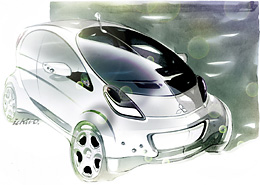
Prototype i-MiEV shown at Geneve Motor Show sketch Source MitsubishiIf batteries aren’t yet up to the task of electrifying the family beater, why not shrink the beater? French automaker PSA Peugeot Citroën kicked off the Geneva Motor Show this morning announcing it was joining an accelerating embrace of this logic. The Paris-based manufacturer revealed this morning that it is pursuing a deal with Mitsubishi Motor to develop a compact Peugeot for sale in Europe next year based on Mitsubishi’s i-MiEV, the 100-mile-range commuter car Mitsubishi plans to roll out in Japan this summer.

Plenty more of these little four-wheelers are in the automotive pipeline. Daimler will sell a battery version of its popular Smart Fortwo next year, and Volkswagen is engineering a commuter EV called the Audi Up! with a top speed of 130 kilometers/hour and roughly 100 kms of range. Renault is engineering a pair of battery-powered , to be produced starting in 2011.
Continue reading “Tiny EV Commuter Cars Heading Mainstream”

Deja Vu as France Plans National EV Charging Network – Again

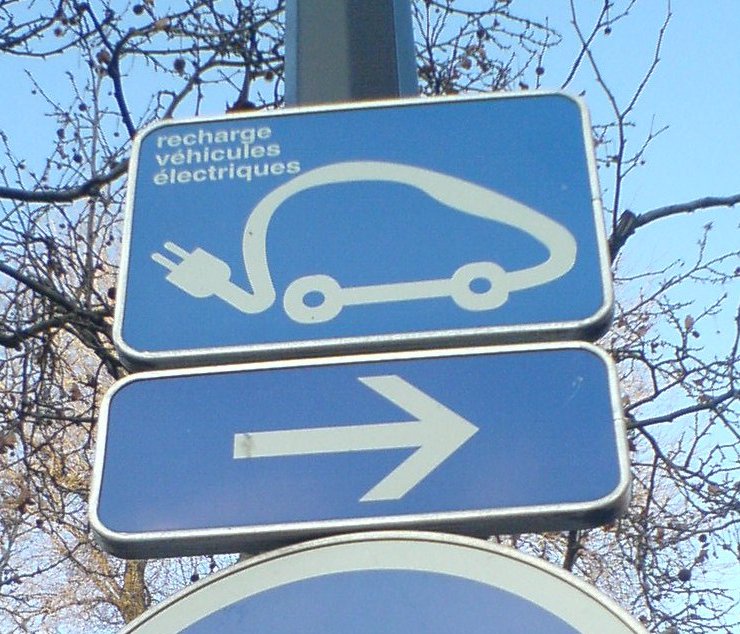
paris-ev-charge-station-sign-credit-peter-fairleyFrance’s government launched a working group this week to coordinate installation of a standardized national charging network for plug-in hybrid electric vehicles and battery-powered EVs. Many may be experience deja vu, so to speak, because this would apparently be the second such charging network the country has installed.

President Nicolas Sarkozy has set a goal of seeing 100,000-plus electric-mode vehicles on the road in 2012 and has offered French automakers bailout funding partially tied to development of EVs as summarized by Earth Times. But as French state minister for industry Luc Chatel told French business magazine Usine Nouvelle [French], “Their battery serves no point without the infrastructure to go with it.” Hence the working group struck last week, representing automakers, energy distributors such as state-owned nuclear utility EDF, municipalities and other players, which is to deliver a plan in June.

Continue reading “Deja Vu as France Plans National EV Charging Network – Again”

Lutz Departure Another Modest Sign of Modernization

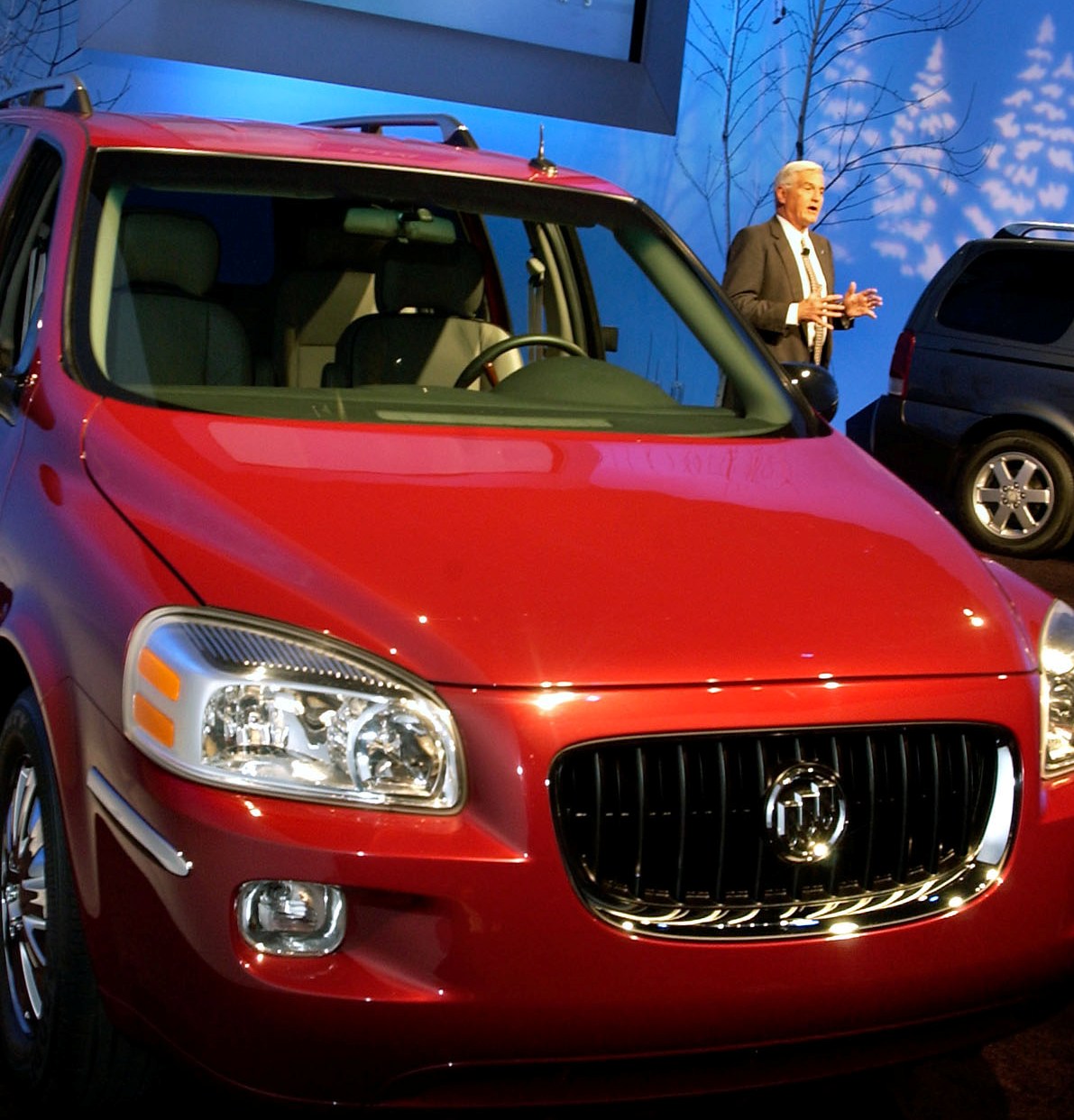
GM's-Bob-Lutz-with-the-7-seater-Buick-TerrazaMany in the green car movement are cheering the announcement that Bob Lutz, GM’s vice chairman, will retire at the end of 2009. Environmental Defense Fund automotive guru John DeCicco celebrates the news on HybridCars.com today, calling Lutz part of a “cohort of corporate leaders who rose to the top eerily disconnected from the parallel rise of environmental values in American culture.” But a speech last week by Hyundai North America’s CEO — billed as a wake-up call by the Detroit News — reinforces the impression that changing the industry’s environmental perspective will require a much broader shift in personnel.

Lutz earned the ire of the environmentally-inclined for two reasons. As product development chief he contributed to GM’s reliance on ever larger and less fuel-efficient SUVs trucks. And he made headlines with his contempt for the theory of climate change. Dallas-based D Magazine quoted a private conversation with journalists just one year ago in which Lutz called global warming a, “total crock of ****.”

Lutz added, according to D, that, “my opinion doesn’t matter.” But how could that be, with GM gearing up to woo environmentally-minded consumers with advanced vehicles such as the plug-in hybrid Chevy Volt? Such comments reverberate louder still within the industry, signaling to junior engineers that an environment-be-damned ethic endures in Detroit’s board rooms.

Continue reading “Lutz Departure Another Modest Sign of Modernization”

Climate Denial Crock of the Week

Opponents of the theory of anthropogenic climate change are hard at work via Internet forums making a last stand against the present societal momentum to address our impact on global climate and, specifically, to reduce the carbon footprint of our energy systems. Midland, MI-based multimedia producer, cartoonist, and alternative energy enthusiast Peter Sinclair is returning fire, nugget-for-nugget, with his new YouTube-distributed video series, Climate Denial Crock of the Week.

Each episode of Crock answers one of the climate denial “hobby-horse arguments” with five minutes of science-based, semi-professionally produced video. The Vikings star in this week’s episode, Medieval Warming?, which explodes the notion that Earth was warmer in the Middle Ages:

Continue reading “Climate Denial Crock of the Week”

Sarkozy Keeping Nuclear Atop France’s Energy Pile

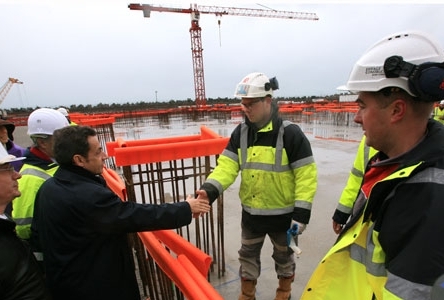
french-president-nicolas-sarkozy-at-flamanvilleFrench president Nicolas Sarkozy was in Normandy last week at the construction site of France’s first new nuclear reactor in two decades, highlighting plans to commence a second new reactor and,  according to Paris-based daily Le Monde (Google translation here), calling nuclear energy a key part of the country’s economic recovery plan. The move is evidence of further diversity in how countries are seeking to shape their energy futures via recovery plans, as President Barack Obama negotiates with Congress to keep renewable energy atop his plan and Canada’s latest budget pursues a heavy emphasis on carbon capture and storage.

A who’s-who list of French corporate heavyweights angling for a piece of Sarkozy’s action leaves no doubt that government dollars impact industrial strategy. French state-owned power giant Electricité de France (EDF) is building the reactor at Flammanville that Sarkozy visited last week, using the third-generation EPR reactor designed by French nuclear technology firm Areva. But Sarkozy says a second EPR to be built further up the Normandy coast at Penly will unite EDF and France’s number two player in electricity, GDF Suez; Reuters reported today that French oil and gas firm Total also wants a “double-digit” stake in the project.

Continue reading “Sarkozy Keeping Nuclear Atop France’s Energy Pile”

GPS-enabled Software Boosts Hybrid Vehicle Efficiency

Mechatronics meets the plug-in hybrid this month at IEEE Spectrum Online:
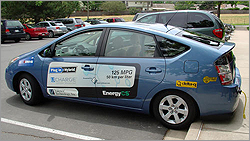
Drivers use all manner of data these days to travel efficiently, and vehicles should follow their lead, according to University of Wisconsin-Milwaukee mechatronics expert Yaoyu Li. He predicts that vehicles privy to data in the latest GPS-enabled electronic navigators — which download real-time traffic data to update route suggestions on the fly — will provide substantial fuel savings in the decades to come.

That’s because:

An uninformed plug-in is almost certain to discharge its battery power either too quickly or too slowly. If it simply uses the battery until it is discharged, it will lack an electric option for later stop-and-go situations where running the internal combustion engine is inefficient. Alternatively, if the plug-in acts like a conventional hybrid and lives in the moment, blending its electric and gasoline energy based on the driving conditions that second, it is likely to arrive at its destination with leftover battery charge. Either way, the plug-in will have consumed more gasoline than necessary.

Continue reading “GPS-enabled Software Boosts Hybrid Vehicle Efficiency”

FERC Boss Dubs the Plug-in a ‘Cashback’ Hybrid

nrel-prius-plug-in-hybrid-demo-vehicleThe head of the Federal Energy Regulatory Commission (FERC) predicts that plug-in hybrid vehicles will provide immense benefit to power grid operators — enough for utilities to provide kickbacks to their customers, paying down the extra cost of a plug-in in as little as three years. Jon Wellinghoff, FERC’s acting chairman, made that comment at a Las Vegas trade show last week according to coverage by the Las Vegas Review-Journal (which I picked up on thanks to the keen newswatching eyes of specialty publication EV World).

Wellinghoff’s comments refer to plug-in hybrids equipped with the smarts to communicate with the power grid, which he termed the “Cashback Hybrid” according to the Review-Journal article:

When the Cashback is plugged in, motorists can allow the utility to vary the speed at which the battery recharges so that the utility can more closely match supply and demand for power on the electric grid…In return, the car owner could obtain cash back or a credit from the utility that makes the electricity free, he said.

Continue reading “FERC Boss Dubs the Plug-in a ‘Cashback’ Hybrid”