
It’s been a rough birthing process for NASA’s Orbiting Carbon Observatory (OCO) satellite program, which promises global tracking of carbon dioxide entering and leaving the atmosphere at ground level. Five years ago the first OCO fell into the Antarctic Ocean and sank, trapped inside the nose cone of a Taurus XL launch vehicle that failed to separate during launch. The angst deepened yesterday when NASA’s Jet Propulsion Laboratory (JPL) scrubbed a first attempt to launch a twin of the lost $280-million satellite, OCO-2, after sensors spotted trouble with the launch pad’s water-flood vibration-damping system less than a minute before ignition.
Continue reading “NASA Launches its First Carbon-Tracking Satellite”

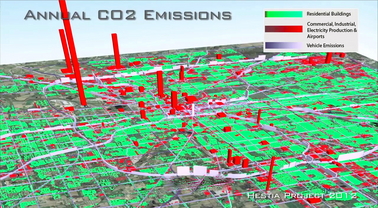 Natural gas has no odor, but you can smell a leak thanks to the addition of an odorific mercaptam compound. Do carbon dioxide and other similarly odorless greenhouse gases (GHGs) require some analogous device to make their presence known and thus prompt evasive action? Yes, and for these ubiquitous gases, it will be a visual cue indicating the source and quantity of GHGs
 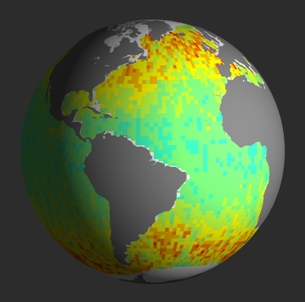 In January we reported that winds across the Northern continents were
  Peter Fairley