Stealth Coal: Like it or lump it

Oil and gas major ConocoPhilips and coal giant Peabody Energy applied for a permit yesterday to build a plant in Muhlenberg County, Kentucky to turn coal into synthetic natural gas. What interests me are not so much the details of their project but the fact that it’s just one more example of what a longtime source of mine, Gasification Technologies Council CEO Jim Childress, calls stealth coal.

Childress uttered this colorful term while I was interviewing him on Chinese versus U.S. developments in coal gasification for power generation using integrated gasification combined cycle or IGCC technology. (‘Combined cycle’ because it uses a gas turbine to generate power from expanding combustion gases plus a steam turbine that generates power from the heat released.) My conclusion, reported today for MIT TechReview in China Closes the Clean-Coal Gap, is that climate concerns have paralyzed IGCC projects in the U.S. whereas air quality concerns are helping push Chinese projects forward.

Stealth coal figures in Childress’ argument that neglect of IGCC technology in the U.S. does not mean we’re through with generating electricity from coal. To the contrary. As utilities turn to natural gas for more and more of their baseload power generation, they will drive demand for gas beyond what drilling can deliver. Childress predicts that coal-to-gas plants such as the ConocoPhillips-Peabody Energy project will keep the gas-fired plants running:

Right now coal plants in the planning stages are stopped dead in their tracks and the default fuel is natural gas. So we’re looking at a tightening of the natural gas market and that’s good news for coal gasification. It may not go [directly] to power but it will substitute for natural gas.

To my ear the word stealth makes coal-derived synthetic gas sound kind of sinister but its climate impact could be negligible according to a University of Kentucky study cited yesterday by Green Car Congress. Visual thinkers may prefer this report by Fox News on Dakota Gasification, the synthetic gas operation that pioneered carbon capture and storage in the U.S. (I’d send you to CNN, but they just axed their entire science, environment and technology team.)

Of course, one should also consider the environmental costs of coal mining. We’ve written recently about upstream impacts of mountaintop-removal mining in Appalachia.

Yesterday Kentucky’s governor Steve Beshear focused instead on coal development’s economic impact — about 1,000 construction jobs and 200 full time jobs for a $1 billion plant according to a Louisville Courier-Journal report. Beshear translates that into political terms in Peabody Energy’s press release on their proposed gas plant: “Projects like this … enjoy rock solid support: More than 80 percent of Kentucky residents support coal gasification.”

I’m not sure about Governor Beshear’s poll data, but one thing’s for sure: There’s nothing stealthy about his feelings for coal.

add to del.icio.us : Add to Blinkslist : add to furl : Digg it : add to ma.gnolia : Stumble It! : add to simpy : seed the vine : : : TailRank

This post was created for Energywise, IEEE Spectrum’s blog on green power, cars and climate

China’s Green Plug-In Machine

BYD's F3DM plug-in hybridWhile major automakers such as GM and Toyota prepare to put batteries front and center in their first plug-in hybrid vehicles, a Chinese battery maker has beaten them to the road. As of yesterday, Shenzen-based BYD Auto — a subsidiary of leading Chinese rechargeable battery producer BYD Group — is selling the world’s first mass-produced plug-in hybrid car, according to Bloomberg. This battery-loaded version of BYD’s F3 sedan is said to travel up to 100 kilometers (62 miles) on stored grid power alone.

Many observers deride the car’s styling as plain and derivative. BBC global business correspondent Peter Day, who drove BYD’s plug-in this weekend, says they’re missing the point: “Critics say this is a copycat car, but that is how the Japanese auto industry started.”

Green Car Congress reports that the plug-in is dubbed the F3DM after its ‘dual-mode’ hybrid system. Misleadingly dubbed, that is, because the vehicle actually operates in three distinct modes:

  • a battery-powered EV mode
  • a series-hybrid mode whereby the gas engine recharges the batteries while the electric motors drive the wheels, and
  • a parallel-hybrid mode whereby both motors and engine drive the wheels.

This marks a contrast with GM’s Chevy Volt, due out two years from now, which dispatches with the parallel hybrid option.

BYD Auto’s parent company is making lithium batteries for the car using employ lithium iron phophate cathodes — a safer design than the lithium cobalt oxide cathodes used in cell phone batteries. Boston-area battery developer A123 uses the same chemistry; A123 is believed to have lost out in the competition to supply the first-generation Chevy Volt but is in the running for many other hybrids and electric vehicles in development.

BYD says it will bring the F3DM to the U.S. market in 2011, but must first pass U.S. crash tests and set up a dealer network. It has a well-connected U.S. investor to help navigate the U.S. hurdles: billionaire investor Warren Buffet, whose Berkshire Hathaway investment group bought a one-tenth stake in BYD for $230 million in September.

China beats the U.S. and Europe to market with what was supposed to be GM’s signature development. The headline reinforces a growing sense that China is suddenly a green technology developer to be reckoned with. A top wind power market. Major photovoltaics production. It looks like the Cleantech Group may have got it right earlier this month when, summing up its forum in Shanghai, it concluded that China could soon be, “the world’s leading laboratory, market for and exporter of clean technologies.”

add to del.icio.us : Add to Blinkslist : add to furl : Digg it : add to ma.gnolia : Stumble It! : add to simpy : seed the vine : : : TailRank

This post was created for the Technology Review guest blog: Insights, opinions and analysis of the latest in emerging technologies

Paris Actualizing the EV CarShare

Paris City HallThe concept of selling mobility-on-demand rather than cars may be gaining some traction. Remember the stackable urban rental cars proposed by GM-funded researchers at MIT last fall? The issues of Forbes magazine to appear on magazine stands next week touts the MIT City Car concept as the embodiment of a new car-sharing direction for troubled automakers. City Car co-designer Bill Mitchell of the MIT Media Lab’s Smart Cities group adds to the drumbeat in an editorial for architecture website BD. “People don’t want cars, they want personal mobility,” writes Mitchell.

Mitchell argues that, rather than bailing out car firms, governments should be radically rethinking urban transport around ultra-lightweight battery electric vehicles (EVs). To provide mobility most efficiently, says Mitchell, we should…

…organise urban electric cars in mobility-on-demand systems like the Vélib bicycle system in Paris. Racks of public-use cars would be provided at closely spaced sites across the service area. If you want to go somewhere, you walk to a nearby rack, swipe a card, pick up a car, drive it to a rack near your destination, and drop it off.

In fact, Paris is already planning the auto equivalent of Vélib, which offers over 20,000 bikes at more than 1,400 sites in the city and is now expanding to the suburbs. Paris mayor Bertrand Delanoë announced in June that the city will place 4,000 electric cars at 700 Autolib pick-up points around Paris and the suburbs starting in 2010. French trains giant SNCF is reportedly vying to operate the Autolib points out of its train stations, which are distributed across and around the French capital, according to business daily Les Echos [story en Français].

The city may have a solution to a potential game-killing problem: the inevitably uneven distribution of vehicles as cars pile up at popular destinations. Parisian’s are well aware of this problem. Mid-morning, for example, as Vélib stations at the periphery of the city empty out and those downtown jam up, it’s not unusual to see trucks redistributing the bikes to counter the tide. That’s easy enough with bikes, but harder to envision with even small EVs.

The city’s solution, according to a leaked document reported by autonews website Caradisiac [en Français], is to have users declare their destination upon checking out a car. In response, the system will determine the closest Autolib point with a free spot for drop-off and reserve that space.

No news on another potential problem for Paris’ Autolib: the name.  Lyon, which beat Paris to the bikeshare program with its own vélo’v, already sports a conventional car-share program called Autolib.

add to del.icio.us : Add to Blinkslist : add to furl : Digg it : add to ma.gnolia : Stumble It! : add to simpy : seed the vine : : : TailRank

This post was created for the Technology Review Editors Blog: Insights, opinions and analysis of the latest in emerging technologies

Black Liquor as Biofuel’s White Knight

Biofuels have really taken a beating this year in the court of public opinion, as concerns mounted over the impact of biofuel production on everything from biodiversity to food prices to water supplies. IEEE Spectrum reader Luc Rolland of Preston, England captured the sense of disillusionment in his letter to the editors this summer: “Valuing biofuel is very controversial—it impoverishes developing countries, and the true energy cost of biofuel is not worth it.”

But there are low-hanging fruit that respond to all of Rolland’s concerns. Today, at MIT’s TechReview.com, I take a look at the biofuel that appears to hang the lowest: dimethyl ether produced via gasification of black liquor. That’s quite a mouthful, so let’s define our terms:

  • black liquor: the blend of caustic inorganic chemicals and dissolved wood generated in pulp and paper mills
  • gasification: subjected to high heat and pressure, organic matter breaks down into a stream of principally hydrogen and carbon monoxide called syngas that can be catalytically reassembled into chemicals and fuels
  • dimethyl ether or DME: a clean-burning substitute for diesel fuel and liquid petroleum gas (LPG) that’s easily synthesized from syngas

Note that this is very similar in principle to the synthesis of methanol via coal gasification. In fact methanol is an intermediate in the synthesis of DME. Production of both methanol and DME from coal is exploding in China, and provides substantial local air quality benefits.

Gasifying black liquor to generate DME, or bio-DME for short, adds ecological and climate benefits, which is why the European Renew study released in July called it one of “the most advanced concepts for fuel production.” Net conversion efficiency on a lifecycle basis of 69%, the highest for any biofuel, means that for every hectare of agricultural production this fuel delivers the biggest energy bang. Greenhouse gas emissions, meanwhile, are on the order of 1/20th that of conventional diesel.

Bio-DME alone will not render personal transportation sustainable. Gasification of all of the black liquor generated in US mills would supply enough DME to displace just 3% of total fuel demand in the U.S., according to Jonas Rudberg, CEO of Swedish biomass gasification developer Chemrec. (For Canada, which has a higher pulp to car ratio, bio-DME could satisfy 7%).

But bio-DME’s potential looks much larger if one views it as a forerunner to broader application of gasification to solid biomass feedstocks such as switchgrass. Solid biomass tends to gum up gasification plants, as Germany’s Choren Industries may be learning as it seeks to start up the 18 million liter/year biomass-to-diesel plant it finished building in April. Mass application of black liquor gasification would invariably accelerate the diffusion of the technology.

If it does,  biomass gasification could deliver more than a fifth of Europe’s transport fuel by 2030 according to Volvo Group, which is coordinating a European bio-DME R&D consortium. Of course, how low all that fruit will hang remains to be seen.

For more on bio-DME, see the TechReview article: “Taking Pulp to the Pump”.

add to del.icio.us : Add to Blinkslist : add to furl : Digg it : add to ma.gnolia : Stumble It! : add to simpy : seed the vine : : : TailRank

This post was created for Energywise, IEEE Spectrum’s blog on green power, cars and climate

Biodiversity Hangs in the Energy Balance

Jo Mulongoy CBDThe newly elected president of the Maldives wants to build a contingency fund to buy land elsewhere so that the island country can literally move to higher ground to escape rising sea levels. But what of the rest of the island’s biodiversity? According to Jo Mulongoy, chief scientist for the Convention on Biological Diversity’s secretariat in Montreal, the island ecosystems will never be reconstructed if they’re swamped – powerful motivation for capping greenhouse gas emissions and blunting climate change.

Overall, however, Mulongoy is more hopeful. Partly because governments are moving to act on biodiversity (says the scientific diplomat). But also because the power of information technology is informing smarter decision making and thus making it easier to do the right thing and preserve biodiversity (at least on higher ground).

The Congolese microbiologist needs to look no further than his homeland, where satellite imagery is helping the government protect its equatorial forests from over-harvesting by refugees displaced by years of civil war.

For more, in his own words, see my Q&A with Mulongoy that posted to Earthzine on Friday.

add to del.icio.us : Add to Blinkslist : add to furl : Digg it : add to ma.gnolia : Stumble It! : add to simpy : seed the vine : : :

Democracy and Climate Change

Here’s some elegant prose on the hopes that rest on the Obama Administration to come from R.K. Pachauri, director general of The Energy and Resources Institute (TERI) in New Dehli and Chairman of the Intergovernmental Panel on Climate Change (IPCC) – the UN body that seeks and sells scientific consensus on climate science and policy. In a statement released yesterday Pachauri elegantly explains why the election is a cause for optimism:
The presidential elections in the US have vindicated the power of democracy as the most responsive form of government of the people, by the people and for the people. In respect of policies related to climate change, there was obviously a major divergence between the position of the Federal Government and that of the people at large, state governments and the cities in the US.

President-elect Barack Obama has not only been very clear in emphasizing the need for the US to engage in global solutions to meet the challenge of climate change but also in respect of bringing about a major shift in US energy policy.

The US now has a unique opportunity to assume leadership in meeting the threat of climate change, and it would help greatly if the new President were to announce a coherent and forward looking policy soon after he takes office. There is every reason to believe that President Obama will actually do so. This should please people across the globe, because US leadership is critical for mounting global efforts to meet this threat effectively. For this reason itself, apart from several others, the election of Mr Obama is a development that should generate optimism all-round.

Pachauri’s statement was forwarded to members of the Society of Environmental Journalists by Arul Louis, a fellow at the International Center for Journalists in Washington, DC.

add to del.icio.us : Add to Blinkslist : add to furl : Digg it : add to ma.gnolia : Stumble It! : add to simpy : seed the vine : : : TailRank

This post was created for EnergywiseIEEE Spectrum’s blog on green power, cars and climate

Clean Coal’s Mountainous Upstream Blindspot

Gasification-based IGCC power plant technology offers a powerful means of cleaning up local air pollution from coal-fired power and, via carbon capture and storage, its carbon footprint. Carbon-Nation has argued in past that it should be legally mandated for new power plants burning coal because (1) air pollution laws require use of the best emissions controls available, (2) carbon capture and storage will be economically viable under emerging carbon caps and taxes, and (3) adding new carbon emissions from coal is unjustifiable given the critical need to stabilize atmospheric levels of CO2. 

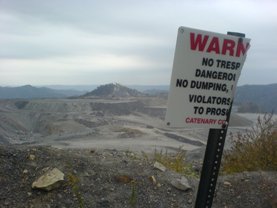
But let’s be clear on one thing: IGCC and carbon capture can substantially clean up the coal-fired power plant, but they can’t deliver “clean” coal. That’s because extracting coal to feed the power plants is, in itself, a dirty business — at least as it is currently practised. Last week I witnessed this firsthand at two West Virginia mines where mountains are literally dismantled to reveal their hidden coal seams, then piled back to a rough approximation of their original contours or left flat for development. I visited the mines as part of the Society of Environmental Journalists’ annual conference, held this year in the heart of coal country in Roanoke, Virginia. 

Mountaintop removal mining, as this practice is called, accounts for about a third of Appalachian coal production but contributes a considerably larger share of Appalachian coal burned in power plants (conventional deep mines yield more metallurgical coal used in steel mills). They are, without question, environmentally and culturally destructive. Thousands of cubic meters of rock, sand, and soil dumped into valleys bury ephemeral stream beds; wildlife are displaced; sludge impoundments from coal-cleaning operations threaten groundwater and communities; and residents of the mountains suffer internal devestation as the lands that define their existence are blasted into oblivion. For a sense of scale check out this 5MB panorama of the mine pictured above by National Geographic executive editor Dennis Dimmick.  

Can the coal industry do better? Yes. For example, reclamation experts from Virginia Tech told the tour that mountaintop mines are adopting a new reforestation approach that could restore the mountains’ ecology within two generations. That’s huge improvement over current practices where grasses and shrubs take over, leaving the land in what Virginia Tech forestry professor James Berger called a state of “arrested succession.”

Will the industry ever make coal mining socially and environmentally sustainable? Appalachian activists who have fought ‘Big Coal’ for decades doubt it. For one thing, the coal companies enjoy undivided support from state legislators and governors in coal states. That’s why West Virginia author and political activist Denise Giardina told the SEJ conference attendees that she was “rooting for global warming” to stop coal. “I think it will force us to change,” said Giardina, who made it clear that IGCC power plants sequestering CO2 weren’t the kind of change she had in mind. Quite the opposite in fact: “If we ever have clean coal,” said Giardina, “you can kiss the mountains goodbye.”

I’m going to need more time to reflect on what I saw and heard last week. The scale of carbon reductions required and developing nations’ right to develop may yet justify the ongoing use of coal. But, at the very least, it is more clearer to me than ever that cleaning up our energy systems must start with energy efficiency and less extractive forms of renewable energy. We are all, as willing users of coal-supplied power grids, contributors to Appalachia’s plight everytime we turn on the juice. 

Storied author, poet and social critic Wendell Berry put that message to the SEJ conference in the bluntest of terms: “It’s awfully hard to remember when you push that button that you are authorizing mountaintop removal.” 

For more on mountaintop removal mining check out this week’s article by the Associated Press which I believe was inspired by the SEJ mountaintop mining tour.

add to del.icio.us : Add to Blinkslist : add to furl : Digg it : add to ma.gnolia : Stumble It! : add to simpy : seed the vine : : : TailRank

This post was created for Energywise, IEEE Spectrum’s blog on green power, cars and climate