Compressed-air Car Proponents Losing Faith

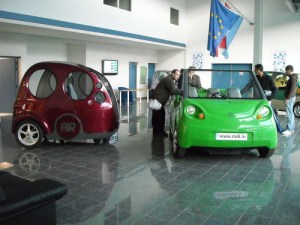
Licensees of the much-hyped AirPOD minicar are pressing for results from Motor Development International, the Luxembourg-registered firm behind the compressed-air-powered vehicle. In recent postings to their websites and coverage by European news sources, some of MDI’s partners are now openly questioning the technology and MDI’s capacity to develop it — questions that Spectrum raised in November 2009 in the investigative feature, “Deflating the Air Car.”

When Spectrum’s feature went to print, MDI was guaranteeing mass-production of AirPODs within a few months at its development base on France’s Cote d’Azur. A year and a half later there is no sign of the promised minicars and their advertised 140-kilometer range, and outspoken licensees are blaming MDI. Continue reading “Compressed-air Car Proponents Losing Faith”

Corporate Fleets: No Magic Sponge for Electric Vehicles

Despite the high levels of excitement surrounding electric vehicles, there is reason to worry about this nascent market’s capacity to fizzle in a big way. Most of the buzz surrounds electric vehicle introductions from major automakers, such as the Nissan Leaf and the Chevy Volt, for which consumer demand remains to be demonstrated. Today I’ve got a piece running at MIT’s TechReview.com site raising doubts about the likelihood that corporate fleets will soak up EVs if consumers leave these pricey machines languishing on showroom floors.
The TechReview story, a ‘news-you-can-use’ piece aimed at managers, concludes that big price reductions and adjustments to fleet management practices will be needed to make a business case for replacing gasoline and diesel fleet vehicles with EVs. In short, lithium battery costs push the purchase price too high for most corporate buyers to recoup their investment through efficiencies — especially if they continue to replace vehicles every three-to-five years. AT&T predicts a return on electric Ford/Azure Dynamics service trucks they are phasing in, but only because the company bucks standard fleet practice and uses its fleet vehicles for 10-12 years. Continue reading “Corporate Fleets: No Magic Sponge for Electric Vehicles”

Paris Puts the Bicyclette First

Paris threw open nearly one thousand one-way streets to two-way traffic this week — that is, for travelers willing to pedal. Whereas other cities such as Boulder and London have created a handful of designated counterflow bike lanes, the new rules taking effect in Paris this week allow bicyclists to cycle upstream against automobile traffic within all of the city’s 30 kilometer-per-hour zones.

Generally speaking these 30-kph zones comprise knots of narrow streets serving primarily neighborhood traffic. But Paris city hall expects a big impact for cyclists. According to Paris planners the move will expand route options for cyclists and may also (seemingly against all odds) improve safety. The mayor’s office notes that on some streets cyclists heading upstream will be further from parked cars, minimizing their risk of ‘winning a door prize’ from innattentive automobile users stepping out onto the roadway. Continue reading “Paris Puts the Bicyclette First”

Facing Our Flow with BP’s Live Spill-Cam

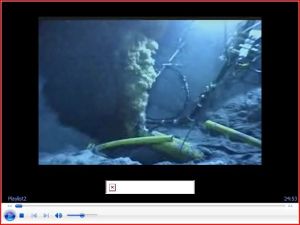
Click image, then hit play (persistently) for live stream

For a look in the mirror that could inspire a car-free weekend, BP has made available a livestream feed of its uncontrolled oil spill over 5000-feet below the Gulf of Mexico’s increasingly oily surface. [You’ll need to hit play several times to get a peek at this very popular feed.] Government agencies and industry engineers have been viewing this feed for two weeks. BP made it accessible today to gasoline consumers and shareholders of the Gulf of Mexico ecosystem at the urging of Ed Markey, chair of the House Select Committee on Energy Independence and Global Warming and an advocate of fossil fuel-free energy and transportation. Continue reading “Facing Our Flow with BP’s Live Spill-Cam”

Buying a Car Without the Engine (or the fuel)

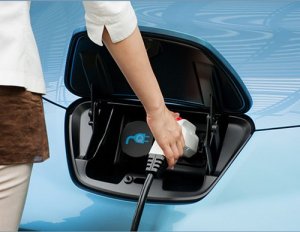
Carmakers have been toying with a novel marketing strategy to take the sting off the electric vehicle’s punishing price premium: selling EVs batteries-not-included. The idea is to lease the lithium batteries separately, shaving a third or more of an EV’s $30,000-plus package cost. Nissan poured some cold water on the idea last week but EV observers think the idea is just getting started, even for Nissan.

Nissan thinks car buyers are ready for its LEAF EV (see teaser ad above) but not for battery leasing. It closed out a pre-sale national tour of the LEAF with news that the compact will be sold or leased as a complete package. As I blogged for Energywise last month, the package includes installation of a home battery charger. Now we know buyers will own the battery too. “Based on the data we have, consumers prefer to buy the full car with batteries,” Nissan Americas chairman Carlos Tavares told the New York Times.

Greentech Media’s Michael Kanellos calls leasing a “conceptual leap” too far: “Imagine if you went to a car dealer today and they offered to sell you the car and lease the engine.” But his analogy may be missing a cog, if one considers the comparative cost of charging an EV versus fueling that internal combustion engine. Per mile, charging the EV will cost roughly a third the cost of gasing up. Imagine if you went to a car dealer and they proposed selling you five years’ worth of fuel up front! Continue reading “Buying a Car Without the Engine (or the fuel)”

WSJ Calls China’s Electric Bicycle Craze a Killer

Mainstream media have finally noticed the electric bicycle craze that’s swept China — where there are now 120 million e-bikes on the road — and is now making inroads in Europe and North America. This weekend the New York Times examined what it called China’s “accidental transportation upheaval”, and the Wall Street Journal devoted a coveted cover slot to China’s e-bikes in January. The latter, unfortunately, paints an unduly dark picture of this energy-efficient and relatively affordable urban transport option.

“Because they are so silent, fast and heavy they’ve become a traffic menace,” says WSJ China correspondent Shai Oster in the video that accompanies his piece on e-bikes, unwisely shot while riding one through Beijing. Oster says this is why there is a “new backlash” against e-bikes, with various levels of Chinese governments trying to squelch the e-bike. What I see is ongoing harassment that China’s e-bike community has endured for the past 6-7 years.

Early on the official complaint was that rapid replacement of the lead acid batteries most Chinese e-bikes carry  fueled pollution (According to the Times a typical Chinese e-bike uses five lead batteries in its lifetime, each containing 20 to 30 pounds of lead). Today the complaint is that deaths have “soared” from 34 in 2001 to over 2000 in 2007 (not too surprising given that e-bike use was exploding exponentially over that period). My take — reinforced by alternative-transport and urban design activists in China — is that these complaints are a smokescreen for car-oriented industrial and urban planners. Continue reading “WSJ Calls China’s Electric Bicycle Craze a Killer”

GM’s Feisty and Embarrassing Vice Chairman

“Once again, Bob won’t get the job.” That was the definitive prediction this weekend by Automotive News, the industry’s journal of record, on GM vice chairman Robert Lutz’s chances of being named CEO [link may require subscription]. Yesterday they were proven right when GM’s acting CEO, GM chairman Ed Whitacre, announced that he would continue permanently in the position. What they got wrong, however, was why Lutz was unfit for the top job.

Automotive News let Lutz speak for himself, arguing that at 78 years old he was too “geriatric” for an ailing automaker in need of rejuvenation. That logic flies in the face of Whitacre’s logic that what GM needs most, after ousting two CEOs in 2009, is stability. After all, Lutz has served in top product development and marketing roles for GM since 2001, and previously held top jobs at Chrysler and Ford.

What makes Lutz the wrong man at the wrong time is that he rejects the intensifying concerns for sustainability that now drive automotive markets and innovation worldwide. At the Detroit Auto Show last week Lutz held forth on climate science with the Sydney Morning Herald, explaining that Earth is being cooled by a dearth of solar flares rather than warmed by greenhouse gases from cars and other fossil fuel-burners:

“All I ever say is look at the data, look at the empirical evidence…Katrina was six years ago and we have yet to have the next hurricane.” Continue reading “GM’s Feisty and Embarrassing Vice Chairman”