
Mazda’s Hybrid-free Strategy of Necessity

mazda-tribute-credit-mazda-usa
Mazda's Tribute SUV uses Ford technology

How to make sense out of the bewildering differences in strategy by automakers today? In the case of Mazda, which rejects hybrid vehicles as a fad, the strategy may be one of necessity.

Mazda R&D chief Seita Kanai confirmed last week that Mazda still has no plans to commercialize its own hybrid technology, according to a report last week in Automobile Magazine. The Japanese automaker markets a hybrid version of its Tribute, a small SUV, which Automobile  Magazine writes off as a Ford engineered system closely resembling the technology in Ford’s Hybrid Escape. Kanai said Mazda will achieve mandated fuel economy savings by improving engines and transmissions, and by redesigning vehicles to reduce their weight.

But Kanai also admitted at the same event for reporters in Japan last week that Mazda couldn’t afford to field a hybrid. And he acknowledged that the resulting technology gap represented a worrisome problem for the company with buyers enamored of hybrids. Here’s how Kanai put it, according to Automotive News:

“We’re in real trouble,” Kanai said of the rapidly falling hybrid prices. “It’s a threat. We don’t have the resources to get involved in that kind of competition.”

Continue reading “Mazda’s Hybrid-free Strategy of Necessity”
Toyota’s Underwhelming Solar Prius

2010-prius-credit-toyotaThe solar roof that Toyota is offering as an option on its next-gen Prius hybrid sedean is even less efficaceous than expected, according to specialty publication EVWorld. The solar panels, reports EVWorld, will add not a nanowatt of charge to drive the Prius.
Technology Review looked at the potential impact of a solar roof on the Prius last summer when rumors of Toyota’s plans first emerged. The clear conclusion of the experts: Keep solar panels on rooftops, where they can be tilted towards the sun for maximum efficiency and multiplied to provide the kilowatts of power it takes to drive a car. A solar rooftop would be just a “marketing gimmick” said Andrew Frank, a plug-in hybrid pioneer at the University of California, Davis, and chief technology officer for UC-Davis hybrid-vehicle spinoff Efficient Drivetrains.

Toyota, it turns out, won’t even bother plugging its solar rooftop panel into the 2010 Prius’ nickel-metal hydride battery.

Continue reading “Toyota’s Underwhelming Solar Prius”

Toyota’s Secret: The Clean Air Act of 1970

masatami-takimoto-credit-toyotaHow many automotive engineering leaders from Detroit or Stuttgart would identify the U.S. Clean Air Act Amendments of 1970 as the inspiration of their engineering career? Yet that’s exactly what Masatami Takimoto did when I spoke with the Toyota executive vice president responsible for R&D and powertrain engineering earlier this month at the Geneva Motor Show.
Since Takimoto retires in June, I asked him to identify the most exciting chapter of his 39-year career with Toyota. His reply brought a smile: “You’re familiar with the Muskie law?,” asked Takimoto. I’d been asked the same question five years earlier, in Tokyo, while interviewing Takehisa Yaegashi (revered within Toyota as ‘the father of the hybrid’) for a cover story on hybrid vehicles for MIT’s Technology Review.

Thanks to Yaegashi I knew that it was Senator Ed Muskie of Maine who drove through the 1970 amendments to the U.S. air pollution law. And I knew that Muskie’s law, which required the federal government to set tailpipe emissions standards,  had inspired a lot more at Toyota than pollution-eating catalytic converters: Toyota’s engineers also began experimenting with new propulsion concepts such as the battery-powered electrical vehicle that produce inherently less pollution.

Continue reading “Toyota’s Secret: The Clean Air Act of 1970”

Pragmatic Electric Strategies the Rage in Geneva

Pragmatism continued Tuesday on day two of the Geneva Motor Show, as automakers more displayed creative means of developing electric vehicles (EVs) in spite of an industry-wide cash crunch. Monday it was PSA Peugeot Citroën unveiling a nascent partnership with Mitsubishi to craft a Peugeot version of the i-MiEV, the battery-powered micro-car that Mitsubishi is preparing to launch in Japan this summer. Yesterday it was Ford Motor and India’s Tata Motors showing EVs they can push to market quick by literally swapping the engine and fuel tank out of petroleum-powered vehicles and popping in batteries and electric motors.

Continue reading “Pragmatic Electric Strategies the Rage in Geneva”

Tiny EV Commuter Cars Heading Mainstream

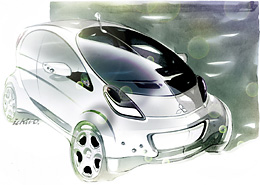
Prototype i-MiEV shown at Geneve Motor Show sketch Source MitsubishiIf batteries aren’t yet up to the task of electrifying the family beater, why not shrink the beater? French automaker PSA Peugeot Citroën kicked off the Geneva Motor Show this morning announcing it was joining an accelerating embrace of this logic. The Paris-based manufacturer revealed this morning that it is pursuing a deal with Mitsubishi Motor to develop a compact Peugeot for sale in Europe next year based on Mitsubishi’s i-MiEV, the 100-mile-range commuter car Mitsubishi plans to roll out in Japan this summer.
Plenty more of these little four-wheelers are in the automotive pipeline. Daimler will sell a battery version of its popular Smart Fortwo next year, and Volkswagen is engineering a commuter EV called the Audi Up! with a top speed of 130 kilometers/hour and roughly 100 kms of range. Renault is engineering a pair of battery-powered , to be produced starting in 2011.

Continue reading “Tiny EV Commuter Cars Heading Mainstream”

Deja Vu as France Plans National EV Charging Network – Again

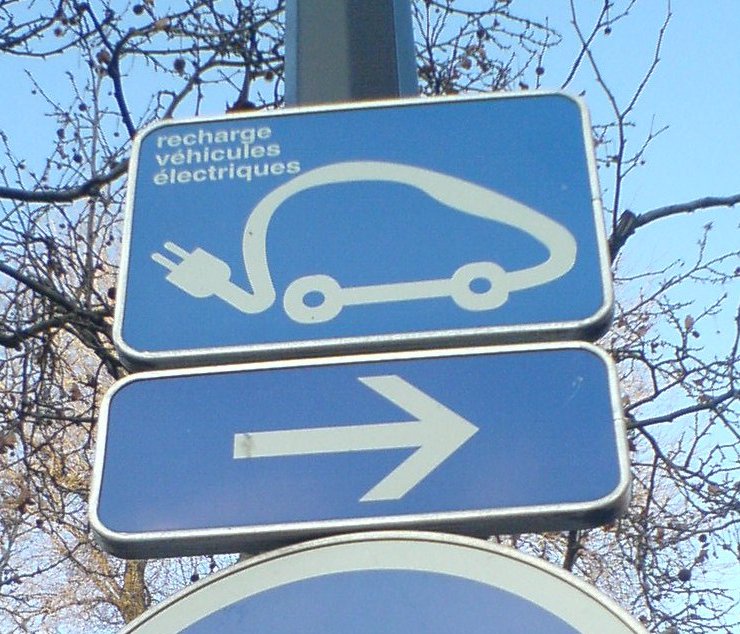
paris-ev-charge-station-sign-credit-peter-fairleyFrance’s government launched a working group this week to coordinate installation of a standardized national charging network for plug-in hybrid electric vehicles and battery-powered EVs. Many may be experience deja vu, so to speak, because this would apparently be the second such charging network the country has installed.

President Nicolas Sarkozy has set a goal of seeing 100,000-plus electric-mode vehicles on the road in 2012 and has offered French automakers bailout funding partially tied to development of EVs as summarized by Earth Times. But as French state minister for industry Luc Chatel told French business magazine Usine Nouvelle [French], “Their battery serves no point without the infrastructure to go with it.” Hence the working group struck last week, representing automakers, energy distributors such as state-owned nuclear utility EDF, municipalities and other players, which is to deliver a plan in June.

Continue reading “Deja Vu as France Plans National EV Charging Network – Again”

Lutz Departure Another Modest Sign of Modernization

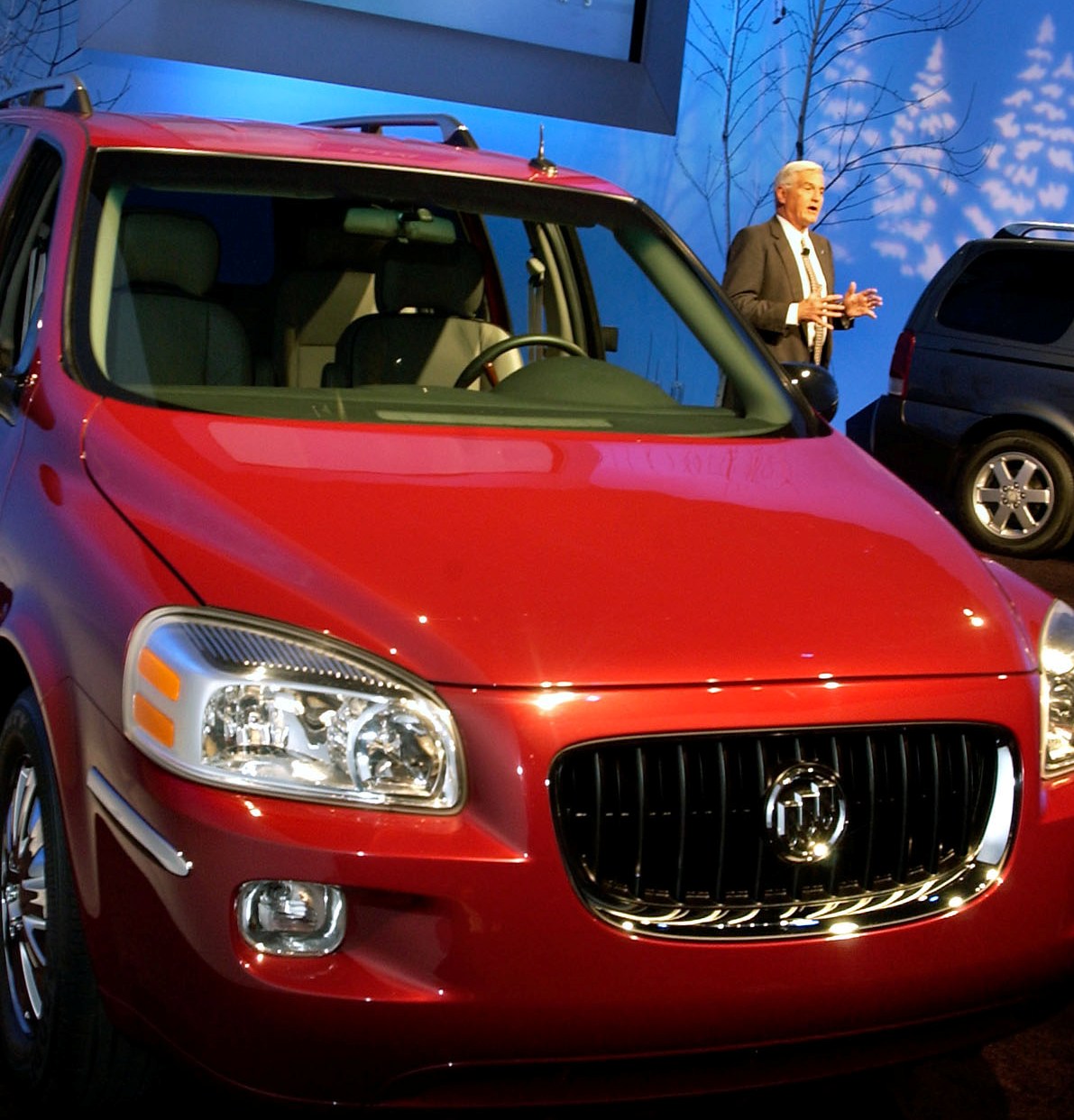
GM's-Bob-Lutz-with-the-7-seater-Buick-TerrazaMany in the green car movement are cheering the announcement that Bob Lutz, GM’s vice chairman, will retire at the end of 2009. Environmental Defense Fund automotive guru John DeCicco celebrates the news on HybridCars.com today, calling Lutz part of a “cohort of corporate leaders who rose to the top eerily disconnected from the parallel rise of environmental values in American culture.” But a speech last week by Hyundai North America’s CEO — billed as a wake-up call by the Detroit News — reinforces the impression that changing the industry’s environmental perspective will require a much broader shift in personnel.

Lutz earned the ire of the environmentally-inclined for two reasons. As product development chief he contributed to GM’s reliance on ever larger and less fuel-efficient SUVs trucks. And he made headlines with his contempt for the theory of climate change. Dallas-based D Magazine quoted a private conversation with journalists just one year ago in which Lutz called global warming a, “total crock of ****.”

Lutz added, according to D, that, “my opinion doesn’t matter.” But how could that be, with GM gearing up to woo environmentally-minded consumers with advanced vehicles such as the plug-in hybrid Chevy Volt? Such comments reverberate louder still within the industry, signaling to junior engineers that an environment-be-damned ethic endures in Detroit’s board rooms.

Continue reading “Lutz Departure Another Modest Sign of Modernization”