Activists Slam California’s ZEV Revisions

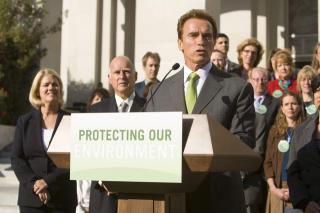
Howls of protest greeted the California Air Resources Board as it followed through on a plan to reorient its zero-emissions vehicle (ZEV) mandate to promote plug-in hybrids over fully battery-electric vehicles. Activists came to Sacramento in force (and in EVs — see video below) to decry what EV booster group Plug In America called a “shameful weakening of the ZEV Program.”

The ZEV directive requires car manufacturers to market ultraclean and emissions-free vehicles (or buy credits earned by others making such vehicles). The California Air Resources Board decision yesterday reduces the quantity of emissions-free battery or fuel cell vehicles mandated for the 2012-2014 period from 25,000 to as few as 5,357, responding to automaker concern over the cost and reliability of EV batteries and fuel cells.

CARB says this reduction is offset by new rules recognizing the transitional value of plug-in hybrids. The agency claims that the ZEV rules will require automakers to produce 66,000 plug-in hybrids over the 2012-2014 period, thereby mainstreaming electric vehicle components and charging infrastructure that will hasten the day when the pure EVs go mainstream.

However, Plug In America claims the new rules will actually lead to 18,000 less plug-in hybrids over 2012-2014. It’s difficult to say who is right because the ZEV rules are devilishly complex, and automakers are not currently required to disclose how many credits they have banked (a transparency gap the new rules would fix).

Plug In America charges that California legislators should take back responsibility for driving electrification of the automobile, but ironically one of their proposals seems to affirm the very battery qualms underlying CARB’s revisions. Specifically, Plug In America proposes that legislators free manufacturers from providing the 15-year, 150,000-mile warranty CARB requires for hybrid batteries. That hardly seems like a recipe for driving mass confidence in the electric car.

This post was created for Tech Talk – Insights into tomorrow’s technology from the editors of IEEE Spectrum.

add to del.icio.us : Add to Blinkslist : add to furl : Digg it : add to ma.gnolia : Stumble It! : add to simpy : seed the vine : : : TailRank

Finding Inspiration in Trans-Oceanic Innovation

Two reports of ocean-crossing innovation breathe new life into the old addage that necessity spurs invention. The first is the completion last Thursday of the maiden 11,952-nautical mile voyage of a sail-assisted cargo ship. According to Hamburg-based Beluga Skysails, the tug of the 160-square meter kite saved about $1,000/day worth of bunker fuel.

The second proof of our capacity to think innovatively is Japanese adventurer Kenichi Horie’s departure from Hawaii on a wave-powered boat. Yes, that’s right: equipment Horie’s boat absorbs the vertical motion of waves hitting the bow into dolphin and converts this energy into dolphin kicks at the stern to propel the boat forward. He figures he’ll reach Japan, 4,400 miles away, by about June. A novelty, you might say? I guess many people said the same thing to Beluga Skysails.

I’ve often said that the accelerating exploitation of Alberta’s tarsands is living proof of peak oil. These innovations are living proof that human society can adapt to a carbon-constrained world. 

add to del.icio.us : Add to Blinkslist : add to furl : Digg it : add to ma.gnolia : Stumble It! : add to simpy : seed the vine : : : TailRank

Quote of the Day from Globe 2008

“When analysts tell you that the only thing that will bring down the price of oil is a recession, you know you’re in trouble.” Gal Luft, Executive Director, Institute for the Analysis of Global Security, delivered that quote of the day here in Vancouver during a panel discussion on future automotive markets at the biennial Globe trade fair and conference — a premier event on the business / environment nexus.

Luft’s policy solution to break oil’s virtual strangle-hold on transportation fuels markets worldwide? Mandating production of flex-fuel vehicles (that can burn a range of alcohol/gasoline blends) and plug-in hybrids (that can charge overnight on comparatively diversified electric power systems). “Flex-fuel should be a standard feature in every automobile,” says Luft, “just like the rear-view mirror, seat belts and air bags.”

Mea cupla of the day goes to Walter McManus, former director of forecasting for automotive market analysts J.D. Powers & Associates. During the same Globe session McManus, now at the University of Michigan’s Transportation Research Institute, admitted personal culpability in Detroit’s decision to sit out the first round of hybrid vehicle development–handing the market to Toyota. He says that Detroit, himself included, considered fuel economy to be simply a question of cost and thus discounted the weight consumers placed on it as “irrational.” He now advises market researchers to pass consumer demands up to senior management even when those demands don’t jive with the researchers’ preconceived notions!

I vividly remember McManus selling me preconceived notions just a few years ago when I was exposing Toyota’s dominance of hybrid technology for MIT Technology Review. (We didn’t quote him in the resulting story, “Hybrids’ Rising Sun”, which ran as TechReview’s April 2004 cover.) I look forward to getting back to my files and digging out my own McManus quotes. For now, here’s a representative quote from a 2004 L.A. Times story: “We don’t see hybrids, per se, ever being more than a niche vehicle.”

add to del.icio.us : Add to Blinkslist : add to furl : Digg it : add to ma.gnolia : Stumble It! : add to simpy : seed the vine : : : TailRank

California Counts the Ways to Decarbonate

Governor Schwarzenegger Takes on the FedsTrying to track California’s developments in climate change policy is a full-time job these days. Carbon-Nation has followed the state’s efforts to drive the electrification of the automobile, but this is but a scratch at the surface. California’s initiatives also include: incentives for renewable energy, taxes on high-carbon fuels, tough vehicle fuel economy standards (in the absence of real leadership from Washington), and, in partnership with other western states and British Columbia, a regional cap-and-trade system that should ratchet down industrial emissions of greenhouse gases.

This broad frontal attack on climate complacency is helping to change the politics of climate change across the U.S. and Canada. It is also driving innovation. Today, California’s Air Resources Board reviews an innovative report from its Global Warming Economic and Technology Advancement Advisory Committee that lays out no less than 55 opportunities to cut greenhouse gas emissions. The proposals span the realms of finance, transportation, industry, commerce, residential energy use, electricity and natural gas, agriculture, forestry and water policy.

Let no one say that its too late to stop climate change.

add to del.icio.us : Add to Blinkslist : add to furl : Digg it : add to ma.gnolia : Stumble It! : add to simpy : seed the vine : : : TailRank

Tech Talk on Plug-in Hybrids

IEEE Spectrum Tech TalkGoing forward, some of Carbon-Nation’s posts will now be copublished via IEEE Spectrum’s Tech Talk blog, beginning with this report on California plug-in mania: “Plug-in hybrids win big in ZEV tweaks” (full text follows)

Plug-in mania has an influential new fan: the California Air Resources Board, which looks set to elevate plug-ins several notches in its zero-emissions vehicle (ZEV) mandate.

The ZEV directive requires car manufacturers to market ultraclean and emissions-free vehicles (or buy credits earned by others making such vehicles). The California Air Resources Board unleashed intense lobbying this winter among battery EV start-ups, major automakers, hydrogen fuel-cell developers, and coalitions promoting plug‑in hybrids when it promised to tweak the level of credits earned by various technologies. From the Air Resources Board staff proposal released late last week, plug-ins appear to be the big winners.

Presently the ZEV credit ratios favor fuel cells and offer relatively little help for plug-ins. The staff proposal would change this by enabling manufacturers to meet most of their ZEV requirements through 2014 with plug-in hybrids and hydrogen combustion vehicles. While not pure ZEVs like battery EVs and fuel cell vehicles, the California regulators bet that manufacture of plug-ins will yield components and infrastructure that will hasten the day when the pure EVs go mainstream.

“The goal continues to be to accelerate the development of pure ZEVs,” says Air Resources Board member Daniel Sperling, director of the University of California, Davis, Institute of Transportation Studies. Sperling says promoting plug-in hybrids is the “only realistic way” to push car makers forward in light of the continued high cost of batteries and fuel cells.

Sperling and his fellow Air Resources Board members will take up the staff proposal after a public hearing in Sacramento scheduled for March 27-28.

Meanwhile, Arizona regulators seem to be feeling considerably more bullish about the viability of pure electrics. The Arizona Republic reports that Airzona’s Department of Environmental Quality has drafted rules mandating that 11 percent of all cars sold in the state must be ZEVs from the 2011 model year. In 2018 the mandate would jump to 16 percent.

This post was created for Tech Talk – Insights into tomorrow’s technology from the editors of IEEE Spectrum.

add to del.icio.us : Add to Blinkslist : add to furl : Digg it : add to ma.gnolia : Stumble It! : add to simpy : seed the vine : : : TailRank

Riding the New CAFE Standards To 35 mpg, and Beyond?

Buzz Lightyear would have put an exclamation point on the end, but the new fuel economy targets approved by Congress last month are not quite so dramatic. For sure, bumping up from roughly 25mpg today to 35mpg in 2020 –the first meaningful increase in the CAFE standards since 1984– will make a difference. The Union of Concerned Scientists estimates the higher standard will eliminate greenhouse gas emissions equivalent to taking 28 million of today’s cars and trucks off the road and save consumers at least $22 billion/year (if gasoline at the pump stays above $2.55/gallon).

Greater use of biofuels encouraged by the energy law containining the new CAFE standard could deliver similar energy savings.

But as my story today on TechReview.com and ABC News.com shows, these savings will be largely negated in 2020 by increased driving. Nor will a 40% CAFE boost, on its own, deliver the changes in technology and behavior needed to deliver a truly sustainable transportation system after 2020.

Provisions in the energy law supporting electrification of the automobile could, however, make a difference. Genevieve Cullen, vice president of the Electric Drive Transportation Association, in Washington, DC, promises that her group will be pushing for more. Their top priority now is to secure a  tax credit for buyers of plug-in hybrid vehicles that would be similar to those available to buyers of the current hybrids and vehicles that can run on alternative fuels.

Supporters of the oil industry stripped out a plug-in tax credit in last month’s legislation along with provisions that would have eliminated tax breaks for oil and gas producers. “The unbelievable state that we’re in right now is that there are absolutely no consumer incentives for battery electric vehicles-the zero petroleum, zero emissions vehicles,” says Cullen.

add to del.icio.us : Add to Blinkslist : add to furl : Digg it : add to ma.gnolia : Stumble It! : add to simpy : seed the vine : : : TailRank

Who Killed the EV Part II: Can California’s ZEV rules deliver an energy revolution?

The award-winning 2006 documentary Who Killed the Electric Car? chronicles the controversial history of California’s Zero Emissions Vehicle mandate. As the movie tells it, the rules prompted major automakers to produce pathbreaking EVs until 2003, when the automakers got the upper hand and crushed both the EVs and the ZEV mandate itself.

In fact, as I show in the November issue of IEEE Spectrum, the program is back and entrepreneurs, car companies and interest groups are scrambling to exploit its incentives to favor their respective automotive visions (see “California to Rule On Fate of EVs”). Far from a failure, the ZEV program’s prodding exposed automakers to the potential of electric propulsion — insights that Toyota applied in its market-leading Prius hybrid — and it may well accelerate the arrival of further innovations.

The ZEV program shows that mandating innovation is a messy process full of unintended consequences. But it may be just what we need to drive adoption of the technologies currently available to slow the growth of greenhouse gases. In his provocatively titled book Sustainable Fossil Fuels Canadian energy economist Mark Jaccard identifies the ZEV program as the forerunner of the renewable portfolio standards adopted by the EU and many U.S. states that are helping to drive installation of wind turbines, large-scale experimentation with new forms of solar power, small-scale hydropower and other renewable sources of electricity. (This summer Congress rejected a proposal to require 10% renewable energy across the U.S. by 2020.)

Jaccard believes that “niche market regulations” such as the ZEV mandate and renewable portfolio standards will be key policy tools to force real change, second only to a cap-and-trade program regulating CO2 emissions (Jaccard would prefer energy taxes to both, but believes they are not politically feasible). In other words, targeted programs like the ZEV mandate that force major industries to try new approaches may be just the thing to deliver meaningful change in the way we use energy.

add to del.icio.us : Add to Blinkslist : add to furl : Digg it : add to ma.gnolia : Stumble It! : add to simpy : seed the vine : : : TailRank