Does Fusion Have a Future?

The 2004 report “Burning Plasma: Bringing a Star to Earth,” from the U.S. National Research Council, sold Washington on the International Thermonuclear Experimental Reactor (ITER), a massive R&D project that proponents predict will be the breakthrough project for fusion energy. In its fiscal 2008 budget, however, Congress drove the United States’ role in ITER right into the ground, slashing US $160 million promised for this year to $10.7 million. That has some wondering if fusion research, considered since the 1960s one of the great long shots for a sustainable and relatively clean energy supply, has run out of time.

What makes fusion a long shot? Like most fusion experiments to date, ITER proposes to use formidable electric currents and magnetic fields to induce fusion in isotopes of hydrogen (deuterium and tritium) and to contain the resulting burning plasma-akin to a tiny star and exceeding 100 million ˚C. Existing fusion reactors have produced heat equivalent to just a few megawatts of power–less than the energy required to induce the reaction–and for just fractions of a second. ITER should put out ten times as much power as it consumes, but still for just a matter of minutes.

And even that level of performance will require a 27-meter-high magnetic confinement chamber that will take a decade to build and cost an estimated $2.76 billion. Including design, administration, and 20 years of operation, the project’s total expenses will be nearly $15 billion.

For more on fusion’s troubled poster child, see my story at Spectrum Online.

add to del.icio.us : Add to Blinkslist : add to furl : Digg it : add to ma.gnolia : Stumble It! : add to simpy : seed the vine : : : TailRank

Earthzine: Widening the scope

Time to introduce to another web portal launched this month, this one called Earthzine. It’s a webzine created by dedicated volunteers involved in Earth observation offering fresh perspective on the state of the planet. Fostering Earth observation & global awareness

My contribution to the launch is an interview with Rob Adam, who emerged from political incarceration during Apartheid to help lead South Africa’s scientific and technological renaissance. I spoke to Adam primarily about his role in GEO, an international collaboration to foster global sharing of oceanic, terrestrial and satellite-based Earth observations. Among other things, GEO could be a critical step towards better modeling of climate change.

Adam made two noteworthy observations on the energy challenge. One was the fact that coal has lost some of its shine even in South Africa, which needs energy to meet its development goals. Some of the many new coal-fired power projects in the offing there are being converted to nuclear projects (which he oversees as CEO of the South African Nuclear Energy Corporation). Adam explains that South Africa wants to pull its weight in the fight against climate change, but also that its leadership recognized that at some point in the future even this developing nation would have to pay the full price of coal — including its environmental costs. The net result, says Adam, is “a profound effect on the thinking on energy production and energy generation in South Africa.”

More profound to me was another comment by Adam, this time on the value of better modeling of weather and climate for renewable energy. Why? Because most renewable energy, as he points out, depends on the weather. How do you project where to put a wind farm or how much energy a solar park will produce if historic patterns of wind flow and cloud cover no longer hold? “The biggest challenge for renewables,” says Adam, “is climate change.”

add to del.icio.us : Add to Blinkslist : add to furl : Digg it : add to ma.gnolia : Stumble It! : add to simpy : seed the vine : : : TailRank

Could a Nuclear Renaissance Be its Own Worst Enemy?

With coal’s environmental profile under fire and natural gas prices well above historic levels, nuclear is surging forward. That’s because it provides baseload power — unlike the shifting output from most renewable energy sources* — and because Washington is providing lucrative tax breaks and loan guarantees under the 2005 energy bill masterminded by Dick Cheney. But could the nuclear industry become its own worst enemy if its surge overwelms the regulators charged with keeping it safe?

That’s the question being asked after the filing late last month of the first licensing applications for new nuclear reactors in 29 years. The construction and operating application filed by NRG Energy is the first of 19 expected to hit the U.S. Nuclear Regulatory Commission by the end of 2008. Combine that with an anticipated spike in uranium fuel production, certification of new nuclear plant designs and the Department of Energy’s Yucca Mountain waste repository, and ongoing safety incidents at aging reactors across the U.S. and you’ve got a perfect storm that will severely test the NRC. See “Nuclear Energy Revs Up” for my coverage this morning on MIT’s TechReview.com.

*Large hydropower projects have long provided renewable baseload power because while the rain is intermittent, a large high reservoir can release its potential energy gradually to track energy demand. Last month Carbon-Nation presented another renewable energy source with baseload potential — solar thermal energy — which stores solar energy in the form of superhot water.

add to del.icio.us : Add to Blinkslist : add to furl : Digg it : add to ma.gnolia : Stumble It! : add to simpy : seed the vine : : : TailRank

Ground-breaking Report Faults Quake Planning at Yucca Mountain

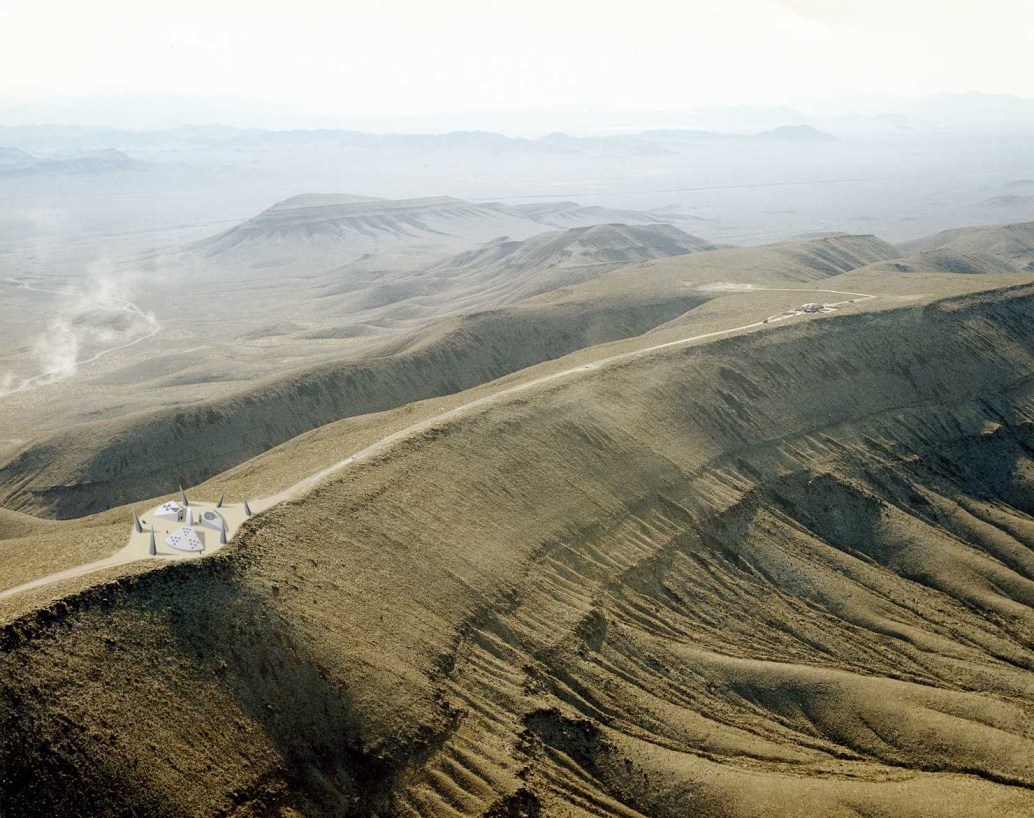
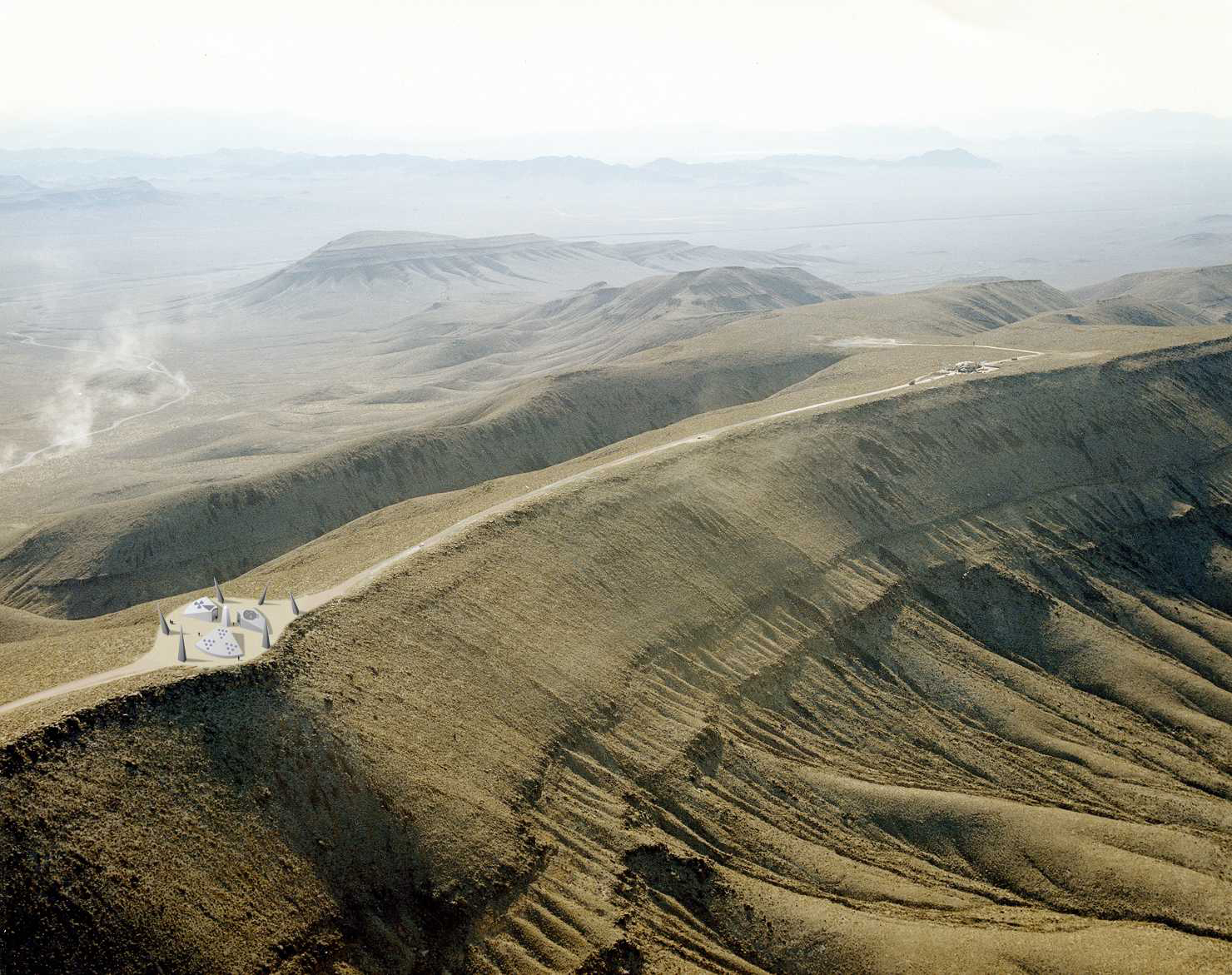
Yucca Mtn with artist's rendition of warning monument for future generations.jpgTo consider nuclear power as a solution to climate change one must confront the legacy of high-level radioactive waste that is building up at power plants across the U.S. and Canada. This week the Las Vegas Review-Journal showed yet again how difficult it will be for regulators to bury the high-level waste problem while ensuring that waste remains safe for millenia to come.

The Review-Journal’s story on developments at the U.S. Department of Energy’s planned waste repositor at Yucca Mountain, Nevada — “Yucca fault line might spring surprise” — reveals that the site’s initial design would place a waste handling area atop a fault line capable of producing a magnitude 6+ earthquake. No wonder that the state of Nevada is fighting to block the repository’s construction, and that even the DOE concedes the repository won’t open for another decade.

Such risks and delays are one reason why the Bush Administration is pursuing nuclear waste reprocessing, in which the components of high-level nuclear waste are separated and reused. As I revealed in my Spectrum story on France’s nuclear waste reprocessing experience — “Nuclear Wasteland” — there are serious problems with this approach as well.

add to del.icio.us : Add to Blinkslist : add to furl : Digg it : add to ma.gnolia : Stumble It! : add to simpy : seed the vine : : : TailRank