Wind Power That Floats

Blue H Group.Wind farms continue to inspire considerable opposition from neighbors and bird lovers. None more so than the proposal by Boston-based Cape Wind to erect 130 wind turbines in Nantucket Sound in what would be the first offshore wind farm in U.S. waters. Ted Kennedy, senior senator from Massachusetts, has led the charge against the proposal, claiming this industrial intrusion would mar the view from his family’s seaside compound and, by extension, harm Cape Cod’s leading industry: tourism.  

To form your own view of Cape Wind’s visual impact, check out the computer-generated graphics prepared by the developer to simulate the wind farm’s appearance from the surrounding shores 5-13 miles away. 

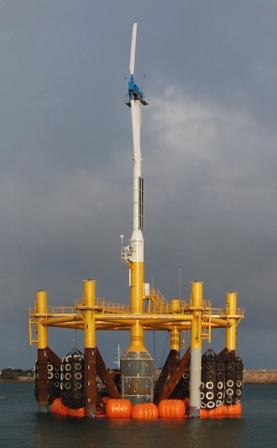
Now, into these contested seas sails a new developer with a proposal designed to please all: Blue H Technologies, which has staked out a parcel of seabed for a wind farm 23-miles off Nantucket, well beyond the sight of sling-sipping vacationers. And the technological solution enabling Blue H to site a wind farm in water 167 feet deep? Floating wind turbines.

Blue H’s proposal struck some partisans of the Cape Wind debate as a fraud. See this rant from Cape Cod Today, for example, suggesting the Blue H is an underhanded scheme by Ted Kennedy and other politicos to protect their waterfront viewscapes.

However, as my report headlining MIT TechReview.com today shows, Blue H is for real. The Dutch firm is well on the way to demonstrating a novel application for conventional oil and gas platform technology, and it has competitors just as intent on proving the economic and energy potential of deepwater wind.

add to del.icio.us : Add to Blinkslist : add to furl : Digg it : add to ma.gnolia : Stumble It! : add to simpy : seed the vine : : : TailRank

Popping the Solar Bubble

A sudden zeal to go fossil-free is fueling plenty of hype in renewable energy circles. That hype hits its shrillest notes in the promise of the least cost-effective of the major renewable options: photovoltaics that convert sunlight directly into electricity.

Consider the holiday season gush around silicon-valley PV startup Nanosolar. The firm was founded to demonstrate a truly novel nanotech-inspired design, but is now commercializing comparatively conventional CIGS thin-film PV. Nevertheless, after Popular Science crowned the company’s “Powersheet” as its innovation of the year, articles on this “game-changing technology” multiplied to fill the slow late-December news season.

Never mind that Nanosolar declined to disclose the most important spec on its product: the efficiency with which it converts sunlight to electricity. Without the efficiency, it is impossible to analyze the product’s economic potential.

The solar rot, however, goes deeper than venture capital-fueled startups. My latest feature for IEEE Spectrum — “Solar-Cell Squabble” — shows that some scientists may also be overstating their advances. And they may be doing so in peer-reviewed reports in top journals such as Science and Nature.

Don’t get me wrong. I’m a big fan of solar energy, in all of its myriad forms. I’m ecstatic to see research dollars once again pouring into solar energy. But let’s make sure those dollars don’t pour back out via the sink, or walk out the rear exit.

add to del.icio.us : Add to Blinkslist : add to furl : Digg it : add to ma.gnolia : Stumble It! : add to simpy : seed the vine : : : TailRank

California Counts the Ways to Decarbonate

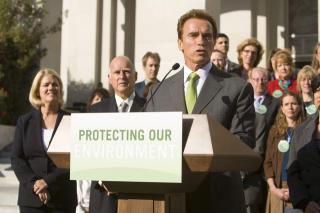
Governor Schwarzenegger Takes on the FedsTrying to track California’s developments in climate change policy is a full-time job these days. Carbon-Nation has followed the state’s efforts to drive the electrification of the automobile, but this is but a scratch at the surface. California’s initiatives also include: incentives for renewable energy, taxes on high-carbon fuels, tough vehicle fuel economy standards (in the absence of real leadership from Washington), and, in partnership with other western states and British Columbia, a regional cap-and-trade system that should ratchet down industrial emissions of greenhouse gases.

This broad frontal attack on climate complacency is helping to change the politics of climate change across the U.S. and Canada. It is also driving innovation. Today, California’s Air Resources Board reviews an innovative report from its Global Warming Economic and Technology Advancement Advisory Committee that lays out no less than 55 opportunities to cut greenhouse gas emissions. The proposals span the realms of finance, transportation, industry, commerce, residential energy use, electricity and natural gas, agriculture, forestry and water policy.

Let no one say that its too late to stop climate change.

add to del.icio.us : Add to Blinkslist : add to furl : Digg it : add to ma.gnolia : Stumble It! : add to simpy : seed the vine : : : TailRank

Naughty Editor Reveals Hidden Reports on Energy

Cranes over Erdos Inner Mongolia 2006 Peter FairleyOver the last month Carbon-Nation went quiet as its editor made noise elsewhere on the web. He should have kept you linked in. Bad editor! Here’s what you missed:

“Cheap Cashmere Sweaters”: A Connect the Dots photo feature on MSN Green tracking cashmere’s environmental footprints –carbon and otherwise– back to the desertified steppes of Central Asia. Bottom line message: The price of that cashmere sweater looks good now, but the cost to the environment will bite you in the end.

Two for IEEE Spectrum Online:

“Power Transmission Without the Power Electronics”: During their low-resolution beginnings digital music and photography delivered a jarring rendition of sounds and images. Today, digital devices used to control electricity flows are making a similar mess on power grids.

“Electric-Car Maker Touts 10-Minute Fill-Up”: Altair Nanotechnologies’ lithium ion batteries for electric vehicles charge up fast. Very fast. One of its 35 kilowatt-hour packs, capable of propelling an EV pickup truck for 160 kilometers, can fully charge in just 10 minutes-a feat that would be downright dangerous with most lithium batteries. But will such rapid-charging prove practical on the street?

And a troika for MIT’s Technology Review website:

“Prospecting for Power”: The ultra-sensitive detection of traces of helium rising from the Earth’s mantle may hold the key to sniffing out sites of hidden geothermal energy.

“Cleaner Nuclear Power?”: Senators representing several Western states are promoting thorium. They say it’s a cleaner-burning fuel for nuclear-power plants, with the potential to cut high-level nuclear-waste volumes in half. Some nuclear watchdogs agree.

“Carbon Capture Moves Ahead”: Carbon offsets marketer Blue Source is building the business case for carbon-capture and storage systems by storing CO2 in oil wells.

Earthzine: Widening the scope

Time to introduce to another web portal launched this month, this one called Earthzine. It’s a webzine created by dedicated volunteers involved in Earth observation offering fresh perspective on the state of the planet. Fostering Earth observation & global awareness

My contribution to the launch is an interview with Rob Adam, who emerged from political incarceration during Apartheid to help lead South Africa’s scientific and technological renaissance. I spoke to Adam primarily about his role in GEO, an international collaboration to foster global sharing of oceanic, terrestrial and satellite-based Earth observations. Among other things, GEO could be a critical step towards better modeling of climate change.

Adam made two noteworthy observations on the energy challenge. One was the fact that coal has lost some of its shine even in South Africa, which needs energy to meet its development goals. Some of the many new coal-fired power projects in the offing there are being converted to nuclear projects (which he oversees as CEO of the South African Nuclear Energy Corporation). Adam explains that South Africa wants to pull its weight in the fight against climate change, but also that its leadership recognized that at some point in the future even this developing nation would have to pay the full price of coal — including its environmental costs. The net result, says Adam, is “a profound effect on the thinking on energy production and energy generation in South Africa.”

More profound to me was another comment by Adam, this time on the value of better modeling of weather and climate for renewable energy. Why? Because most renewable energy, as he points out, depends on the weather. How do you project where to put a wind farm or how much energy a solar park will produce if historic patterns of wind flow and cloud cover no longer hold? “The biggest challenge for renewables,” says Adam, “is climate change.”

add to del.icio.us : Add to Blinkslist : add to furl : Digg it : add to ma.gnolia : Stumble It! : add to simpy : seed the vine : : : TailRank

European Wind Power Meets European Humour

Time for Carbon-Nation to take a walk on the wilder side. In all seriousness, I’m curious what you make of this ad for German wind farm and solar power developer Epuron. What does it say about the image of wind power? To my mind it speaks to a greater awareness of renewable energy in Europe, since its deadpan delivery would seem to assume that European audiences need no introduction to the technology.

add to del.icio.us : Add to Blinkslist : add to furl : Digg it : add to ma.gnolia : Stumble It! : add to simpy : seed the vine : : : TailRank

Fixing Power to Power Grids — Today’s Batteries Mean More Wind Power Tomorrow

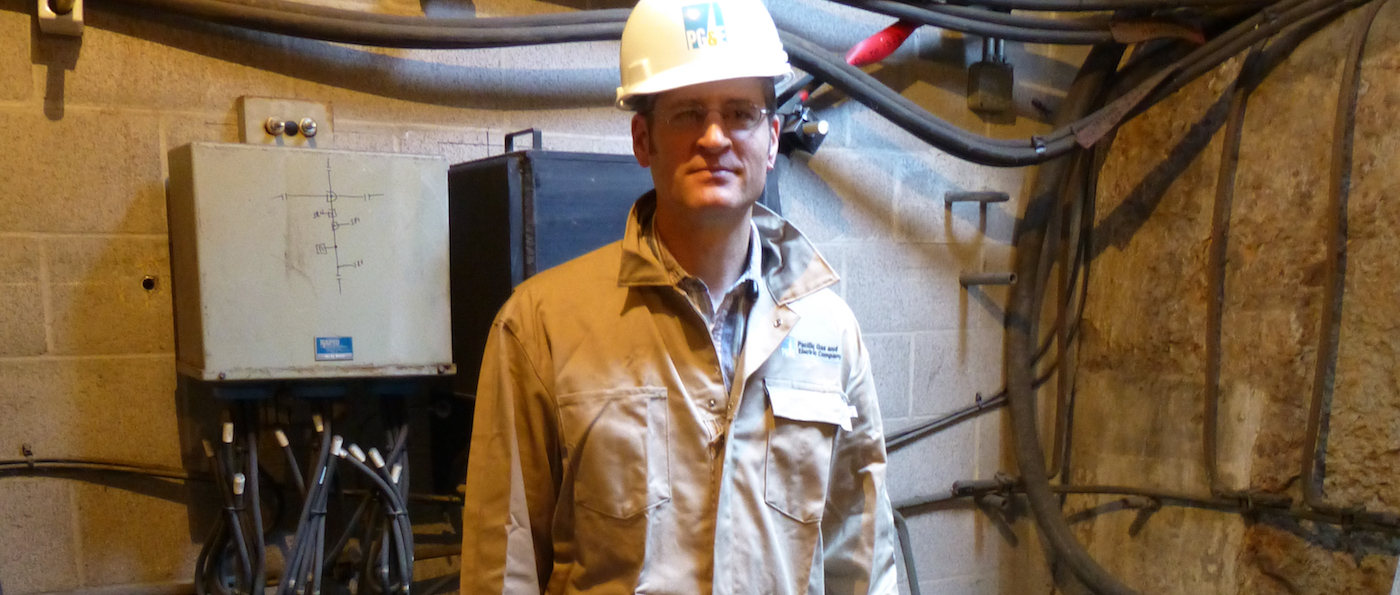
It was probably my greatest embarrassement as a journalist. Within weeks of publishing a major feature on energy storage in Technology Review (see “Recharging the Power Grid”), the half-completed demonstration project we profiled as the start of something big — a giant battery to stabilize the power grid in eastern Mississippi — was scrapped by its developer. The corporate parent of the battery developer, Regenesys, was bought up and the new buyer simply decided to pursue different opportunities.

Disappointments such as this are a perennial risk for the technology journalist who tries to peer into the future, given the vagaries of the R&D process. In this case, however, the risk was higher than normal due to the high cost of energy storage technology and the large size of the facility. Four years later energy storage is finally going commercial as utilities exploit of batteries that are less than one-fifth the size, as my story this morning on TechReview.com and ABCNews.com attests (see “Fixing the Power Grid”). 

These portable batteries will be the power grids’ rapid-response teams, ready to ship out for duty to stabilize overloaded power lines and substations. Why should we care? Commercialization of small batteries is likely to bring down the cost of such technology, enabling them to take on a more transformative role: providing the buffering grids will need if renewable energy sources such as solar panels and wind farms grow to large scale. It already appears to be happening in Japan and Europe, thanks to higher energy prices and forward-looking government policies.

add to del.icio.us : Add to Blinkslist : add to furl : Digg it : add to ma.gnolia : Stumble It! : add to simpy : seed the vine : : : TailRank