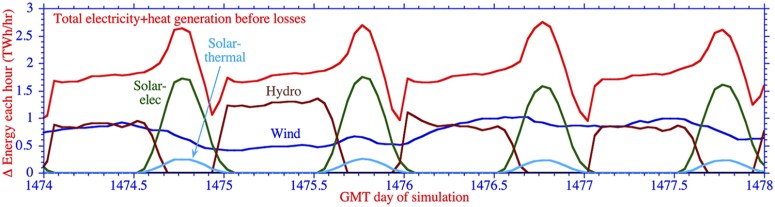
In the final days of 2018 a 100-megawatt solar thermal generating station capable of running around-the-clock, 365-days-a-year connected to the Northwest China regional power grid. It was a race against time to commission the plant in temperatures as low as -20 celsius—and one that plant designer and builder Beijing Shouhang Resources Saving Co could not afford to lose.
“We must finish on time. Otherwise we may face a heavy financial problem,” says Chen Han, Shouhang’s director for international markets.
Shouhang was racing to beat the Chinese government’s December 31, 2018 deadline to secure a guaranteed price for the plant’s power. The deadline was part of an aggressive demonstration program launched in September 2016 to slash the cost of solar thermal power and catapult Chinese firms to the head of the global pack—much as China did with solar photovoltaics.
Alas, a little more than two years later, China has stumbled on the path to solar thermal supremacy. While Shouhang’s and two more of the program’s 20 approved projects met the deadline, four others were cancelled last year and the remaining 13 projects are in limbo. Continue reading “SPECTRUM: China Stumbles on Path to Solar Thermal Supremacy”
 Just a few decades ago many experts fretted that variable power from wind turbines and solar panels would destabilize power grids. Today they’re debating the feasibility of 100 percent renewable power, which appears to be the most likely route to decarbonized energy systems by mid-century and thus our best shot at avoiding truly extreme climate change. Two of my recent feature articles explore what running grids on 100 percent renewable energy will take. My