Supergrid Technology Beats Expectations

HVDC breaker Source AlstomAn industrial research consortium that is a who’s-who of the European power industry says development of technologies to produce high-voltage DC (HVDC) supergrids accelerated in 2012 — “surpassing expectations.” The assessment comes in the supergrids technology roadmap updated earlier this month by Friends of the Supergrid, whose members include power equipment suppliers such as Siemens, ABB and Alstom, as well as transmission system operators and renewable energy developers.

Summarizing the conclusions of an expert group within the International Council on Large Electric Systems — better known as CIGRE, its French acroynm — the Friends of the Supergrid says there is now no doubt as to the feasibility of HVDC networks ferrying renewable energy resources from wherever they are in surplus to wherever they are needed: “CIGRE Working Group B4–52 considered this question, specifically whether it was technically and economically feasible to build a DC Grid, and the answer was yes.” Continue reading “Supergrid Technology Beats Expectations”

AC/DC 101

Much of your editor’s reporting in 2012 focused on the re-emergence of direct current or DC power — through pieces in IEEE Spectrum, Technology Review, and Power & Energy Magazine — and there is more in the works. Some of you, however, may still be wondering what DC power is and how it differs from the alternating current or AC power flowing from most electrical sockets. So here are some answers.

The questions were posed by Andrew Huang, a 9th grader at High Technology High School in Lincroft, NJ, who recently interviewed me for a history project on Nikola Tesla and Thomas Edison’s late-19th Century War of Currents. (Check out The Oatmeal’s Why Nikola Tesla was the greatest geek who ever lived for a rather tilted yet entertaining take on a key combattant in this epic tech tussle.)

What are some differences between the physics of AC and DC? Continue reading “AC/DC 101”

The Debate: Fracking and the Future of Energy

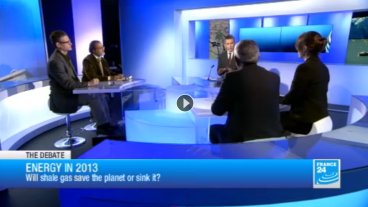
France 24 Energy in 2013 DebateThe Arctic is melting faster than predicted. Is now the time to shut down the low-carbon nuclear power plants in France — the 20th Century’s staunchest proponent of nuclear energy? Is natural gas produced via hydraulic fracturing or ‘fracking’ a gift that is buying time for a transition to renewable energy or a curse that reinforces fossil fuel dependence? Will carbon belching heavyweights such as the U.S. and China ever get serious about cleaning up their energy systems?

Such questions are top order in France, whose President kicked off a Grand Débat on energy this month Continue reading “The Debate: Fracking and the Future of Energy”

The Inconvenient Science of Biomass Power

New science confirms that burning trees to produce power instead of coal may be a losing strategy for combatting climate change.

In my April 2012 Spectrum news article on the questionable carbon benefits of largescale biomass power generation, I identified a boom in exports of wood pellets from the U.S. Southeast to Europe, where they are fast becoming a crucial energy supply for power firms seeking to meet the European Union’s renewable energy and carbon reduction mandates.

Forbes Magazine greentech columnist (and friend) Erica Gies noted my analysis in a May 22 blog post, Massachusetts Addresses “Biomass Loophole” and Limits Subsidies, about recently-issued regulations that set higher standards for biomass power plants seeking state-issued renewable energy certificates. Continue reading “The Inconvenient Science of Biomass Power”

Electrical Upgrade Prescribed for Japan’s Crimped Grid

An advisory body for Japan’s powerful Ministry of Economy, Trade and Industry (METI) has endorsed a tripling of the capacity to pass power between Japan’s otherwise estranged AC power grids: the 50-hertz AC grid that serves Tokyo and northeastern Japan, and the 60-hertz grid that serves western Japan. This frequency divide hascomplicated efforts to keep Japan powered since the March 2011 earthquake and tsunami — a task that keeps getting harder with the inexorable decline in nuclear power generation (at present just one of Japan’s 54 reactors is operating). Continue reading “Electrical Upgrade Prescribed for Japan’s Crimped Grid”
Fukushima Inspires Change in Germany & China

Amidst the stubbornly disappointing string of news emanating from Japan’s Fukushima Daiichi nuclear complex, there are signs that its melting nuclear fuel rods are inspiring some important and long-overdue developments in global power systems. And there’s good news for both nuclear supporters and critics.

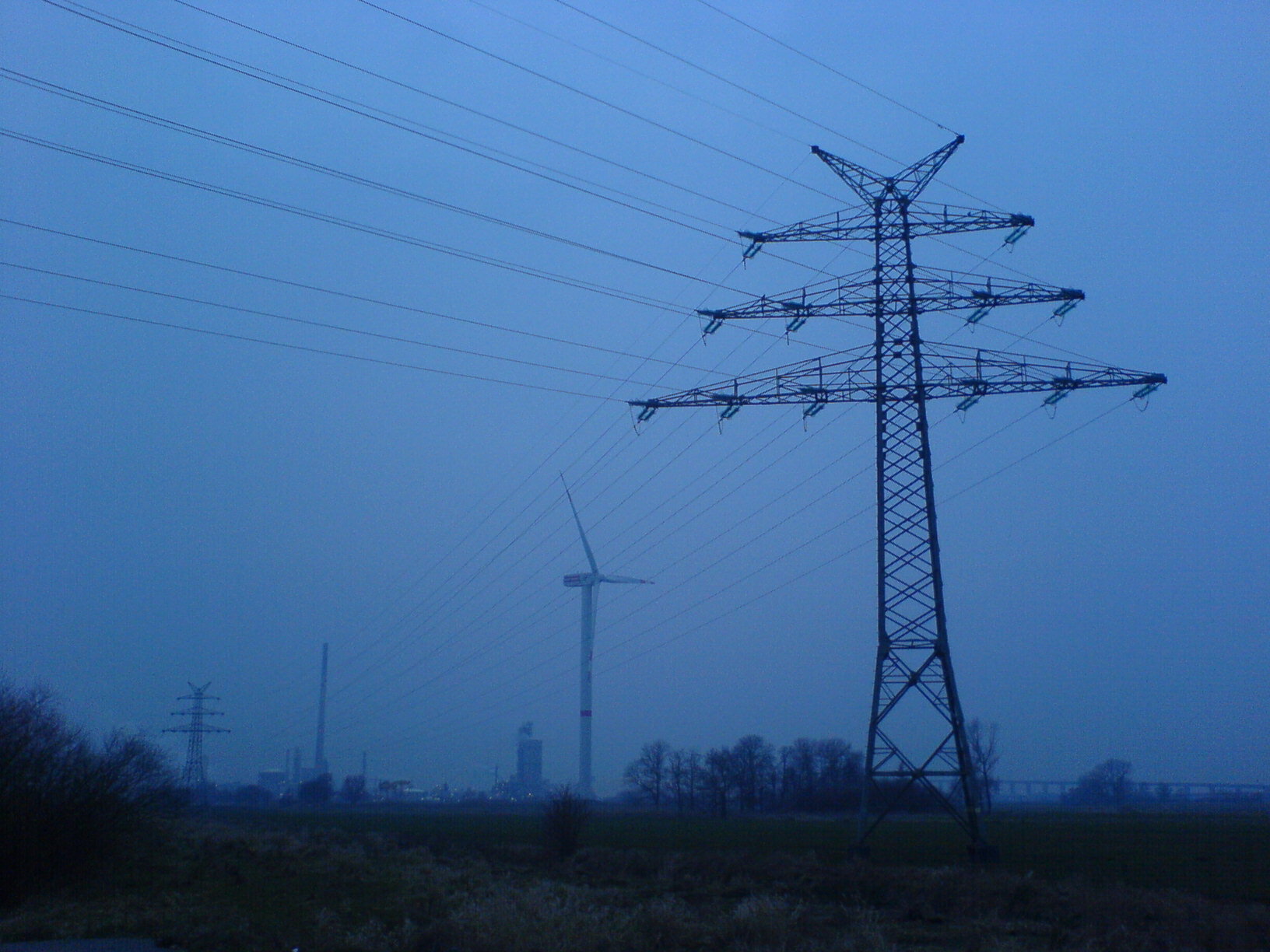
Hopeful spinoff number one: Berlin is getting serious about upgrading the balkanized and inadequate transmission grid that represents a serious liability for Germany’s renewable energy ambitions.

Chancellor Angela Merkel’s decision last month to shut down Germany’s oldest nuclear reactors and temporarily scrub life extensions for the rest was widely seen as a sop to voters in the state of Baden-Württemberg. Well, Merkel’s Conservative Democrats lost the state to the Green Party, and she hasn’t looked back. Last week a document leaked from Germany’s Economy Ministry and reported by Bloomberg revealed plans to revamp the power grid–a precondition to replacing nuclear energy with solar, wind and other renewable power sources. Continue reading “Fukushima Inspires Change in Germany & China”

A Mighty Extreme Wind for Offshore Turbines

In January we reported that winds across the Northern continents were losing some of their punch, and that climate change threatened to weaken them further — altogether bad news for wind power. In stark contrast, Australian researchers report today in the journal Science that gusts are accelerating over Earth’s oceans.

Unfortunately the trend offers offshore wind power a mixed bag: stronger but also more dangerous winds. “Mean wind conditions over the oceans have only marginally increased over the last 20 years. It is the extreme conditions where there has been a larger increase,” says Ian Young, vice chancellor at the Australian National University in Canberra and principal author of today’s report. Continue reading “A Mighty Extreme Wind for Offshore Turbines”