In the April 2014 issue of IEEE Spectrum:
Methane emissions from oil and gas extraction, herding livestock, and other human activities in the United States are likely 25 to 75 percent higher than the U.S. Environmental Protection Agency currently recognizes, according to ameta-analysis of methane emissions research published recently in Science. While experts in remote sensing debate the merits of this and other recent challenges to the EPA’s numbers, definitive answers are already on order via a high-precision Earth observation satellite to be launched next year.
The intensifying methane emissions debate has profound implications for climate and energy policy. Natural gas consumption is rising, and methane’s global warming impact is more than 30 times as much as that of carbon dioxide, molecule for molecule, and second only to carbon dioxide’s in today’s net climate impact …
click to read on
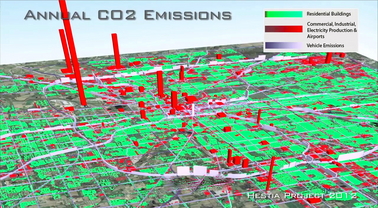 Natural gas has no odor, but you can smell a leak thanks to the addition of an odorific mercaptam compound. Do carbon dioxide and other similarly odorless greenhouse gases (GHGs) require some analogous device to make their presence known and thus prompt evasive action? Yes, and for these ubiquitous gases, it will be a visual cue indicating the source and quantity of GHGs
  Late last week President Barack Obama deferred consideration of the Keystone XL oil pipeline, designed to ship Alberta petroleum to the Gulf Coast, until after next year’s U.S. elections. Obama’s move immediately sparked vows in Canada to redirect crude exports to Asian markets less angst-ridden by the environmental impacts associated with tapping Alberta’s tough, tarry petroleum. A smarter strategy would be to reduce those impacts, starting with the black mark that brought Keystone XL to national attention: oil sands crude’s bloated carbon footprint.
  In January we reported that winds across the Northern continents were
  Peter Fairley