
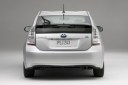
 The solar roof that Toyota is offering as an option on its next-gen Prius hybrid sedean is even less efficaceous than expected, according to specialty publication EVWorld. The solar panels, reports EVWorld, will add not a nanowatt of charge to drive the Prius.
Technology Review looked at the potential impact of a solar roof on the Prius last summer when rumors of Toyota’s plans first emerged. The clear conclusion of the experts: Keep solar panels on rooftops, where they can be tilted towards the sun for maximum efficiency and multiplied to provide the kilowatts of power it takes to drive a car. A solar rooftop would be just a “marketing gimmick” said Andrew Frank, a plug-in hybrid pioneer at the University of California, Davis, and chief technology officer for UC-Davis hybrid-vehicle spinoff Efficient Drivetrains.
Toyota, it turns out, won’t even bother plugging its solar rooftop panel into the 2010 Prius’ nickel-metal hydride battery.
 How many automotive engineering leaders from Detroit or Stuttgart would identify the U.S. Clean Air Act Amendments of 1970 as the inspiration of their engineering career? Yet that’s exactly what Masatami Takimoto did when I spoke with the Toyota executive vice president responsible for R&D and powertrain engineering earlier this month at the Geneva Motor Show.
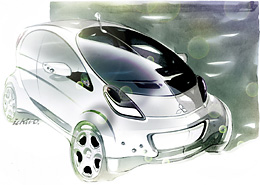 If batteries aren’t yet up to the task of electrifying the family beater, why not shrink the beater? French automaker PSA Peugeot Citroën kicked off the Geneva Motor Show this morning announcing it was joining an accelerating embrace of this logic. The Paris-based manufacturer revealed this morning that it is pursuing a deal with Mitsubishi Motor to
  Peter Fairley