Power and gas utilities—especially when pushing their own internal energy projects and products—often cloak their proposals for transmission lines, power plants and pipelines in proprietary data and models. And such scrutiny-averting tactics can lead to more costly infrastructure, squander opportunities for cleaner energy, and reduce public acceptance of system upgrades. “Companies get away with bad planning, hiding their cherry-picked assumptions in models nobody can see. This erodes confidence and costs consumers dearly,” says Tom Brown, an energy modeling expert at the Technical University of Berlin.
Such concerns are gaining traction within Europe’s official bodies, where greater transparency is seen as the only way to plan a robust and sustainable grid for tomorrow that taxpayers and communities will get behind today. Pressure is mounting project proponents and the organizations that coordinate the continent’s electricity and gas networks to switch to open-source models.
This week a European Commission-funded study concluded that open source codes can—and should—underpin official 10-year plans prepared for Europe’s gas and power networks. And its findings affirm a forceful endorsement of open modeling by the European Scientific Advisory Board on Climate Change. “Transparency of market and network models and calculations is key to ensuring public scrutiny of political investment decisions,” the independent council told the European Commission. As a result, it stated, the “traditionally closed and proprietary nature of energy system planning … is no longer fit for purpose.”
Read the full story @IEEE Spectrum.


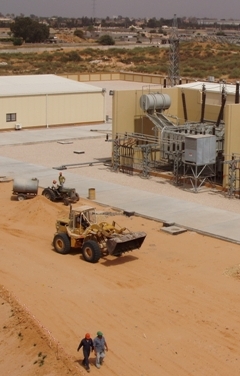 Engineers working in the teeming cities and lonely deserts of North Africa are creating the last links in a power grid that will ring the Mediterranean Sea. Sharing electricity over this ‘Mediterranean Ring’ could secure Europe’s power supply with clean renewable energy, accelerating North Africa’s development and knitting together two worlds that seem to be racing apart — those of Muslim North Africa and an increasingly xenophobic Europe.


 Peter Fairley