
The Man Who Kept Ukraine Warm

In the 21st Century nothing works when the power goes out, which is exactly why Vladimir Putin repeatedly attacks Ukraine’s power system. In How Electrical Engineers Fight a War I narrate their grid engineers’ fight to keep the lights on and the heat flowing. One man did more than any other: transmission mastermind Oleksiy Brecht, who was killed in January while rebuilding a crippled substation.

Oleksiy Brecht / Ukrenergo

Brecht’s life and death are a window into the realities of thousands of Ukrainian grid engineers who face conditions beyond what most of their international counterparts could imagine. Mariia Tsaturian, who worked with Brecht at the country’s power grid operator Ukrenergo, told me the war transformed professional life. “Their world was turned upside down entirely. A substation engineer working under shelling is something no one had ever seen or experienced before,” said Tsaturian.

Brecht’s brilliance, creativity and courage empowered his colleagues to restore power flows again and again after Russian missiles and drones smashed power plants, electrical switchyards and transmission lines. The transmission boss found a way to use whatever equipment was available, sometimes making unprecedented ‘off design’ use of complex devices. And he beat the bushes to find replacement parts abroad.

Andrii Nemyrovskyi, Ukrenergo’s former Deputy CEO, told me he insisted that the military provide protection for two people at the company: the CEO, who made daily operational calls, and Brecht, because “system operations requires that the system exists.” President Zelenskyy posthumously named Brecht a “Hero of Ukraine.”
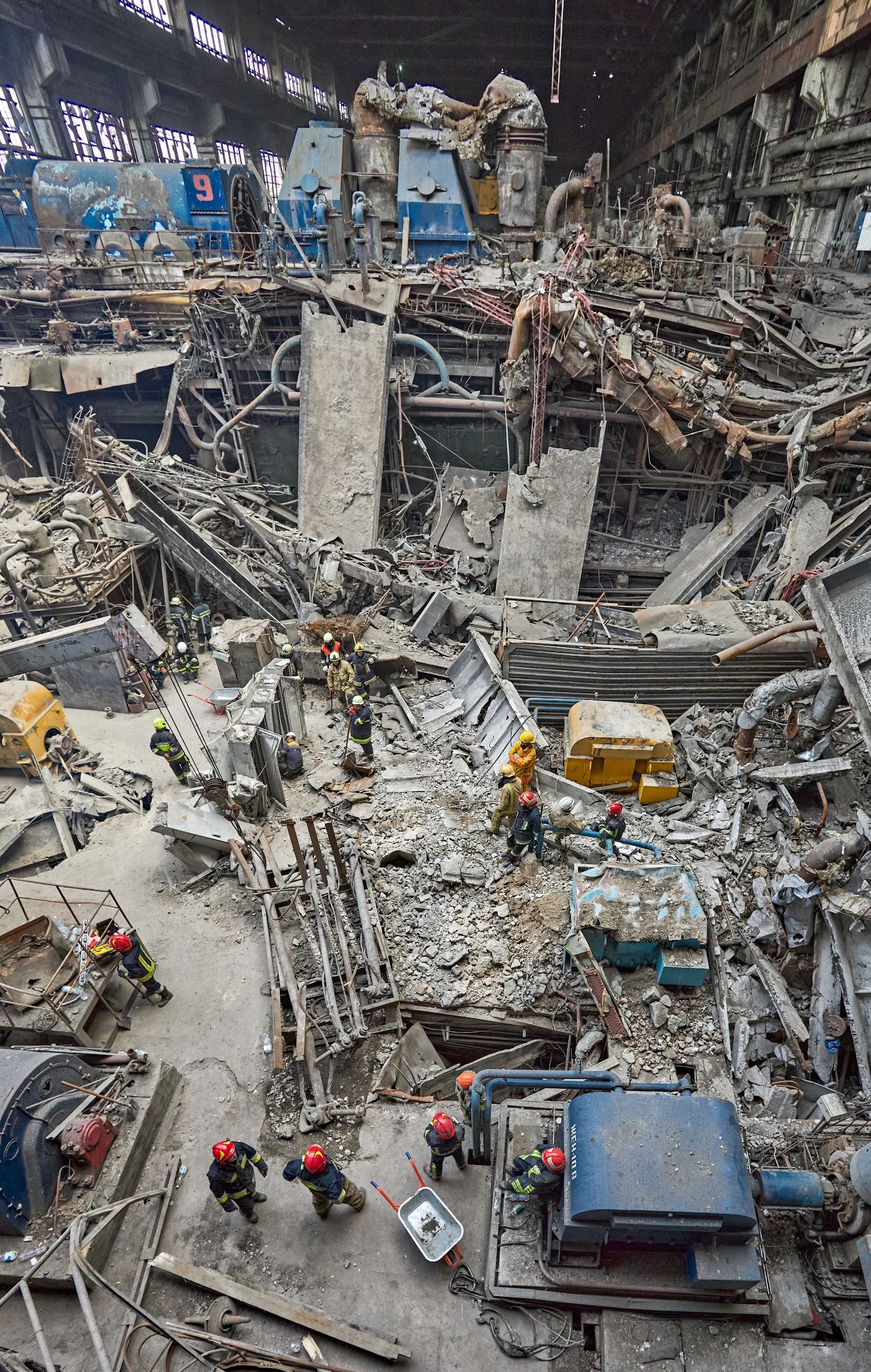
A Part of Modern Life So Essential That Armies Should Never Attack It Again

Photo: DTEK

It’s time to change the laws of war to punish and hopefully deter the insane and inhumane destruction of power grids. So argues my guest essay for The New York Times opinion pages.

For two years, it has pained me to observe and occasionally cover Russia’s increasingly destructive pummelling of Ukraine’s power grid. As a longtime student of power systems, I intimately know the engineering and operational sophistication that keeps power grids — the world’s largest machines — running at close to the speed of light. I know how entrenched power systems have become in modern life, assuring everything from home oxygen generators to sewage treatment. And I know that plugging in more is our best hope for stopping climate change.

Since Russia’s whole-scale grid attacks began in late 2022 I have questioned the legality of such wanton destruction. In my debut contribution to The Times I lay bare the holes in international law that legalize most attacks on power systems, and argue that the international community should draw brighter lines to protect them.

The Internal Struggle Compounding Ukraine’s Nuclear Peril

There’s a cloak-and-dagger struggle on for control of Ukraine’s nuclear power plants, pitting activist nuclear professionals against alleged Russian agents. I began tracking this opaque battle early in Russia’s invasion when Ukraine’s state security bureau detained the nuclear power utility’s director of personnel. That cast a dark cloud over officials he’d appointed at Energoatom’s headquarters and at the four nuclear power plants that supply over half of Ukraine’s electricity.

Now this spy-vs-spy battle for Ukraine’s nuclear power has leapt from the shadows.

Last month Ukrainian counterintelligence pierced an “extensive agent network” led by the suspect official’s longtime patron: U.S.-sanctioned Russian spy Andriy Derkach, who gained global notoriety passing kompromat on Biden to Trump lawyer Rudy Giuliani in 2019. Then utility CEO Petro Kotin fanned the flames this month in a disastrous appearance before a parliamentary panel. Kotin did not win deputies’ confidence when, for example, he explained that his deputy failed to show for the hearing because he had the day off.

The spectacle prompted Kyiv-based media outlet Glavcom to report that Ukraine’s “Nuclear energy is in danger,” and that a “search for collaborators” was on.

Fears of infiltration add to the instability created by Russia’s unprecedented military assaults on Ukraine’s nuclear reactors. And both threats raise the spectre of accidents that could spread radiation across Europe, and undercutting Ukraine’s ability to defend itself. If the power grid collapses, the country will be in chaos.

Read the full story @IEEE Spectrum

Ukraine’s #EnergyFront

Energy is central to the geopolitics of Russia’s war on Ukraine. Putin thought Europe would let him seize Ukraine because the continent depends so heavily on Russian gas, petroleum and coal. The US is helping turn back Russian aggression not just by pumping weapons into Ukraine, but also by bolstering Europe’s energy supplies and thus facilitating European solidarity.

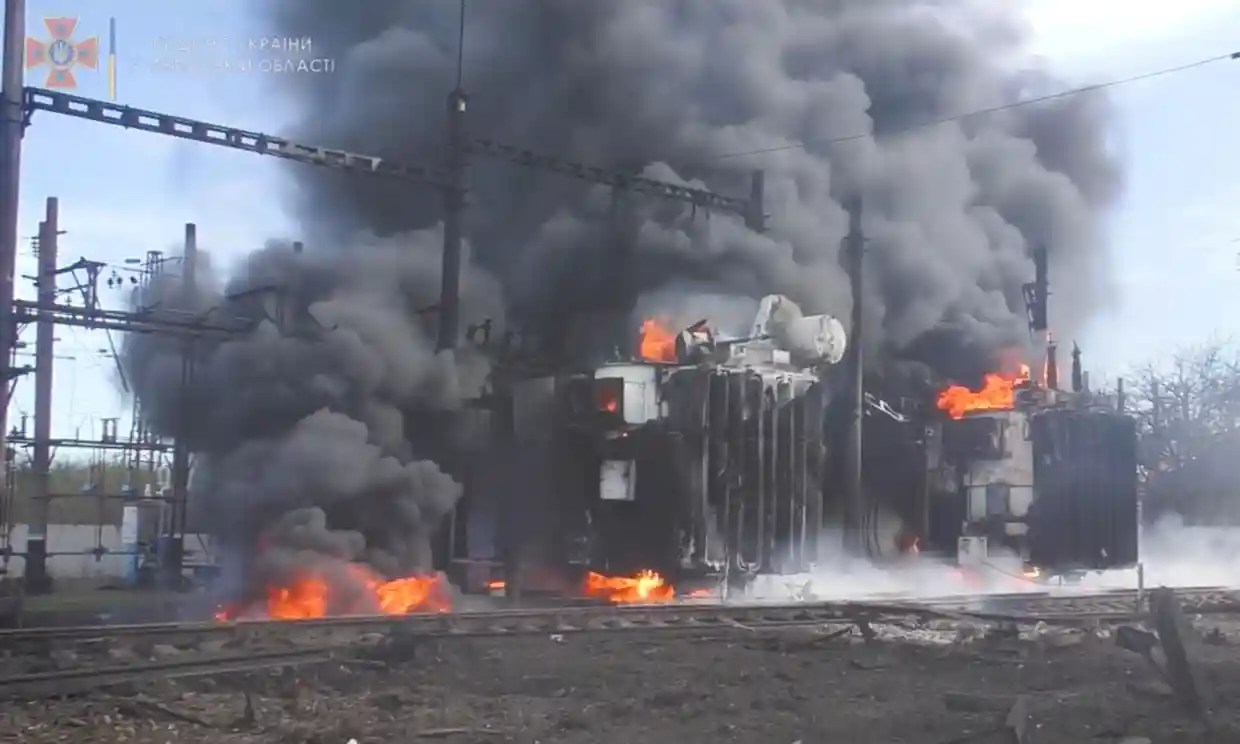
A substation in Ukraine shelled by Russia. Photo credit: State Emergency Service Of Ukraine.

But there’s also an #EnergyFront within Ukraine, which I’ve been covering for @IEEESpectrum. One flashpoint has been Ukraine’s power grid which was, until the war began, tied to the giant UPS/IPS synchronous AC power zone controlled from Moscow. My report, How Russia Sent Ukraine Racing Into the “Energy Eurozone”, chronicles bold moves in the war’s first weeks that isolated Ukraine’s power system and then plugged it into Europe’s.

Ukraine’s power grid operator made the first move hours before Russian tanks and missiles crossed borders in February. The transmission operators’ European counterparts made the next “heroic” move a few weeks later, stabilizing Ukraine’s power supply even as its attackers destroyed lines, substations and power generators.

Another flashpoint is the battle for control of Ukraine’s nuclear power sector, including the four operating plants that supply over half of the country’s electricity. When Russia invaded, Ukraine remained heavily dependent on Russian suppliers of nuclear fuel, waste handling, and parts. Patriots feared sabotage of nuclear power plants and and their defences, either to facilitate the plants’ seizure by Russian forces or to cause a nuclear incident.

Their fears prove justified when the Russian army attacked and captured Ukraine’s Zaporizhzhya nuclear power plant—Europe’s largest.

My report, Ukraine Scrubbing Nuclear Agencies of Russian Influence, revealed an internal struggle for control of Ukrainian national nuclear power generating company Energoatom whereby several top executives fled the country and a vice president was detained by state security police.

China Close to Firing Up a Fast Reactor

Russian nuclear energy holding company Rosatom reported yesterday that a subsidiary had completed construction of an experimental nuclear reactor in Beijing. At 25 megawatts the reactor’s power output is small, but it sends a big message about where nuclear technology may be heading — especially after the Obama Administration’s effective cancellation last month of plans to store U.S. spent nuclear fuel at an underground repository below Nevada’s Yucca Mountain.

The Chinese Experimental Fast Reactor is so-named because the neutrons produced in its core are not ‘moderated’ with water like those that generate heat in nearly all commercial nuclear reactors. The faster neutrons can burn down nuclear waste and even generate new fuel, promising a solution to the thorny problem of waste storage as well as energy independence.

Continue reading “China Close to Firing Up a Fast Reactor”