Energizing Taiwan’s ‘Silicon Shield’

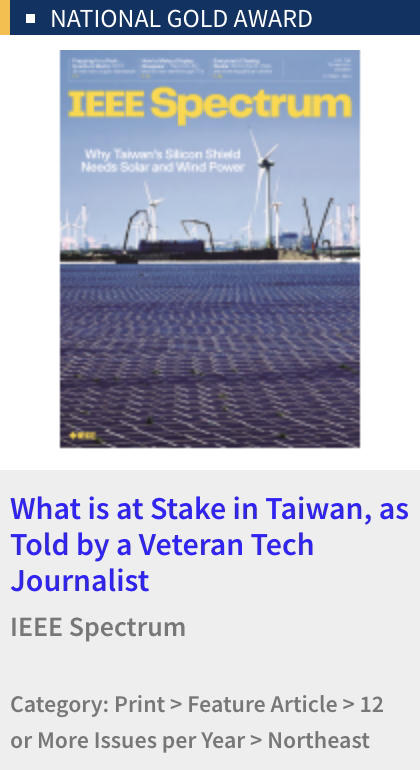
National Gold Feature Article, 2025 Azbee Awards

One incredibly wealthy firm, the Taiwan Semiconductor Manufacturing Company, dominates the global microchip market. To Taiwan, it’s much more than an economic engine. TSMC’s advanced microchips are to this century what petroleum was to the last, and that geopolitical asset gives embattled Taiwan what security experts call the ‘Silicon Shield’: The US won’t let TSMC’s chip fabrication plants fall to China, and Beijing won’t risk the economic devastation of a fab-destroying invasion.

Or so the logic goes.

The challenge is keeping this geopolitical forcefield powered up.

TSMC’s power consumption is nearly doubling every 5 yrs as it taps extreme-UV beams to etch silicon. And power quality matters as much as quantity. TSMC needs cleaner energy than Taiwan’s mostly coal and LNG-fired power plants supply. As buyers like Apple & Google seek to wring carbon out of their supply chains, Taiwan risks losing TSMC to greener pastures.

My latest feature, reported from Taiwan, captures a massive push to green the country’s energy with solar arrays and offshore wind plants. In a densely-populated land slightly larger than Maryland, that renewables push is inevitably ruffling feathers.

Read the full story @IEEE Spectrum
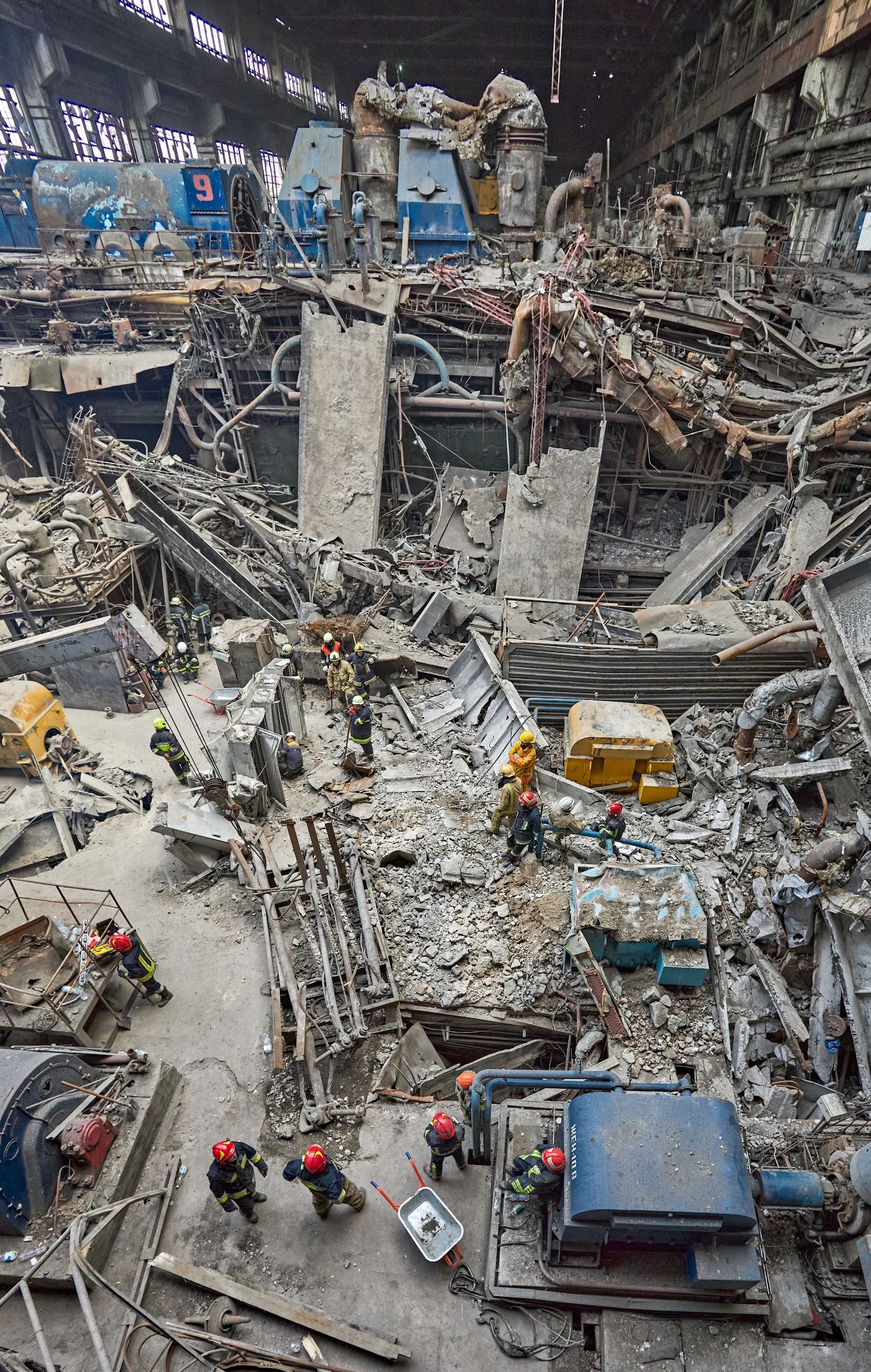
A Part of Modern Life So Essential That Armies Should Never Attack It Again

Photo: DTEK

It’s time to change the laws of war to punish and hopefully deter the insane and inhumane destruction of power grids. So argues my guest essay for The New York Times opinion pages.

For two years, it has pained me to observe and occasionally cover Russia’s increasingly destructive pummelling of Ukraine’s power grid. As a longtime student of power systems, I intimately know the engineering and operational sophistication that keeps power grids — the world’s largest machines — running at close to the speed of light. I know how entrenched power systems have become in modern life, assuring everything from home oxygen generators to sewage treatment. And I know that plugging in more is our best hope for stopping climate change.

Since Russia’s whole-scale grid attacks began in late 2022 I have questioned the legality of such wanton destruction. In my debut contribution to The Times I lay bare the holes in international law that legalize most attacks on power systems, and argue that the international community should draw brighter lines to protect them.

“They Had to Break the Law to Try to Save Humanity”

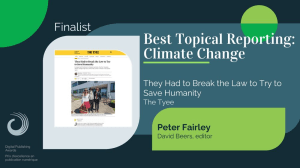
Finalist, 2025 Digital Publishing Awards

The climate clock ticks toward midnight, yet US fossil fuel output keeps setting records and Canada goes on chopping Old Growth forests. Under such circumstances it’s hardly surprising that many climate activists have turned to civil disobedience, blocking highways and attacking masterworks to amplify their message. What is surprising is that courts seem to be listening.

My exposé for Vancouver’s premier public-interest news outlet, The Tyee, explores one case where precedent-setting judicial compassion could embolden activists across Canada to ratchet up pressure on governments.

In this courtroom drama a pair of climate activists deploy the ‘defence of necessity’, arguing that they should be excused for blockading highways, airports, banks and ports because the dire threat posed by climate change left them no legal alternative. My exposé explores the moral and practical considerations that go into determining when such premeditated lawbreaking should be legally tolerated — and whether it might actually strengthen the rule of law.

The result is “powerfully informative” according to one informed reviewer. “You give readers a deep and clear look at all the moving parts of this defence of necessity and the profound issues it raises – but you do that as a master storyteller, so it is gripping, easygoing, and compelling.”

UPDATE: On May 3, 2024 Judge Ronald Lamperson ruled that the activists’ civil disobedience did not qualify for the necessity defense. You can read why in my day-of news filing for The Tyee.