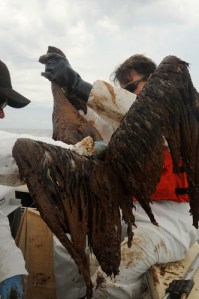
 How is one to bridge the gap between BP’s latest oil collection stats and visual reality?
The oil and gas giant claims to be sucking crude straight off its stricken mile-deep wellhead and pouring it into the drillship Enterprise at a rate of 11,000 barrels per day, thanks to a cap and tube installed on Friday. And, yet, video feeds from ROVs present a plume of oil and gas that looks as angry as ever, gushing plenty more black goop destined for dispersal into the Gulf of Mexico’s already beleaguered ecosystems.
“Clearly alot of people are looking at it and trying to understand what does this mean,” acknowledged BP senior vp/exploration Kent Wells of the top-rated video images during in a media briefing this afternoon. Continue reading “BP Under Pressure to Tighten Spill Cap”
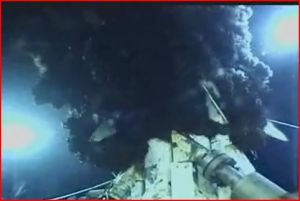 BP is capturing oil at a rate of 1,000 barrels-per-day via its latest containment scheme — a cap and new riser installed on its gushing Gulf spill last night — according to Federal response coordinator and Coast Guard Admiral Thad Allen. But video feeds confirm that far more crude is still spilling into the sea from under the cap — at least 11,000 barrels per day if one subtracts 1,000 bpd from the minimum
  BP Americas chief operating officer Doug Suttles says the ‘top kill’ operation initiated this morning to stanch the Gulf oil spill is “performing as expected” and could be completed within 24 hours. But U.S. Coast Guard Rear Admiral Mary Landry, who spoke with Suttles at an early-evening media briefing, took a more reserved tone. “I do not want to express optimism until I know for sure that we’ve secured the well and that the leak has stopped,” says Landry.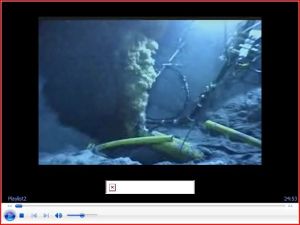

 A notorious economics joke has optimistic implications for solar energy and its decades-long dreams of matching the cost of the electricity now flowing on power grids — the vaunted grid parity that is most renewable energy advocates’ image of the singularity that will free us from climate change and the anti-democratic effects of centralized power. In the joke an economist, physicist and chemist are stranded, starving, on a remote island when a can of soup washes ashore.
 Peter Fairley