A LowCarb Negawatt Diet for the Planet

We could all get by with a lot less energy. According to a report out today by the Alliance to Save Energy, the Washington-based United Nations Foundation and Dow Chemical, the G8 countries such as Canada, France, Russia and the U.S. could double their current rate of efficiency improvement to 2.5% per year with investments that would pay for themselves over 3-5 years. That would eliminate the need for four-fifths of the new coal-fired power plants that the International Energy Agency estimates will be built between now and 2030.

Today on TechReview.com I profile a simple device to motivate energy efficiency that’s likely to become as common as the thermostat. It’s a glorified glow-lamp called the Joule with the potential stop blackouts and slash energy costs.

In future Carbon-Nation will bring you more energy efficiency opportunities. We’ll also try to massage energy efficiency’s achilles heel: a vicious feedback loop known by economists as the rebound effect whereby high energy prices stimulate energy efficiency improvements so effectively that they reduce demand, undercut energy prices, and stimulate new consumption that offsets the original efficiency gains. The rebound effect is just one of several reasons why potential efficiency gains such as those identified in today’s report fail to translate into longterm reductions in overall energy demand.

Is there a gadget out there to keep us from rebounding?

add to del.icio.us : Add to Blinkslist : add to furl : Digg it : add to ma.gnolia : Stumble It! : add to simpy : seed the vine : : : TailRank

Fixing Power to Power Grids — Today’s Batteries Mean More Wind Power Tomorrow

It was probably my greatest embarrassement as a journalist. Within weeks of publishing a major feature on energy storage in Technology Review (see “Recharging the Power Grid”), the half-completed demonstration project we profiled as the start of something big — a giant battery to stabilize the power grid in eastern Mississippi — was scrapped by its developer. The corporate parent of the battery developer, Regenesys, was bought up and the new buyer simply decided to pursue different opportunities.

Disappointments such as this are a perennial risk for the technology journalist who tries to peer into the future, given the vagaries of the R&D process. In this case, however, the risk was higher than normal due to the high cost of energy storage technology and the large size of the facility. Four years later energy storage is finally going commercial as utilities exploit of batteries that are less than one-fifth the size, as my story this morning on TechReview.com and ABCNews.com attests (see “Fixing the Power Grid”). 

These portable batteries will be the power grids’ rapid-response teams, ready to ship out for duty to stabilize overloaded power lines and substations. Why should we care? Commercialization of small batteries is likely to bring down the cost of such technology, enabling them to take on a more transformative role: providing the buffering grids will need if renewable energy sources such as solar panels and wind farms grow to large scale. It already appears to be happening in Japan and Europe, thanks to higher energy prices and forward-looking government policies.

add to del.icio.us : Add to Blinkslist : add to furl : Digg it : add to ma.gnolia : Stumble It! : add to simpy : seed the vine : : : TailRank

Solar Thermal Power: Reliable Renewable Energy?

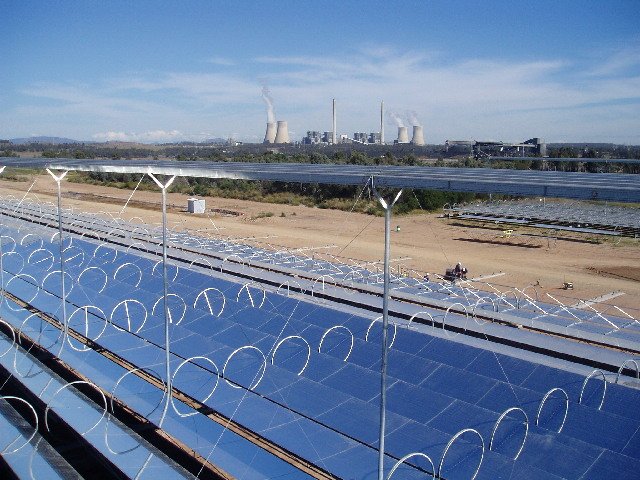
Solar proponents love to run the math on how much (or how little) Southwestern desert one would need to cover with solar energy installations to power the United States. David Mills, founder and chairman of Palo Alto, CA solar startup Ausra, has his own estimate: 145 kilometers. Mills’ estimate is more credible than most, and not only because he’s a former president of the International Solar Energy Society.

Mills’ company is developing a less well known variant of solar power that could actually make solar power work as a total energy solution: solar thermal power plants that turn sunlight into steam and then use that steam to produce electricity in turbines (much as a nuclear or coal-fired power plant does). See my story on the MIT Technology Review website this morning — “Storing Solar Power Efficiently” — on why such plants’ ability to store heat sets them apart from other renewable energy options such as wind power and photovoltaics (solar panels that turn light directly into electricity).

Note that the potential of solar thermal power extends beyond the U.S.: China and India have sun-baked desert regions available for large solar installations, while Europe is just a transmission line away from North Africa.

add to del.icio.us : Add to Blinkslist : add to furl : Digg it : add to ma.gnolia : Stumble It! : add to simpy : seed the vine : : : TailRank

Rethinking Energy Deregulation’s Green Dividends

The European Commission proposed new rules today to break up Europe’s energy monopolies and I must say it makes me wonder whether they aren’t trying to fix something that isn’t broken–at least as far as the environment is concerned.

Commission President José Manuel Barroso told reporters today that: “We need a common European response to combat climate change, to achieve greater energy security and provide abundant energy at a fair price for citizens. This is only possible if we have a competitive gas and electricity market.” But that assumed connection between responding to climate change and competition is worth questioning.

Certainly, the EC’s proposal to take control of power transmission grids out of the big utilties’ hands seems a good bet, giving innovative new players such as wind farm developers a better chance of gaining access to the grid. In fact, the European Wind Energy Association says the EC should go farther and force utilities to sell their interest in power transmission. “Allowing power generation companies to own the transmission grid makes as much sense as allowing an airline company to own the sky,” comments EWEA CEO Christian Kjaer in a press statement issued today.  

However, one of my conclusions from reporting on China and the U.S. is that the increasing drive towards deregulation–in particular the conversion of utilities from state-owned entities into profit-focused firms–can make it more difficult to drive change in energy technology. As I reported in Part II of my feature for Technology Review, China’s Coal Future, China’s move to a more open economy hampered efforts to deploy that countries first gasification coal-fired power plant. 

In 1993, China’s leading power engineering firm, China Power Engineering Consulting in Beijing, began designing the country’s first gasification power plant for the monopoly utility of the era, the State Power Corporation. This demonstration plant was to be the beginning of a transition to cleaner coal technology. Instead, the plant went on a roller-coaster ride to nowhere. The project was delayed by cost concerns in the mid-1990s and then revived in the late 1990s, only to be cut adrift after 2002 by the breakup of the State Power Corporation.

Anyone who’s breathed the air in China recently knows that was an immense lost opportunity.

add to del.icio.us : Add to Blinkslist : add to furl : Digg it : add to ma.gnolia : Stumble It! : add to simpy : seed the vine : : : TailRank

Re-embracing the Grid

eagle-island-2007-145.jpgOne month ago (a thoroughly inexcusable gap for a webjournal) I began my annual migration to an island-bound off-grid retreat, promising to make up for my absence by bringing Carbon-Nation fresh insights on low-energy living.

First realization: Energy efficiency is a tough sell. People want energy. Fellow islanders, suddenly attuned to energy like the rest of North America, had trouble reconciling the fact that I write about energy and live in the most primitive house on the island. Yet energy conservation is the largest and cleanest opportunity we have to radically reduce our use of energy, far better than switching to new forms of power generation which inevitably bring their own risks and environmental impacts. The challenge is exciting people (including my editors).

Second insight: Our energy use on the island has expanded more than I had realized. Like our neighbors we have a propane stove and fridge, but we are the last holdouts without on-demand electricity (others use solar and gasoline generators while we rely on batteries and kerosene) and we still use an outhouse and a rain-fed cistern connected to a hand pump for plumbing (others have solar-pumped water systems and there are even a few toilets). Nevertheless, over the past decade we’ve added a chain saw and a small boat, bringing gasoline into our energy mix and thus plugging in a little tighter to a fossil fuel distribution ‘grid’ stretching from here to Iraq.

Mea culpa: I did plug in to a friend’s solar system once or twice to recharge a pocket PC and cell phone and, yes, to check my email. In 2003 I was ensconced in my island paradise in August, missing both the largest blackout in history and calls from CNN looking for on-air commentary on the state of the grid and the technological options for modernizing it. I didn’t want to miss the boat again. 

Three: Upon departing, I described the rain-fed cistern and hand pump as our cottage’s most advanced technological feature. I had overlooked the kerosene lamps, whiUncle Dave burning fuelch burn amazingly clean thanks to their glass chimneys. The contrast with what the off-grid villagers I visited in Bolivia’s Cordillera Real for “Lighting Up the Andes” is stark. Many used a kerosene-filled tin can with a wick stuck into the top producing a thick stream of soot.

A reminder: Huge efficiency and health gains await if we can banish such primitive lighting and open-burning stoves from the developing world.

Which brings me to Jerry’s comments during my absence: Jerry asked why North Americans surpass everyone else in energy consumed per capita, and what strategies we can employ to turn this around. Observing that Ford, Daimler-Chrysler and GM sell far more efficienct vehicles in Europe, the higher use of ductless AC in Asia (what is that?), and Europe’s tankless water heaters, Jerry says he is “beginning to believe that the technology required to significantly reduce our per-capita consumption is proven, established, even old.” How true. The glass-chimneyed kerosene lamp is but one more example.

Stay tuned for a proper response to the “what to do” portion of Jerry’s comment. Or start writing!

add to del.icio.us : Add to Blinkslist : add to furl : Digg it : add to ma.gnolia : Stumble It! : add to simpy : seed the vine : : : TailRank

Going Off-Grid

Eagle Island, METhis weekend I begin my annual migration to an off-grid cottage whose most advanced technological feature is a rain-fed cistern connected to a hand pump. I hope to resist the urge to use the Internet (technically feasible but not easy), thus returning to Carbon-Nation with fresh insights from both the alternative manner of existence and the uninterrupted stretches of deep-thinking it delivers. Go ahead and chime in with deep thoughts of your own about our use of energy and options for rethinking it.
Let the Electrons Blow

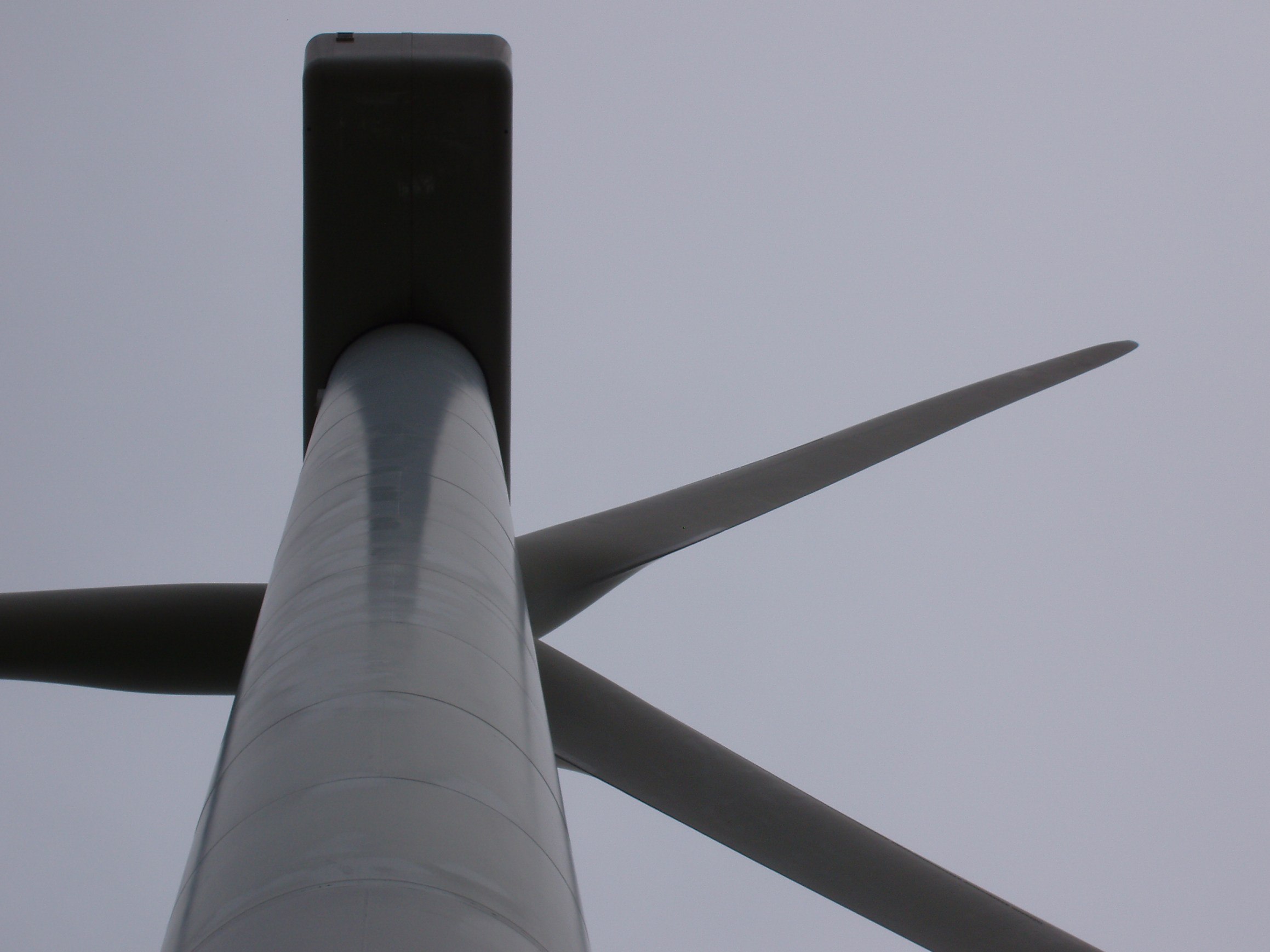
Up close and personal with a Pennsylvania wind turbineFor several years now the American Wind Energy Association has been telling anyone who’d listen that access to power transmission lines was quickly emerging as the greatest impediment to continued expansion of wind farms — renewable energy’s biggest success story of the decade. This puts wind power in a very uncomfortable place given the cost and unpopularity of high-voltage power lines, which multiply similar issues faced by the wind farms themselves.

Case in point is recent opposition to new power lines under construction in southern California to bring wind power out of the Tehachapi Mountains. Southern California Edison and California regulators say the 500kv lines are needed to meet the state’s agressive renewable portfolio standard, which mandates that the utility meet 20% of electricity demand with renewable sources by 2010.

But according to today’s LA Times a few dozen cabin owners in the Angeles National Forest, to be bisected by the lines, pose an unacceptable fire risk to their cabins. This otherwise fine piece of reporting neglects to ask one important question: Should these people be living in a national forest, where fire is a natural component of the ecosystem?

One piece of good news from California: the state is not only expanding grid capacity for renewable energy today, but also creating new approaches to grid financing that will help address the cost burden of building new power lines. Under current market rules set by the Federal Energy Regulatory Commission (FERC) in D.C., windfarm developers must pay up front for the cost of new transmission capacity built to bring their electricity to market.

However, FERC recently approved a California proposal enabling utilities to pay the upfront cost of building new transmission lines and then recover that investment from the line’s users as they feed in their power. Folks at CalISO, the independent system operator which controls California’s grid, tell me the new financing scheme has kickstarted other wind projects and a geothermal project elsewhere in the state that were heretofore stymied by the transmission cost-penalty.

add to del.icio.us : Add to Blinkslist : add to furl : Digg it : add to ma.gnolia : Stumble It! : add to simpy : seed the vine : : : TailRank