U.S. Law Swinging for Carbon Controls

Just over one year ago Carbon-Nation pondered the continued construction of conventional coal-fired power plants in the U.S. despite the availability of cleaner gasification-based technology. In Why EPA is not Mandating Cleaner Coal I laid out the legal case for EPA to mandate the use of Integrated Gasification Combined Cycle technology — something the Bush Administration has refused to do:

As the Clean Air Act stipulates that new power plants must be built using the best pollution control technology available, new coal plants dirtier than IGCCs should thus be technology-non-grata.

At the time I posited that the then-recent U.S. Supreme Court decision declaring carbon dioxide a pollutant under U.S. law might help to turn the tide. That appears to be happening. Late last month a judge in Georgia overturned a permit for a planned coal-fired power plant, linking the Supreme Court ruling and the existing Clean Air Act requirement for best available technology.

Here’s how the Pew Center on Global Climate Change, a Washington-based think tank, presented the decision in “Georgia Court Rejects Proposed Coal-Fired Plant Over GHG Emissions Concerns” :

On June 30, 2008, Judge Moore of Georgia’s Fulton County Superior Court revoked a permit for construction of a proposed 1200-megawatt coal-fired power plant in the state. Ruling in favor of the plaintiffs, Judge Moore found that the permit filed by Longleaf Energy and approved by the Georgia Environmental Protection Division failed to consider the best available pollution control technology (BACT) to mitigate harm caused by the proposed plant’s estimated annual emissions of 8-9 million tons of CO2. The defense had argued that a BACT analysis was unnecessary because CO2 is not a pollutant subject to regulation under the Clean Air Act (CAA). In rejecting the defense’s argument, Judge Moore cited the U.S. Supreme Court’s April, 2007 decision in Massachusetts v. EPA, in which the Court found that CO2 does qualify as a harmful pollutant that the United States Environmental Protection Agency must consider regulating under the CAA.

The company behind the project, Longleaf Energy Associates, plans to appeal.

add to del.icio.us : Add to Blinkslist : add to furl : Digg it : add to ma.gnolia : Stumble It! : add to simpy : seed the vine : : :

Toyota’s Solar Sales Scheme

University of Minnesotas 2008 Solar Challenge Vehicle

“Cool” was the first word out of University of Minnesota aerospace engineering prof Jeff Hammer’s mouth when I told him Toyota’s Prius may soon come with its own rooftop solar generating system. But does it make sense? Not really, says Hammer: “The car is not always in the sun and there’s no surface facing the same direction all the time. The best thing to do is set [your solar panels] somewhere fixed that’s always in the sun and use the energy directly. That’s what the economics would tell you to do.”

That’s pretty damning coming from Hammer, whose job is to help turn solar energy into motive power. Well, sort of. Hammer is faculty advisor for an engineering team that put together one of 18 solar-powered vehicles competing in the 2008 North American Solar Challenge — a 2,400 mile race from Dallas to Calgary that got underway this weekend. His job is actually to help engineering students learn. “The main thing that solar car racing does to help automakers is that engineering students get a better education,” says Hammer. “We don’t think of building a solar car as a research activity or technology development activity.”

So what is Toyota doing offering solar panels that will be largely wasted? Showing once again that it is the master of green marketing. For the full story, see my full report — “Does Car-Mounted Solar Make Sense?” — at MIT’s TechReview.com today.

add to del.icio.us : Add to Blinkslist : add to furl : Digg it : add to ma.gnolia : Stumble It! : add to simpy : seed the vine : : :

Garbage to Gas Addendum

An important paragraph fell out of my waste gasification coverage this week during the editing process:

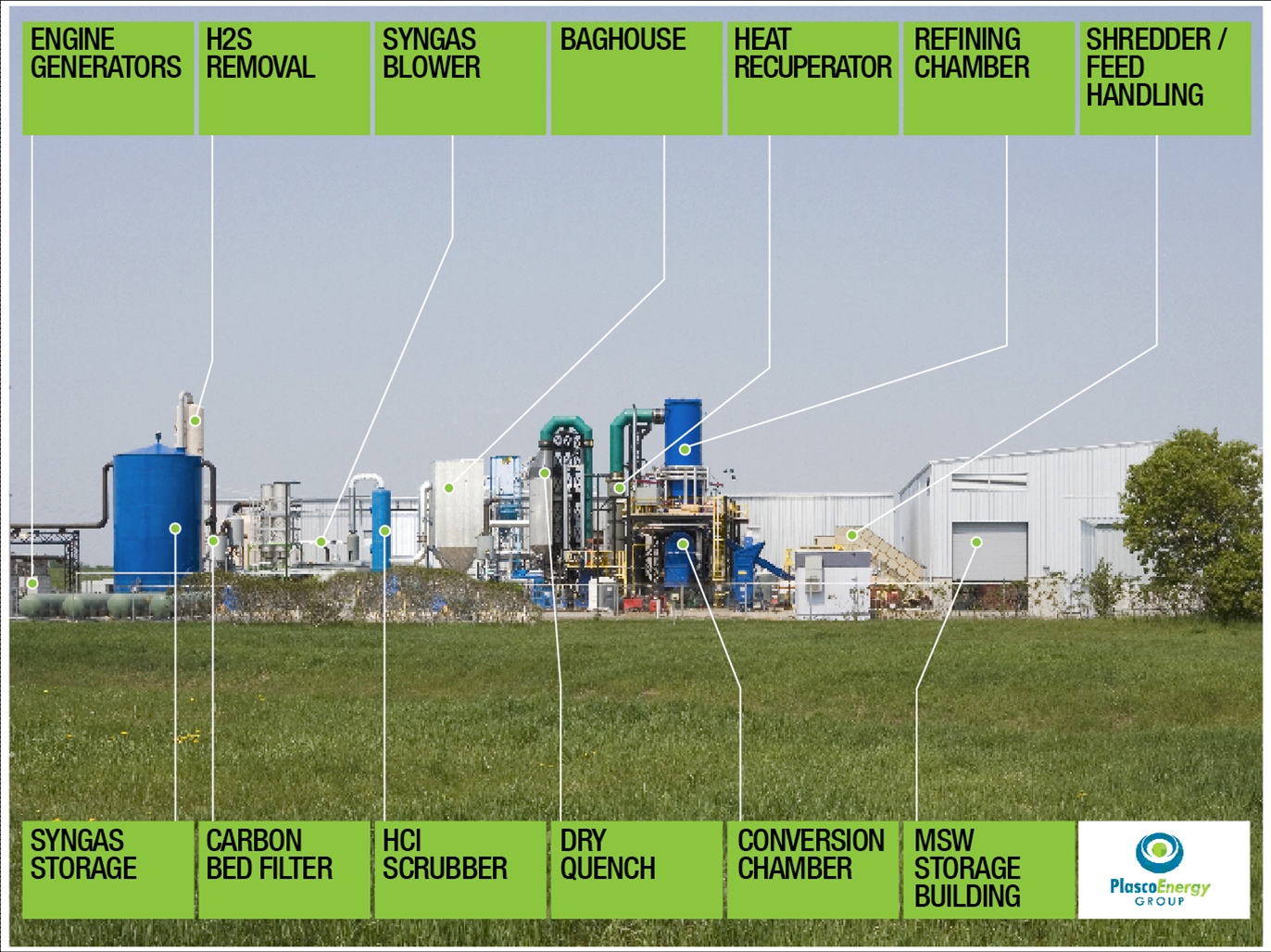
Bryden [PlascoEnergy’s CEO] says the core functions of their 100-m.t./day demo plant are performing to expectations. Nevertheless, he acknowledges that its also had its share of teething pains. The feed system has proved susceptible to jamming, regularly interrupting test runs. And they discovered that after such unanticipated interruptions oxygen entering the system ignited particulates and burned the baghouse filters designed to capture that soot before it exits the plant. Adding a valve stopped the filter fires, and Bryden says PlascoEnergy will install a new waste feeder in August.

These are the kinds of glitches one expects with new technology. But they’re also an important reminder that this is new technology and, as such, there’s no guarantee it will work as advertised.

Caveat emptor.

add to del.icio.us : Add to Blinkslist : add to furl : Digg it : add to ma.gnolia : Stumble It! : add to simpy : seed the vine : : :

Garbage to Gas

PlascoEnergy\'s Waste Gasfication ProcessRising costs of energy and other commodities have silenced erstwhile critics of municipal collection of plastic, paper and glass for recycling. Critics of converting trash into energy may be the next to go, if developments in Ottawa are any guide. Last week Ottawa’s city council unanimously approved a proposal by local technology developer PlascoEnergy to build an innovative 400-m.t./day waste-to-energy facility within city limits. If built, it would be the first such plant in North America in over a decade.

PlascoEnergy CEO Rod Bryden says the plant’s technology is key to public acceptance. “There wasn’t a single person who attended the council meeting to object. There’s no chance that would happen with a landfill or an incinerator,” says Bryden.

Rather than simply tossing trash into a giant furnace, PlascoEnergy’s design employs superhot electric plasma torches to first gasify municipal waste. Gasification eases the subsequent removal of contaminants such as mercury and produces a clean-burning ‘synthesis gas’ amenable to combustion in high-efficiency engine generators; net power exports to the grid will be about 21 megawatts. At the same time the plant will cut the equivalent of 2.1 m.t. of CO2 for every tonne of waste, thanks largely to avoided methane emissions from Ottawa’s landfill.

More gasification-based waste treatment is on the way, and not just to generate electricity. In April General Motors-based cellulosic ethanol firm Coskata, which plans to make ethanol from syngas, announced plans to integrate its first demonstration plant with an existing waste gasification pilot plant in Pennsylvania.

For more on the trash gas trend, see “Garbage In, Megawatts Out” on MIT’s TechnologyReview.com.

add to del.icio.us : Add to Blinkslist : add to furl : Digg it : add to ma.gnolia : Stumble It! : add to simpy : seed the vine : : : TailRank

Dark Clouds Over Clean Diesels

GM-Opal\'s turbo-diesel Agila © GM CorpDiesels are returning to auto showrooms nationwide. Major automakers will offer them from this fall for the 2009 model year, equipped with vastly improved emissions control devices that make them a lot cleaner than the diesel image. But their main attraction — fuel economy — is rapidly fading. The cost of diesel is rising more rapidly than gasoline, while there is increasing skepticism about their impact on climate change.

I explore the environmental implications of diesel in “Dark Clouds Over Clean Diesels”, a web-exclusive news piece on Spectrum.com. The short take: diesels still emit more soot than gasoline-fueled vehicles and the bad news on soot just keeps getting worse. Estimates of mortality from breathing fine particles is still rising, and there are top climate scientists who believe that soot is also a serious contributor to global warming. It could be second only to CO2, even outpacing methane.

Interestingly, while the U.S. and Canada prepares for a new generation of diesel cars and light trucks, European car buyers are moving in the opposite direction. A German automotive research center recently forecast a sharp decline in diesel’s share of the European car market over the coming decades, thanks to the cost of adding tailpipe controls and tough competition from gasoline-powered engine technology. From a current market share of 53% (compared to 3% in the U.S.), the study predicts diesels to drop to 38% of Europe’s car market in 2015 and to 30% in 2020.

add to del.icio.us : Add to Blinkslist : add to furl : Digg it : add to ma.gnolia : Stumble It! : add to simpy : seed the vine : : : TailRank

China ‘Gets It’ On Green Jobs

Threatened American jobs and higher gas prices were the points of attack that deep-sixed the latest effort to put a price on U.S. greenhouse gas emissions — a cap-and-trade bill that died in the Senate on Friday. This defensive posture, seeking to preserve energy-intensive transportation and industries, is short-sighted in light of the transition to alternative forms of energy underway worldwide.

China gets it. Not only is it racing to implement renewable energy (ie setting a nationwide renewable portfolio standard for utilities, installing enough wind power in just the last two years to edge out wind-energy pioneer Denmark for fifth place in the Global Wind Energy Council’s annual capacity rankings, and building a photovoltaics export business essentially overnight). China designs these initiatives to favor the development of domestic industries.

In a recent article for Spectrum magazine I show how China’s dramatic installation of wind power parks is occuring despite rock-bottom pricing — a situation that analysts say favors local players. See China Doubles Wind Watts in Spectrum’s May 2008 issue.

Note that while John McCain and Barack Obama both claim to get it on both green jobs and climate change, neither bothered to show up for Friday’s vote.

add to del.icio.us : Add to Blinkslist : add to furl : Digg it : add to ma.gnolia : Stumble It! : add to simpy : seed the vine : : : TailRank

A Steadier Platform for Floating Wind Power

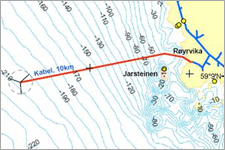
The Norwegian North Sea site for StatoilHydro\'s first floating wind turbineThose of you who mistook CN’s April 2 post Wind Power That Floats for a belated April Fool’s joke will want to consider last month’s project launch by Norway’s StatoilHydro. The North Sea oil and gas giant has teamed up with engineering conglomerate Siemens AG to anchor a full-scale commercial wind turbine in over 200 meters of water off Norway’s southwest tip.

StatoilHydro and Siemens plan to take a different tack from the startups profiled in the April 2 piece. As I show today in Wind Power Moves into Deep Waters at TechnologyReview.com, these big players are selecting components conservatively to prove that the concept of floating wind turbines is workable rather than trying to engineer the optimal floating system from the start. 

Consider the turbine itself. Tech startup Sway is designing a downwind rotor, and rival Blue H Group is building a two-bladed rotor with hinged blades. Both designs could reduce the forces on the machine and thus reduce the weight of the entire system–including the super-pricey counterweights required to anchor giant buoys to the seabed. But both designs were also left behind as the commercial wind power industry went mainstream in the mid to late 1990s and coalesced around the less elegant but more durable upwind three-bladed rotors now universally used on utility scale turbines.

StatoilHydro and Siemens will use a well-tested Siemens three-blade upwind machine, thus simplifying both their design process and their demonstration of the floating wind concept. As StatoilHydro’s vp for wind power notes in my story, if the demo fails in any way they’ll know that it’s not the turbine itself that’s to blame.

add to del.icio.us : Add to Blinkslist : add to furl : Digg it : add to ma.gnolia : Stumble It! : add to simpy : seed the vine : : :