Cleaner Coal Rises from China’s Central Committee

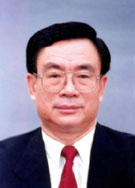
He Guoqiang. Credit: People’s DailyThis weekend the Chinese Communist Party’s Central Committee swapped added some new faces to the 9-man Politburo that actually runs what is or will soon be the world’s largest producer of greenhouse gases. Among the four new members is a chemical engineer named He Guoqiang. As the New York Times reported, Mr. He is tasked with running the party’s corruption-fighting Central Commission for Discipline Inspection. He is less well known as the innovator behind China’s adoption of advanced coal gasification technology to turn coal into chemicals and, increasingly, fuels.

I discovered He Guoqiang while visiting coal mines and chemical plants last fall. One of my stops was at the Lunan Chemical Fertilizer Plant in Shandong Province, about halfway between Shanghai and Beijing, where He got his first job in 1967 and oversaw China’s first application of advanced gasification in the 1980s.

When He arrived Lunan was producing ammonia fertilizer from coal using a gasifier little evolved from the coal-gas plants that lit up Western cities in the 19th C, and almost as dirty, yielding a partially-burned char leftover packed with poisons and a choking sulfurous gas. (More than 8000 such small gasifiers still operate in China, including six at Lunan.) He cut through red tape and restrictions on spending hard-currency (remember that China was still dirt poor 20 years ago) to import China’s first modern gasifiers. These Texaco-designed gasifiers, still running today, break down coal at higher pressures and temperatures that preclude the formation of char and captured the sulfur. 

Lunan’s success set off what has become exponential growth in the use of such advanced gasifiers. There are now over 40 plants using advanced gasifiers from GE (which bought the Texaco technology in 2004) and Shell and more players entering the market, including Siemens, South Africa’s Sasol, and Chinese groups such as East China University of Science and Technology’s Institute of Clean Coal Technology. According to the U.S.-based Gasification Technologies Council, an industry group, China will add 29 large gasifiers between 2004 and 2010.

It was such domestic innovation that brought me to Lunan last October. In what many considered a sign of He’s continued influence, the Yankuang Group that runs Lunan gained Beijing’s support to build a new plant adjacent to Lunan that is China’s first significant coal-fired power project using gasification technology — a development with significant environmental implications. Let’s hope He continues to support R&D to take coal gasification to the next level: capturing CO2 to help slow China’s ballooning greenhouse gas emissions. 

For details on He’s latest good deeds, see “Syn City” — my profile of Yankuang’s combined power and chemicals plant in IEEE Spectrum. For the broader story on China’s increasing adoption of coal gasification see “China’s Coal Future” in MIT Technology Review.

add to del.icio.us : Add to Blinkslist : add to furl : Digg it : add to ma.gnolia : Stumble It! : add to simpy : seed the vine : : : TailRank

Fixing Power to Power Grids — Today’s Batteries Mean More Wind Power Tomorrow

It was probably my greatest embarrassement as a journalist. Within weeks of publishing a major feature on energy storage in Technology Review (see “Recharging the Power Grid”), the half-completed demonstration project we profiled as the start of something big — a giant battery to stabilize the power grid in eastern Mississippi — was scrapped by its developer. The corporate parent of the battery developer, Regenesys, was bought up and the new buyer simply decided to pursue different opportunities.

Disappointments such as this are a perennial risk for the technology journalist who tries to peer into the future, given the vagaries of the R&D process. In this case, however, the risk was higher than normal due to the high cost of energy storage technology and the large size of the facility. Four years later energy storage is finally going commercial as utilities exploit of batteries that are less than one-fifth the size, as my story this morning on TechReview.com and ABCNews.com attests (see “Fixing the Power Grid”). 

These portable batteries will be the power grids’ rapid-response teams, ready to ship out for duty to stabilize overloaded power lines and substations. Why should we care? Commercialization of small batteries is likely to bring down the cost of such technology, enabling them to take on a more transformative role: providing the buffering grids will need if renewable energy sources such as solar panels and wind farms grow to large scale. It already appears to be happening in Japan and Europe, thanks to higher energy prices and forward-looking government policies.

add to del.icio.us : Add to Blinkslist : add to furl : Digg it : add to ma.gnolia : Stumble It! : add to simpy : seed the vine : : : TailRank

Could a Nuclear Renaissance Be its Own Worst Enemy?

With coal’s environmental profile under fire and natural gas prices well above historic levels, nuclear is surging forward. That’s because it provides baseload power — unlike the shifting output from most renewable energy sources* — and because Washington is providing lucrative tax breaks and loan guarantees under the 2005 energy bill masterminded by Dick Cheney. But could the nuclear industry become its own worst enemy if its surge overwelms the regulators charged with keeping it safe?

That’s the question being asked after the filing late last month of the first licensing applications for new nuclear reactors in 29 years. The construction and operating application filed by NRG Energy is the first of 19 expected to hit the U.S. Nuclear Regulatory Commission by the end of 2008. Combine that with an anticipated spike in uranium fuel production, certification of new nuclear plant designs and the Department of Energy’s Yucca Mountain waste repository, and ongoing safety incidents at aging reactors across the U.S. and you’ve got a perfect storm that will severely test the NRC. See “Nuclear Energy Revs Up” for my coverage this morning on MIT’s TechReview.com.

*Large hydropower projects have long provided renewable baseload power because while the rain is intermittent, a large high reservoir can release its potential energy gradually to track energy demand. Last month Carbon-Nation presented another renewable energy source with baseload potential — solar thermal energy — which stores solar energy in the form of superhot water.

add to del.icio.us : Add to Blinkslist : add to furl : Digg it : add to ma.gnolia : Stumble It! : add to simpy : seed the vine : : : TailRank

BC Premier Shows the Political Climate Can Also Change

gordon-campbell-announcing-climate-measures.jpgBritish Columbia’s generally conservative Liberal Party premier, Gordon Campbell, earned my respect this winter when he banned new coal-fired power plants from releasing CO2 — in effect mandating the use of carbon sequestration (or, as my coverage at TechReview.com indicated, driving planned coal plants to instead burn renewable wood). Now Campbell has gone much further — at least on paper.
Campbell announced this past weekend that his government will propose legislation this fall to mandate a 33% cut in greenhouse gases from current levels by 2020; a still to be announced Climate Action Team representing environmental organizations, business, science and First Nations is to set binding midterm targets for 2012 and 2016 by July 31, 2008.

Here are a few of the measures BC intends to launch over the coming year to get there:

Setting hard caps on greenhouse gases to be used in an emissions cap and trade system under development by five Western U.S. states and BC.

Requiring all provincial entities, including the power utility BC Hydro, to be carbon neutral by 2010. Government agencies must purchase carbon offsets at $25 per ton of CO2 released or otherwise find a way to make their travel carbon neutral starting this year. The offsets cash will fund projects in B.C. that enhance energy efficiency, generate renewable energy or reforestation.

Building all new government buildings to green-building certification equivalent to at least Gold level LEED certification. 

Phasing in California’s strict tailpipe emission standards (still stymied by auto industry litigants in the U.S.) by 2016 and adopting California’s low carbon fuel standards.

Spending more on public transit.

“I could barely believe my ears,” is what one climate activist here in Victoria told me. Journalists like me will be busy tracking to see if Campbell and crew actually deliver on all this. But I’d say hope springs a bit more eternally this week thanks to his detailed promises. 

add to del.icio.us : Add to Blinkslist : add to furl : Digg it : add to ma.gnolia : Stumble It! : add to simpy : seed the vine : : : TailRank

Solar Thermal Power: Reliable Renewable Energy?

Solar proponents love to run the math on how much (or how little) Southwestern desert one would need to cover with solar energy installations to power the United States. David Mills, founder and chairman of Palo Alto, CA solar startup Ausra, has his own estimate: 145 kilometers. Mills’ estimate is more credible than most, and not only because he’s a former president of the International Solar Energy Society.

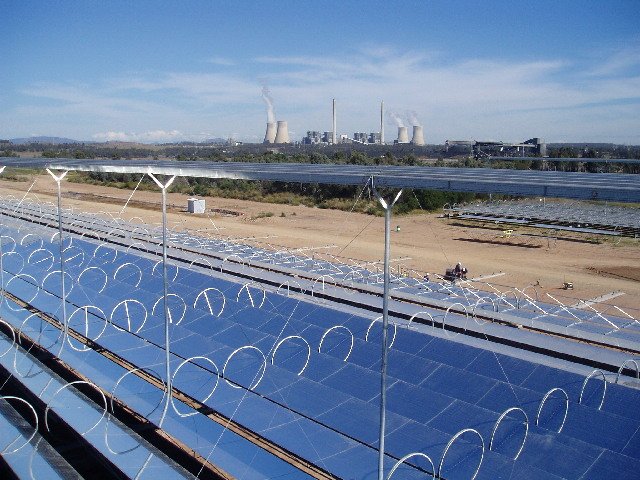
Mills’ company is developing a less well known variant of solar power that could actually make solar power work as a total energy solution: solar thermal power plants that turn sunlight into steam and then use that steam to produce electricity in turbines (much as a nuclear or coal-fired power plant does). See my story on the MIT Technology Review website this morning — “Storing Solar Power Efficiently” — on why such plants’ ability to store heat sets them apart from other renewable energy options such as wind power and photovoltaics (solar panels that turn light directly into electricity).

Note that the potential of solar thermal power extends beyond the U.S.: China and India have sun-baked desert regions available for large solar installations, while Europe is just a transmission line away from North Africa.

add to del.icio.us : Add to Blinkslist : add to furl : Digg it : add to ma.gnolia : Stumble It! : add to simpy : seed the vine : : : TailRank

Ground-breaking Report Faults Quake Planning at Yucca Mountain

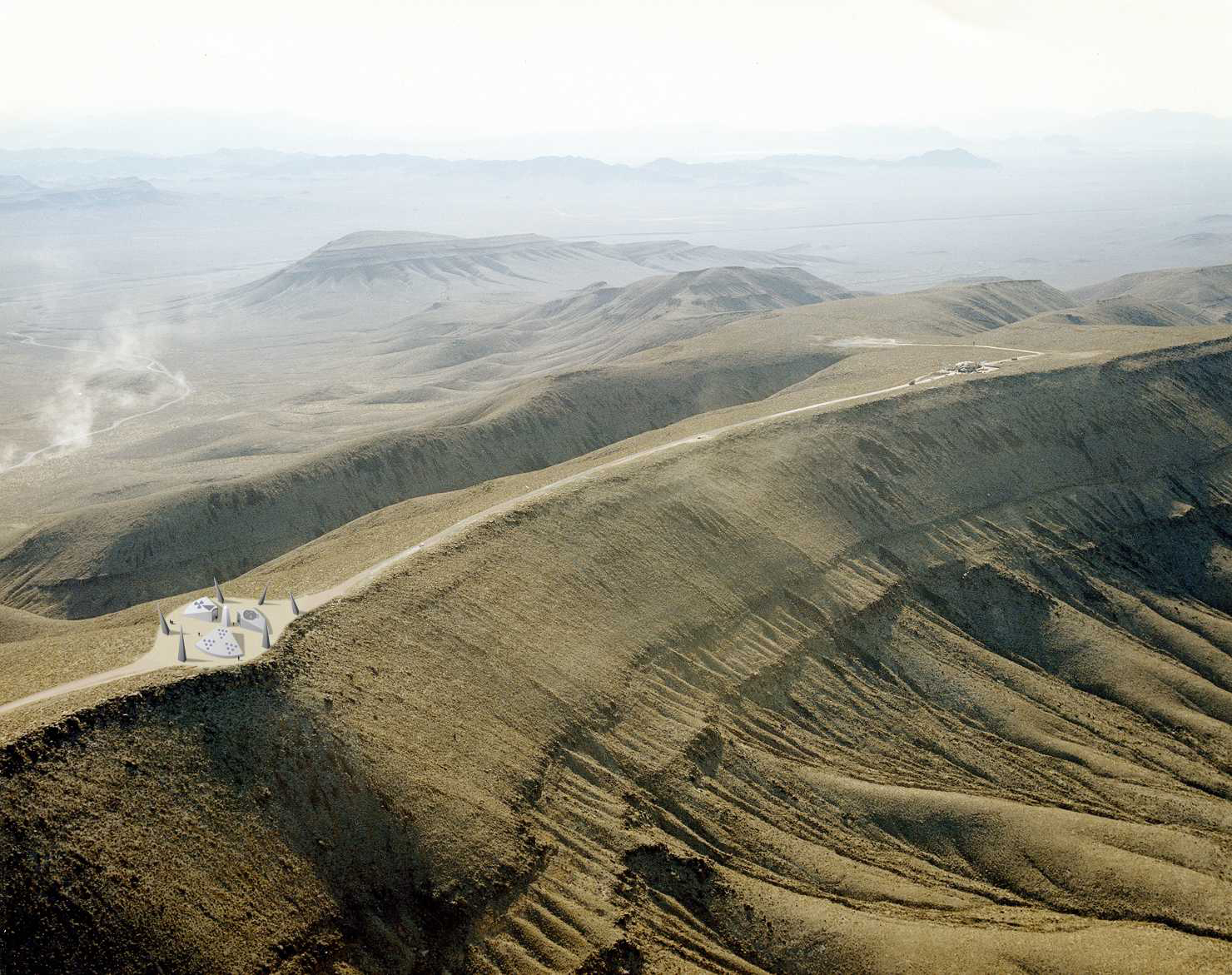
Yucca Mtn with artist's rendition of warning monument for future generations.jpgTo consider nuclear power as a solution to climate change one must confront the legacy of high-level radioactive waste that is building up at power plants across the U.S. and Canada. This week the Las Vegas Review-Journal showed yet again how difficult it will be for regulators to bury the high-level waste problem while ensuring that waste remains safe for millenia to come.

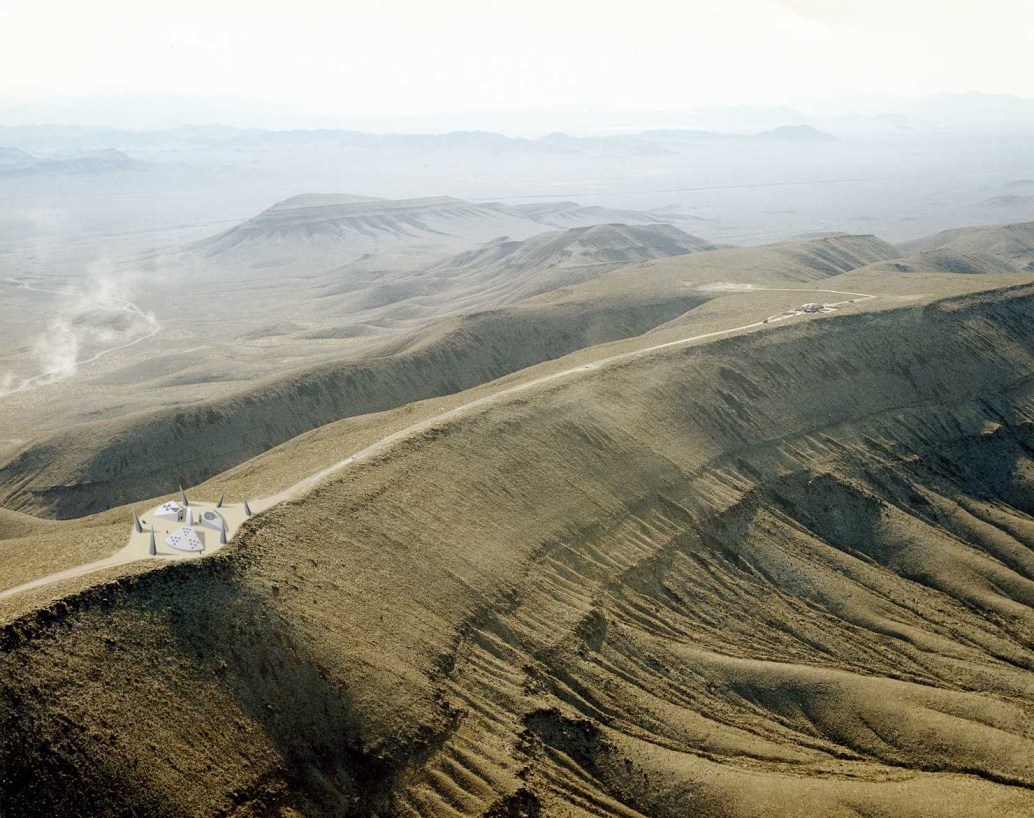
The Review-Journal’s story on developments at the U.S. Department of Energy’s planned waste repositor at Yucca Mountain, Nevada — “Yucca fault line might spring surprise” — reveals that the site’s initial design would place a waste handling area atop a fault line capable of producing a magnitude 6+ earthquake. No wonder that the state of Nevada is fighting to block the repository’s construction, and that even the DOE concedes the repository won’t open for another decade.

Such risks and delays are one reason why the Bush Administration is pursuing nuclear waste reprocessing, in which the components of high-level nuclear waste are separated and reused. As I revealed in my Spectrum story on France’s nuclear waste reprocessing experience — “Nuclear Wasteland” — there are serious problems with this approach as well.

add to del.icio.us : Add to Blinkslist : add to furl : Digg it : add to ma.gnolia : Stumble It! : add to simpy : seed the vine : : : TailRank

Can Magnets Save Ethanol?

Biofuels are growing at an explosive pace. Especially in Brazil, where output of sugar-cane ethanol has increased almost 10% per year since 2000. No suprise, given the high price of oil.

Markets like this one have powerful effects. We’ve all read about the threat of rising food prices, for instance, as food crops are diverted to fuel production (though in Brazil the price of sugar has actually crashed amid the boom: see “Brazil ethanol sector fears ‘delirious’ growth”).

But the market also provides a powerful incentive to innovate. This morning MIT Technology Review is running a quick take of mine on one sign of the ethanol innovation boom: research espousing the growth-enhancing benefits of magnetic fields. See “Can Magnets Boost Ethanol Production?”

add to del.icio.us : Add to Blinkslist : add to furl : Digg it : add to ma.gnolia : Stumble It! : add to simpy : seed the vine : : : TailRank