Are pro-nuclear politics a threat to public safety?

The one moribund nuclear power sector is suddenly a hive of activity, and nuclear regulators face pressure to rapidly assess an unprecedented number and variety of projects. How they respond will determine winners and losers among reactor designers, power companies and nations. More importantly, it will shape the future safety of nuclear energy and, if they get it wrong, squander the technology’s recently-revived public support.

Congress created the NRC in 1974 after pro-nuclear bias sunk the Atomic Energy Commission

I evaluated the quandary facing regulators for Nature magazine, drawing lessons from nuclear power’s history and perspective from past and present nuclear regulators around the world.

Front and center is the U.S. Nuclear Regulatory Commission, which has pivoted aggressively to an unapologetically nuclear-boosting posture under Trump 2.0. NRC chairman Ho Nieh is pushing for rapid transformation to make his agency a nuclear construction enabler. His stated goals: “Licences are issued. Shovels go in the ground. And we start building nuclear reactors safely and securely in the United States.”

Are “shovels in the ground” an appropriate measure of success for a nuclear regulator? Read on for answers…

The 1976 Campus Experiment That Spun Up the Wind Industry

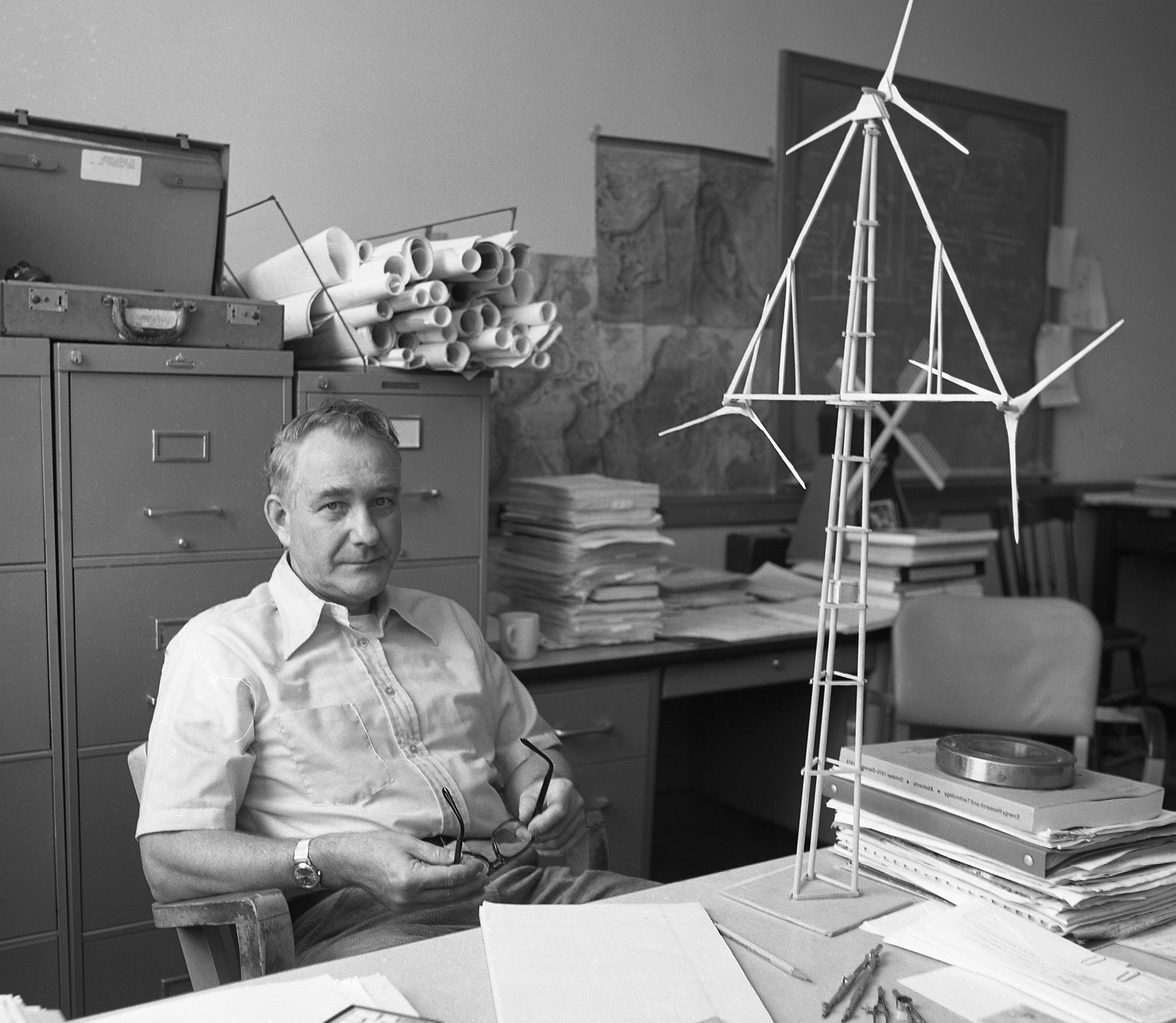
William Heronemus, 1975, with multirotor offshore wind turbine model. Robert S. Cox Special Collections/UMass Amherst Libraries

A half century ago, a scrappy crew at the University of Massachusetts Amherst erected a wind turbine on Orchard Hill, the highest point on campus. It was a frugal production, cobbled together from the rear axle of a Ford truck, a donated generator and microcontroller, a steam pipe, and various handcrafted steel and fibreglass parts, including its 4.5-meter blades. It was also tiny by modern standards — generating 1000x less power than today’s biggest wind machines. But the UMass ‘Wind Furnace’ delivered far more than most experts expected from wind energy in 1976.

The Wind Furnace project’s enduring impact is impossible to overstate. The training and inspiration it provided the spark and the engineers that unleashed the modern wind industry. For IEEE Spectrum magazine I profiled the UMass project and the visionary engineer behind the machine: Captain William Heronemus.

Bill Heronemus was a nuclear submarine veteran turned professor. A nuclear energy critic. Above all a brilliant engineer with a steady moral compass. I hope you read the profile and then want more, because I’ve got a lot more to say about ‘The Captain’ and his legacy.

Piercing the fog of war at Ukraine’s embattled Zaporizhzhia Nuclear Plant

After plumbing Ukraine’s lightning fast leap to unplug from Russia’s power grid and a pair of exposés exposing Russian moles within its nuclear energy utility, my latest reporting on the #EnergyFront refocused coverage of the warfare threatening Europe’s largest nuclear power plant. While domestic and international reporting focused on the terrifying explosions rocking Zaporizhzhia — a perilous game of nuclear roulette — my stories spotlighted efforts by Ukrainian nuclear experts to cancel the game, and thus slash the risk of devastating reactor meltdowns.

Few stories questioned why Zaporizhzhia was still producing power in the middle of a war zone. U.S. reactors proactively shut down when, for example, a hurricane is barreling in. Why was Ukraine’s nuclear utility and energy ministry and nuclear regulator ordering Zaporizhzhia’s operators to do otherwise, and why was its nuclear regulator allowing it? The answer: Ukraine wanted to maximize its power supply to bolster electricity exports to Europe in a bid for political support and badly-needed revenue.

But nuclear experts I spoke to, such as former Chernobyl chief engineer and IAEA board member Nikolai Steinberg, called maintaining nuclear chain reactions at Zaporizhzhia “a crime.” Shutting down, Steinberg and others argued, would cool Zaporizhzhia’s reactors, thus slashing the risk of an accident akin to (or potentially worse than) Japan’s Fukushima disaster.

My first story laid out the experts’ case for a proactive shutdown. For example, I cited an unpublished assessment by Ukraine’s state nuclear-safety center reviewing the risk of a station-wide blackout that would zap the plant’s ability to cool its reactors and pools of spent nuclear fuel (as occurred at Fukushima in 2011). Moving Zaporizhzhia’s reactors to a ‘cold stop’, they found, would reduce accident risk by extending the time between station blackout and reactor core damage from 3 hours to 27 hours, buying crucial time for operators to find workarounds and restart cooling.

Shutting down proactively would also cease the production of short-lived fission products, reducing the harm caused by any reactor breach.

I followed up one week later after shelling (most likely by the Russian forces occupying the plant) forced the entire plant off the grid for the first time since it began operating in 1985, and temporarily shut down two reactors. My story explained how:

  • Repeated damage to Zaporizhzhia’s transmission lines — the electrical umbilical cords linking it to Ukraine’s grid — caused the plant’s reactors to blink on and off the grid.
  • The near misses bolstered calls for an orderly shutdown, even if diesel generators and other emergency systems had averted radiological accidents; and
  • Ukrainian officials continued to restart reactors and power generation rather than heed the warnings.

My story also noted, however, that nuclear experts had scored one win. Ukraine’s nuclear regulator took a symbolic baby step by ordering two reactor units already in cold shutdown to remain offline.

A few days later after that story the White House called for a “controlled shutdown” at Zaporizhzhia. Ukraine’s nuclear utility Energoatom acceded to the growing chorus on September 11.
Double Milestone for Safer Reactors

Call it the world’s slowest photo finish. After several decades of engineering, construction flaws and delays, and cost overruns—a troubled birth that cost their developers dearly—the most advanced commercial reactor designs from Europe and the United States just delivered their first megawatt-hours of electricity within one day of each other. But their benefits—including safety advances such as the AP1000’s passive cooling and the EPR’s airplane-crash-proof shell—may offer too little, too late to secure future projects.

Continue reading “Double Milestone for Safer Reactors”

Cyclone Exposes Trump’s Grid Fallacy

Extreme weather events have knocked both nuclear and coal-fired power plants offline recently, undercutting the Trump Administration argument that subsidizing aging generators is crucial to prevent blackouts. The latest failure came late last week when Winter Storm Gregory forced a nuclear plant in New England offline, ratcheting up the challenge facing grid operators amidst the “bomb” cyclone’s high winds and freezing temperatures. Continue reading “Cyclone Exposes Trump’s Grid Fallacy”

Palmetto State’s $9-bn Nuclear Boondoggle

“Public trust is at stake here, folks.” That’s how South Carolina’s top power industry regulator described the gravity of local utilities’ decision to walk away from a pair of partially-built nuclear reactors, according to Charleston’s Post and Courier. Public Service Commission chairman Swain Whitfield added that the reactors’ cancellation after $9 billion of investment — more than the state’s annual budget — “is going to shatter lives, hopes and dreams” in South Carolina. South Carolina-based Santee Cooper and SCANA’s abandonment of their pair of new reactors, announced on Monday, also have broader ramifications for the nuclear industry’s self-declared “nuclear renaissance.” The cost overruns and delays afflicting this project and a sister project in Georgia drove the reactor designer and builder Westinghouse Electric Co. into bankruptcy. Cost overruns and political concerns are also squeezing nuclear suppliers from France, South Korea, and Russia. Continue reading “Palmetto State’s $9-bn Nuclear Boondoggle”

Startup Time for Fukushima’s Frozen Wall

Japan’s TEPCO — operator of the stricken Fukushima nuclear power plant — is about to flip the switch on its infamous ‘ice wall’ intended to divert flowing groundwater around its crippled reactors and thus stem groundwater contamination at the site. The widely mischaracterized and maligned installation—which is a barrier of frozen soil rather than a wall of ice—has every chance of delivering the hoped for results, according to radiation cleanup experts at U.S. national laboratories and feedback from initial system tests. “The frozen barrier is going to work,” predicts Brian Looney, senior advisory engineer at the U.S. Department of Energy’s Savannah River National Laboratory in South Carolina and co-author of an independent assessment of TEPCO’s frozen barrier. Continue reading “Startup Time for Fukushima’s Frozen Wall”