Corporate Fleets: No Magic Sponge for Electric Vehicles

Despite the high levels of excitement surrounding electric vehicles, there is reason to worry about this nascent market’s capacity to fizzle in a big way. Most of the buzz surrounds electric vehicle introductions from major automakers, such as the Nissan Leaf and the Chevy Volt, for which consumer demand remains to be demonstrated. Today I’ve got a piece running at MIT’s TechReview.com site raising doubts about the likelihood that corporate fleets will soak up EVs if consumers leave these pricey machines languishing on showroom floors.

The TechReview story, a ‘news-you-can-use’ piece aimed at managers, concludes that big price reductions and adjustments to fleet management practices will be needed to make a business case for replacing gasoline and diesel fleet vehicles with EVs. In short, lithium battery costs push the purchase price too high for most corporate buyers to recoup their investment through efficiencies — especially if they continue to replace vehicles every three-to-five years. AT&T predicts a return on electric Ford/Azure Dynamics service trucks they are phasing in, but only because the company bucks standard fleet practice and uses its fleet vehicles for 10-12 years. Continue reading “Corporate Fleets: No Magic Sponge for Electric Vehicles”

UK Rejects Tidal Barrage, but Smaller Tech May Endure

The UK government has shelved schemes to build a tidal barrage across the Severn estuary, West of London, that could have supplied 5% of the UK’s power needs. What reports are missing is the endurance of more nimble tidal turbines and other marine power devices–distributed energy devices that the UK is helping to nurture.

Barrages are essentially hydro dams that capture each high tide and generate electricity from their outflow.The first large barrage and largest currently operating crosses the estuary of the Rance River on France’s Atlantic coast, generating a peak of 240 megawatts–the scale of a large wind farm. Five competing proposals for a Severn barrage were to generate up to 40 times that much from the region’s 14-meter tides. Continue reading “UK Rejects Tidal Barrage, but Smaller Tech May Endure”

Quebecers Say ‘Non’ to “Gaz de Shit”

Heckled and booed off the stage at a series of public meetings earlier this month, Quebec’s salesman-in-chief for a novel energy development withdrew from the fight this week — citing the advice of worried doctors but vowing to rejoin the fight. The inspiration for André Caillé’s intemperate welcome was not a coal-fired power plant or a pipeline full of heavy oil from Alberta’s tarsands, but what until recently was considered the green fossil fuel: methane. Continue reading “Quebecers Say ‘Non’ to “Gaz de Shit””

Paris Puts the Bicyclette First

Paris threw open nearly one thousand one-way streets to two-way traffic this week — that is, for travelers willing to pedal. Whereas other cities such as Boulder and London have created a handful of designated counterflow bike lanes, the new rules taking effect in Paris this week allow bicyclists to cycle upstream against automobile traffic within all of the city’s 30 kilometer-per-hour zones.

Generally speaking these 30-kph zones comprise knots of narrow streets serving primarily neighborhood traffic. But Paris city hall expects a big impact for cyclists. According to Paris planners the move will expand route options for cyclists and may also (seemingly against all odds) improve safety. The mayor’s office notes that on some streets cyclists heading upstream will be further from parked cars, minimizing their risk of ‘winning a door prize’ from innattentive automobile users stepping out onto the roadway. Continue reading “Paris Puts the Bicyclette First”

Europe and Turkey’s High-Power Embrace

Ethnic and economic tensions may have stalled Turkey’s longstanding bid to join the European Union, but electrical circuits can be color blind. As of September the alternating current on the Turkish power grid will flow in synchrony with Continental Europe’s, according to the European Network of Transmission System Operators for Electricity (ENTSO-E), which took control of Europe’s power grids last summer.

Yesterday’s announcement means that Turkey can trade electricity with Europe and benefit from the bigger grid’s stability, in turn helping to stabilize the lines in neighboring Bulgaria and Greece. The link will run for at least one year, with power exchanges ramping up in stages.

Turkey’s integration provides hope for would-be regional developers in the Mediterranean, who face rising protectionism, ethnic tensions, and seemingly endless diplomatic bombshells from Israel and the Palestinian territories. The Middle East troubles caused the Union for the Mediterranean organized by French President Nicolas Sarkozy to delay a second summit scheduled to convene in Barcelona yesterday until November, according to the AP. Continue reading “Europe and Turkey’s High-Power Embrace”

BP Under Pressure to Tighten Spill Cap

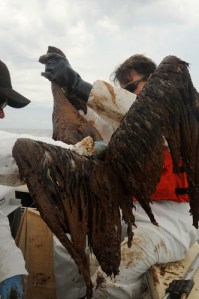
How is one to bridge the gap between BP’s latest oil collection stats and visual reality?

The oil and gas giant claims to be sucking crude straight off its stricken mile-deep wellhead and pouring it into the drillship Enterprise at a rate of 11,000 barrels per day, thanks to a cap and tube installed on Friday. And, yet, video feeds from ROVs present a plume of oil and gas that looks as angry as ever, gushing plenty more black goop destined for dispersal into the Gulf of Mexico’s already beleaguered  ecosystems.

“Clearly alot of people are looking at it and trying to understand what does this mean,” acknowledged BP senior vp/exploration Kent Wells of the top-rated video images during in a media briefing this afternoon. Continue reading “BP Under Pressure to Tighten Spill Cap”